Quotes about experience
109 quotes · 80 authors
Quotes
We face the future fortified with the lessons we have learned from the past. It is today that we must create the world of the future. Spinoza, I think, pointed out that we ourselves can make experience valuable when, by imagination and reason, we turn it into foresight.
To know a thing well, know it limits. Only when pushed beyond its tolerances will true nature be seen. Do not depend only on theory if your life is at stake.
Muad'Dib learned rapidly because his first training was in how to learn. And the first lesson of all was the basic trust that he could learn. It's shocking to find how many people do not believe they can learn, and how many more believe learning to be difficult. Muad'Dib knew that every experience carries its lesson.
And, as for me, if, by any possibility, there be any as yet undiscovered prime thing in me; if I shall ever deserve any real repute in that small but high hushed world which I might not be unreasonably ambitious of; if hereafter I shall do anything that, upon the whole, a man might rather have done than to have left undone; if, at my death, my executors, or more properly my creditors, find any precious MSS. in my desk, then here I prospectively ascribe all the honor and the glory to whaling; for a whale-ship was my Yale College and my Harvard.
p. 123
"It’s uh known fact, Pheoby, you got tuh go there tuh know there. Yo’ papa and yo’ mama and nobody else can’t tell yuh and show yuh. Two things everybody’s got tuh do fuh theyselves. They got tuh go tuh God, and they got tuh find out about livin’ fuh theyselves."
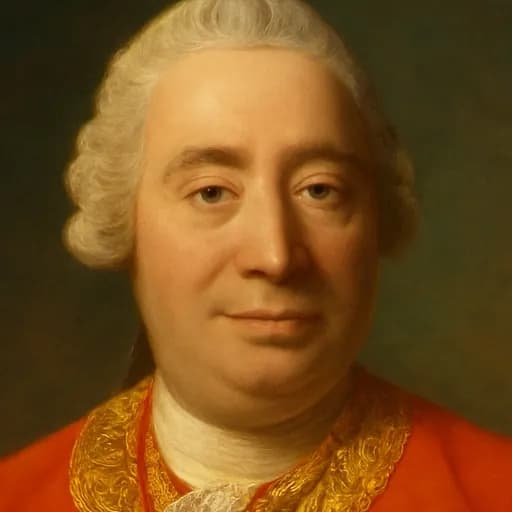
Though experience be our only guide in reasoning concerning matters of fact; it must be acknowledged, that this guide is not altogether infallible, but in some cases is apt to lead us into errors.
In vain, therefore, should we pretend to determine any single event, or infer any cause or effect, without the assistance of observation and experience.
Custom, then, is the great guide of human life. It is that principle alone which renders our experience useful to us, and makes us expect, for the future, a similar train of events with those which have appeared in the past. Without the influence of custom, we should be entirely ignorant of every matter of fact beyond what is immediately present to the memory and senses. We should never know how to adjust means to ends, or to employ our natural powers in the production of any effect. There would be an end at once of all action, as well as of the chief part of speculation.
There is nothing in any object, consider'd in itself, which can afford us a reason for drawing a conclusion beyond it; [...] even after the observation of the frequent or constant conjunction of objects, we have no reason to draw any inference concerning any object beyond those of which we have had experience.
What I know at sixty, I knew as well at twenty. Forty years of a long, a superfluous, labor of verification.
When I see the studies of young men at the period of their greatest activity confined to purely speculative matters, while later on they are suddenly plunged, without any sort of experience, into the world of men and affairs, it strikes me as contrary alike to reason and to nature, and I cease to be surprised that so few men know what to do. How strange a choice to teach us so many useless things, while the art of doing is never touched upon! They profess to fit us for society, and we are taught as if each of us were to live a life of contemplation in a solitary cell, or to discuss theories with persons whom they did not concern. You think you are teaching your scholars how to live, and you teach them certain bodily contortions and certain forms of words without meaning. I, too, have taught Emile how to live; for I have taught him to enjoy his own society and, more than that, to earn his own bread. But this is not enough. To live in the world he must know how to get on with other people, he must know what forces move them, he must calculate the action and re-action of self-interest in civil society, he must estimate the results so accurately that he will rarely fail in his undertakings, or he will at least have tried in the best possible way.
If my scholar rarely gives me cause for such prophecies, neither will he give me cause for such regrets, for he never says a useless word, and does not exhaust himself by chattering when he knows there is no one to listen to him. His ideas are few but precise, he knows nothing by rote but much by experience. If he reads our books worse than other children, he reads far better in the book of nature; his thoughts are not in his tongue but in his brain; he has less memory and more judgment; he can only speak one language, but he understands what he is saying, and if his speech is not so good as that of other children his deeds are better.