Quotes about equality
133 quotes · 85 authors
Quotes
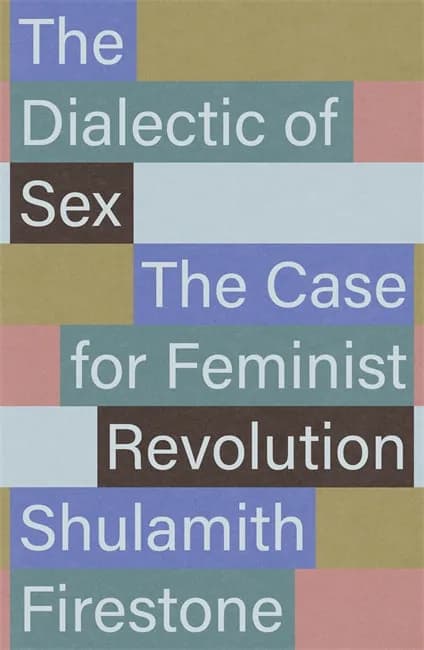
Sex class is so deep as to be invisible. Or it may appear as a superficial inequality, one that can be solved by merely a few reforms, or perhaps by the full integration of women into the labour force. But the reaction of the common man, woman, and child - 'That? Why you can't change that! You must be out of your mind!' - is the closest to the truth. ]
p. 1
We must recognize, and loudly proclaim, that every one, whatever his grade in the old society, whether strong or weak, capable or incapable, as, before everything, THE RIGHT TO LIVE, and that society is bound to share amongst all, without exception , the means of existence at its disposal.
p. 71
The immense accumulations of fixed capital which, to the great benefit of mankind, were built up during the half century before the war, could never have come about in a Society where wealth was divided equitably.
p. 19
We are not yet speaking about equality if we have not yet spoken about equal grievability, or the equal attribution of grievability. Grievability is a defining feature of equality. Those whose grievability is not assumed are those who suffer inequality—unequal value.
p. 108
The ethical stand of nonviolence has to be linked to a commitment to radical equality. And more specifically, the practice of nonviolence requires an opposition to biopolitical forms of racism and war logics that regularly distinguish lives worth safeguarding from those that are not—populations conceived as collateral damage, or as obstructions to policy and military aims.
p. 62
Nonviolence is less a failure of action than a physical assertion of the claims of life, a living assertion, a claim that is made by speech, gesture, and action, through networks, encampments, and assemblies; all of these seek to recast the living as worthy of value, as potentially grievable, precisely under conditions in which they are either erased from view or cast into irreversible forms of precarity. When the precarious expose their living status to those powers that threaten their very lives, they engage a form of persistence that holds the potential to defeat one of the guiding aims of violent power—namely, to cast those on the margins as dispensable, to push them beyond the margins into the zone of non-being, to use Fanon’s phrase. When nonviolent movements work within the ideals of , it is the equal claim to a livable and grievable life that serves as a guiding social ideal, one that is fundamental to an ethics and politics of nonviolence that moves beyond the legacy of individualism. It opens up a new consideration of social freedom as defined in part by our constitutive interdependency. An egalitarian imaginary is required for such a struggle—one that reckons with the potential for destruction in every living bond. Violence against the other is, in this sense, violence against oneself, something that becomes clear when we recognize that violence assaults the living interdependency that is, or should be, our social world.
p. 24
Nonviolence does not make sense without a commitment to equality. The reason why nonviolence requires a commitment to equality can best be understood by considering that in this world some lives are more clearly valued than others, and that this inequality implies that certain lives will be more tenaciously defended than others. If one opposes the violence done to human lives—or, indeed, to other living beings—this presumes that it is because those lives are valuable. Our opposition affirms those lives as valuable. If they were to be lost as a result of violence, that loss would be registered as a loss only because those lives were affirmed as having a living value, and that, in turn, means we regard those lives as worthy of grief.
p. 28
One might expect that a consideration of grievability pertains only to those who are dead, but my contention is that grievability is already operative in life, and that it is a characteristic attributed to living creatures, marking their value within a differential scheme of values and bearing directly on the question of whether or not they are treated equally and in a just way. To be grievable is to be interpellated in such a way that you know your life matters; that the loss of your life would matter; that your body is treated as one that should be able to live and thrive, whose precarity should be minimized, for which provisions for flourishing should be available. The presumption of equal grievability would be not only a conviction or attitude with which another person greets you, but a principle that organizes the social organization of health, food, shelter, employment, sexual life, and civic life.
p. 59
To affirm equality is to affirm a cohabitation defined in part by an interdependency that takes the edge off the individual boundaries of the body, or that works that edge for its social and political potential.
p. 148
One reason an egalitarian approach to the value of life is important is that it draws from ideals of radical democracy at the same time that it enters into ethical considerations about how best to practice nonviolence. The institutional life of violence will not be brought down by a prohibition, but only by a counter-institutional ethos and practice.
p. 61
When the world fails us, when we ourselves become worldless in the social sense, the body suffers and shows its precarity; that mode of demonstrating precarity is itself, or carries with it, a political demand and even an expression of outrage. To be a body differentially exposed to harm or to death is precisely to exhibit a form of precarity, but also to suffer a form of inequality that is unjust. So, the situation of many populations who are increasingly subject to unlivable precarity raises for us the question of global obligations. If we ask why any of us should care about those who suffer at a distance from us, the answer is not to be found in paternalistic justifications, but in the fact that we inhabit the world together in relations of interdependency. Our fates are, as it were, given over to one another.
p. 50
Lives matter in the sense that they assume physical form within the sphere of appearance; lives matter because they are to be valued equally.
p. 12