Quotes about childhood
163 quotes · 111 authors
Quotes
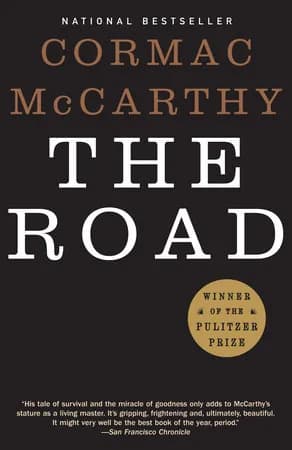
Maybe he understood for the first time that to the boy he was himself an alien. A being from a planet that no longer existed. The tales of which were suspect. He could not construct for the child’s pleasure the world he’d lost without constructing the loss as well and he thought perhaps the child has known this better than he.
Children know precious little, but that profound ignorance comes from profound innocence. People really mean to say that innocence is bliss. And bliss is short-lived.
As a child, coming home at sunset through the infinite chain of backyards that led from the schoolyard to our house, I would catch glimpses in windows of dining rooms, tables set for supper; of crayon drawings tacked to refrigerators, cartons of milk standing on counters; of feet on low hassocks, framed photographs, and empty sofas, all lit by the bland light of the television; and these quickly shifting tableaux, of strange furniture and the lives and families they divulged, would send me into a trance of curiosity. For a long time I thought that one became a spy in order to watch the houses of other people, to be confronted by the simple, wondrous fact of other kitchens, other clocks, and ottomans.
Now and then we had a hope that if we lived and were good, God would permit us to be pirates.
A cemetery is an affront to the rational mind. One reason is its eerily wasted space, this tribute to the dead that inevitably degenerates into ancestor worship as, on birthdays and anniversaries, humans of every faith and no faith at all brave whatever weather may that day threaten, in order to stand before these rows of silent stone markers, praying, yes, and remembering, of course, but very often actually speaking to the deceased, an oddly pagan ritual in which we engage, this shared pretense that the rotted corpses in warped wooden boxes are able to hear and understand us if we stand before their graves.The other reason a cemetery appeals to the irrational side is its obtrusive, irresistible habit of sneaking past the civilized veneer with which we cover the primitive planks of our childhood fears. When we are children, we know that what our parents insist is merely a tree branch blowing in the wind is really the gnarled fingertip of some horrific creature of the night, waiting outside the window, tapping, tapping, tapping, to let us know that, as soon as our parents close the door and sentence us to the gloom which they insist builds character, he will lift the sash and dart inside and...And there childhood imagination usually runs out, unable to give shape to the precise fears that have kept us awake and that will, in a few months, be forgotten entirely. Until we next visit a cemetery, that is, when, suddenly, the possibility of some terrifying creature of the night seems remarkably real.
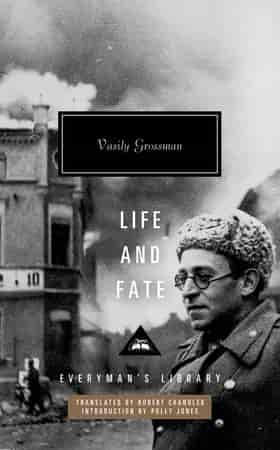
Death, who had once lived in a fairy-tale forest where a fairy-tale wolf was creeping up on a fairy-tale goat, was no longer confined to the pages of a book. For the first time David felt very clearly that he himself was mortal, not just in a fairy-tale way, but in actual fact. ' He understood that one day his mother would die. And it wasn’t from the fairy-tale forest and the dim light of its fir-trees that Death would come for him and his mother – it would come from this very air, from these walls, from life itself, and there was no way they would be able to hide from it. ' He sensed Death with a depth and clarity of which only small children or great philosophers are capable, philosophers who are themselves almost childlike in the power and simplicity of their thinking.
p. 193
People with happy childhoods never overdo; they don't strive or exert themselves. They're moderate, pleasant, well liked, and good citizens. Society needs them. But the tremendous drive and dedication necessary to succeed in any field- not only show business- often seems to be rooted in a disturbed childhood. I wasn't an unloved or an unwanted child, but I was moved around a lot, and then death and cruel circumstances brought many painful separations.
p. 21
Kids grow up connected to nothing these days, plugged-in and living lives boosted to them from other people. Hand-me-down adventures."
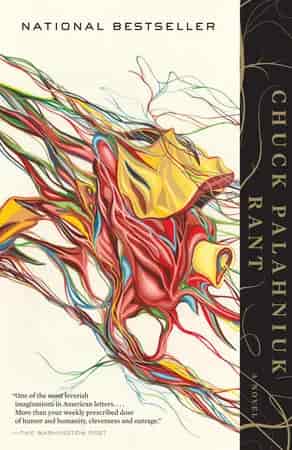
Each holiday tradition acts as an exercise in cognitive development, a greater challenge for the child. Despite the fact that most parents don't recognize this function, they still practice the exercise. Rant also saw how resolving the illusions is crucial to how the child uses any new skills. A child who is never coached with Santa Claus may never develop an ability to imagine. To him, nothing exists except the literal and tangible. A child who is disillusioned abruptly, by his peers or his siblings, being ridiculed for his faith and imagination, may choose never to believe in anything--tangible or intangible--again. To never trust or wonder. But a child who relinquishes the illusions of Santa Claus, the Easter Bunny, and the Tooth Fairy, that child may come away with the most important skill set. That child may recognize the strength of his own imagination and faith. He will embrace the ability to create his own reality. That child becomes his own authority. He determines the nature of his world. His own vision. And by doing so, by the power of his example, he determines the reality of the other two types: those who can't imagine, and those who can't trust."
The words of our childhood became strangers to us- we couldn't use them in the same way and so we chose not to use them at all. Life demanded a new language.
p. 6
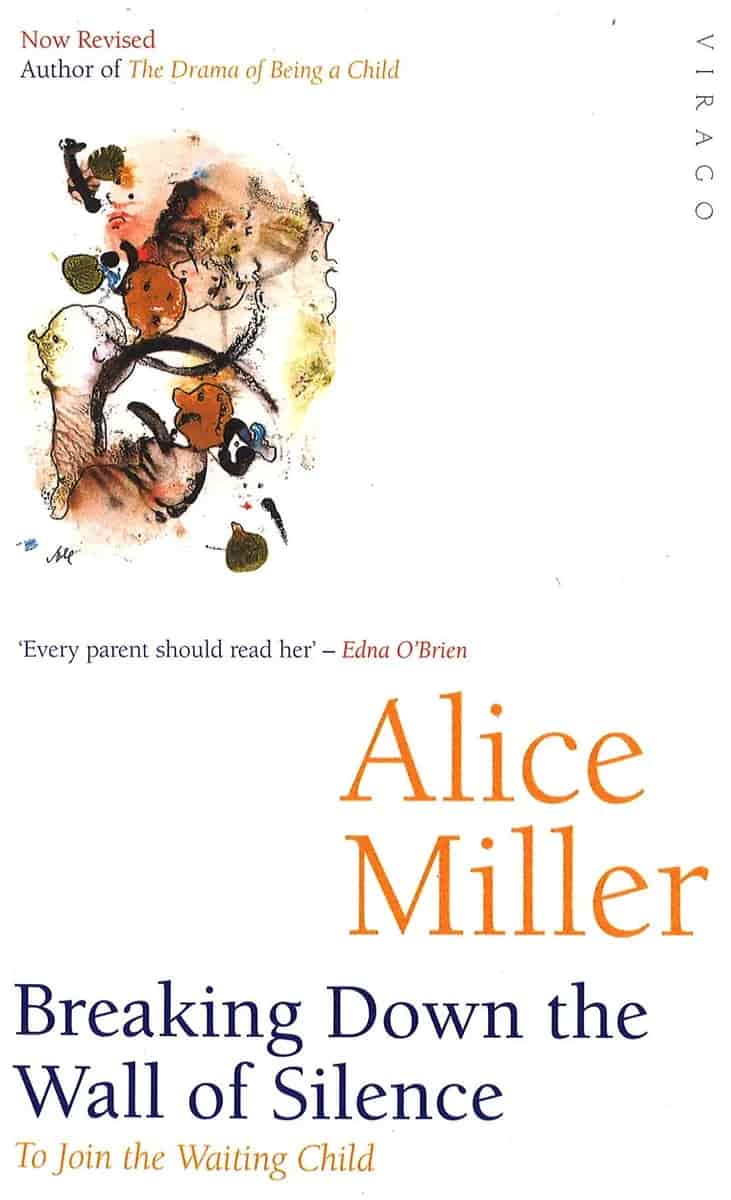
Hard as it is to believe, in the entire world there is not a single faculty in which a degree is offered in the study of psychic injuries in childhood.
Psychoanalysis does not distort the truth by accident. It does so by necessity. It is an effective system for the suppression of the truth about childhood, a truth feared by our entire society. Not surprisingly, it enjoys great esteem among intellectuals... Fear of the truth about child abuse is a leitmotif of nearly all forms of therapy known to me.