Quotes
I don’t really care that much about if I want to be more successful or less successful in art, because I never think life and art should be separate. What’s life if you don’t have conversation and joy and anger?
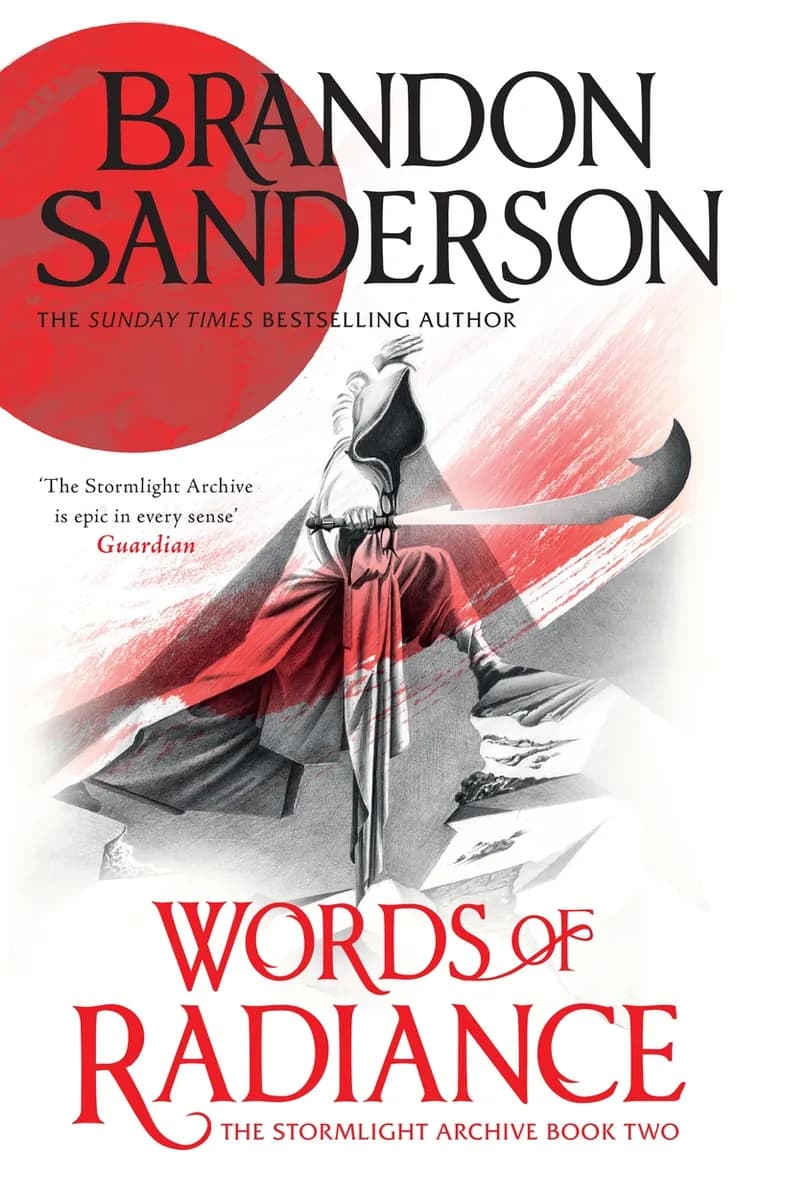
"Art’s something you choose to make … it’s a bringing together of … of everything around you into something that makes you more human, more khepri, whatever. More of a person."
p. 94
I do not think the coerced mind ever really learns an art.
p. 20
He needed more than vague explanations and abstract ideas—but those were the very soul of art. If you could explain something perfectly, then you’d never need art. That was the difference between a table and a beautiful woodcutting. You could explain the table: its purpose, its shape, its nature. The woodcutting you simply had to experience.
p. 295
She didn’t exactly understand what she was doing, but she rarely did. Art wasn’t about understanding, but about knowing.
p. 98
“And so,” he said, “in the end, what must we determine? Is it the intellect of a genius that we revere? If it were their artistry, the beauty of their mind, would we not laud it regardless of whether we’d seen their product before?
“But we don’t. Given two works of artistic majesty, otherwise weighted equally, we will give greater acclaim to the one who did it first. It doesn’t matter what you create. It matters what you create before anyone else.
“So it’s not the beauty itself we admire. It’s not the force of intellect. It’s not invention, aesthetics, or capacity itself. The greatest talent that we think a man can have?” He plucked one final string. “Seems to me that it must be nothing more than novelty.”
p. 1000
She let the world consume her. The familiar sound of pencil on paper, the focus of creation. Beauty was out there, all around. To create art was not to capture it, but to participate in it.
p. 554
Art was about creation. That was its soul, its essence. Creation and order. You took something disorganized—a splash of ink, an empty page—and you built something from it. Something from nothing. The soul of creation.
p. 948
That evening he talked about Leonardo and Michelangelo. It is impossible to place them in the human world, he said. It is impossible to comprehend how anything that attests to greatness has survived; it is obviously a result of innumerable chance events and of human incomprehension, he said. If people had understood the greatness of those works, they would have destroyed them long ago. Fortunately, people have lost their flair for greatness and only their flair for murder has persisted, though undoubtedly they have refined the latter, their flair for murder, to an art, almost to point of greatness, he said.
As instanced by Virgil and Dante, the vocation of artisthood bears some analogy to those of mythic-herohood and messiahship—conspicuously so for the Romantics and the great early Modernists, with their characteristic conception of the artist as hero (one recalls James Joyce's Stephen Dedalus, originally named Stephen Hero, vowing to "forge, in the smithy of my soul, the uncreated conscience of my race"), more modestly so even for Postmoderns. In at least some cases, the present author's included, one's apprentice sense of calling may be far from clear. even to oneself. … One may be uncertain of both one's vocation and one's talent for it, or confident of one of those but not the other, or confident of both but mistaken, or doubtful of both but mistaken, or correct on one or both counts. In the happiest case, one comes to have reasonable faith in both calling and gift and at least some "objective" confirmation that that faith is not altogether misplaced. But "real, non-scripted life" is slippery terrain, in which templates and prophecies are ill-defined, elastic, arguable, and verdicts are forever subject to reversal. One crosses one's fingers, invokes one's muse and does one's best.
p. 306
Some people flinch when you talk about art in the context of the needs of society thinking you are introducing something far too common for a discussion of art. Why should art have a purpose and a use? Art shouldn't be concerned with purpose and reason and need, they say. These are improper. But from the very beginning, it seems to me, stories have indeed been meant to be enjoyed, to appeal to that part of us which enjoys good form and good shape and good sound.
Propaganda of sufficient age became art.
p. 204