

Quotes
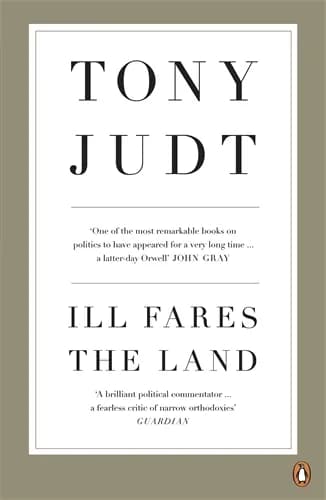
Something is profoundly wrong with the way we live today. For thirty years we have made a virtue out of the pursuit of material self-interest: indeed, this very pursuit now constitutes whatever remains of our sense of collective purpose. We know what things cost but have no idea what they are worth. We no longer ask of a judicial ruling or a legislative act: is it good? Is it fair? Is it just? Is it right? Will it help bring about a better society or a better world? Those used to be the political questions, even if they invited no easy answers. We must learn once again to pose them.
The ‘false precision’ of which Maynard Keynes accused his economist critics is with us still. Worse: we have smuggled in a misleadingly ‘ethical’ vocabulary to bolster our economic arguments, furnishing us with a self-satisfied gloss upon crassly utilitarian calculations. When imposing welfare cuts on the poor, for example, legislators in the UK and US alike have taken a singular pride in the ‘hard choices’ they have had to make.
The past was neither as good nor as bad as we suppose: it was just different. If we tell ourselves nostalgic stories, we shall never engage the problems that face us in the present—and the same is true if we fondly suppose that our own world is better in every way. The past really is another country: we cannot go back. However, there is something worse than idealizing the past—or presenting it to ourselves and our children as a chamber of horrors: forgetting it.
We have entered an age of insecurity—economic insecurity, physical insecurity, political insecurity. The fact that we are largely unaware of this is small comfort: few in 1914 predicted the utter collapse of their world and the economic and political catastrophes that followed. Insecurity breeds fear. And fear—fear of change, fear of decline, fear of strangers and an unfamiliar world—is corroding the trust and interdependence on which civil societies rest.
In writing this book, I hope I have offered some guidance to those—the young especially—trying to articulate their objections to our way of life. However, this is not enough. As citizens of a free society, we have a duty to look critically at our world. But if we think we know what is wrong, we must act upon that knowledge. Philosophers, it was famously observed, have hitherto only interpreted the world in various ways; the point is to change it.
The case for reviving the state does not rest uniquely upon its contributions to modern society as a collective project; there is a more urgent consideration. We have entered an age of fear. Insecurity is once again an active ingredient of political life in Western democracies. Insecurity born of terrorism, of course; but also, and more insidiously, fear of the uncontrollable speed of change, fear of the loss of employment, fear of losing ground to others in an increasingly unequal distribution of resources, fear of losing control of the circumstances and routines of our daily life. And, perhaps above all, fear that it is not just we who can no longer shape our lives but that those in authority have also lost control, to forces beyond their reach.
We face today two practical dilemmas. The first can be succinctly described as the return of the ‘social question’. For Victorian reformers—or American activists of the pre-1914 age of reform—the challenge posed by the social question of their time was straightforward: how was a liberal society to respond to the poverty, overcrowding, dirt, malnutrition and ill health of the new industrial cities? How were the working masses to be brought into the community—as voters, as citizens, as participants—without upheaval, protest and even revolution? What should be done to alleviate the suffering and injustices to which the urban working masses were now exposed and how was the ruling elite of the day to be brought to see the need for change?
The history of the 20th century West is in large measure the history of efforts to answer these questions. The responses proved spectacularly successful: not only was revolution avoided but the industrial proletariat was integrated to a remarkable degree. Only in countries where any liberal reform was prevented by authoritarian rulers did the social question rephrase itself as a political challenge, typically ending in violent confrontation. In the middle of the 19th century, sharp-eyed observers like Karl Marx had taken it for granted that the only way the inequities of industrial capitalism could be overcome was by revolution. The idea that they could be dissolved peacefully into New Deals, Great Societies and welfare states simply never would have occurred to him.
Even in Scandinavia, where social democratic institutions were far more culturally ingrained, membership of the EU—or even just participation in the World Trade Organization and other international agencies—appeared to constrain locally-initiated legislation. In short, social democracy seemed doomed by that same internationalization which its early theorists had so enthusiastically adumbrated as the future of capitalism.
From this perspective, social democracy—like liberalism—was a byproduct of the rise of the European nation-state: a political idea keyed to the social challenges of industrialization in developed societies. Not only was there no ‘socialism’ in America, but social democracy as a working compromise between radical goals and liberal traditions lacked widespread support in any other continent. There was no shortage of enthusiasm for revolutionary socialism in much of the non-Western world, but the distinctively European compromise did not export well.
Political skepticism is the source of so many of our dilemmas. Even if free markets worked as advertised, it would be hard to claim that they constituted a sufficient basis for the well-lived life. So what precisely is it that we find lacking in unrestrained financial capitalism, or ‘commercial society’ as the 18th century had it? What do we find instinctively amiss in our present arrangements and what can we do about them? What is it that offends our sense of propriety when faced with unfettered lobbying by the wealthy at the expense of everyone else? What have we lost?
We are all children of the Greeks. We intuitively grasp the need for a sense of moral direction: it is not necessary to be familiar with Socrates to feel that the unexamined life is not worth much. Natural Aristotelians, we assume that a just society is one in which justice is habitually practiced; a good society one in which people behave well. But in order for such an implicitly circular account to convince, we need to agree on the meaning of ‘just’ or ‘well’.
What did trust, cooperation, progressive taxation and the interventionist state bequeath to western societies in the decades following 1945? The short answer is, in varying degrees, security, prosperity, social services and greater equality. We have grown accustomed in recent years to the assertion that the price paid for these benefits—in economic inefficiency, insufficient innovation, stifled entrepreneurship, public debt and a loss of private initiative—was too high. Most of these criticisms are demonstrably false.
We no longer have political movements. While thousands of us may come together for a rally or march, we are bound together on such occasions by a single shared interest. Any effort to convert such interests into collective goals is usually undermined by the fragmented individualism of our concerns. Laudable goals—fighting climate change, opposing war, advocating public healthcare or penalizing bankers—are united by nothing more than the expression of emotion. In our political as in our economic lives, we have become consumers: choosing from a broad gamut of competing objectives, we find it hard to imagine ways or reasons to combine these into a coherent whole. We must do better than this.
All change is disruptive. We have seen that the specter of terrorism is enough to cast stable democracies into turmoil. Climate change will have even more dramatic consequences. Men and women will be thrown back upon the resources of the state. They will look to their political leaders and representatives to protect them: open societies will once again be urged to close in upon themselves, sacrificing freedom for ‘security’. The choice will no longer be between the state and the market, but between two sorts of state. It is thus incumbent upon us to re-conceive the role of government. If we do not, others will.
Unfortunately, pragmatism is not always good politics. The greatest asset of mid-20th century social democracy—its willingness to compromise its own core beliefs in the name of balance, tolerance, fairness and freedom—now looks more like weakness: a loss of nerve in the face of changed circumstances. We find it hard to look past those compromises to recall the qualities that informed progressive thought in the first place: what the early 20th century syndicalist Edouard Berth termed “a revolt of the spirit against . . . a world in which man was threatened by a monstrous moral and metaphysical materialism”.
Inequality is corrosive. It rots societies from within. The impact of material differences takes a while to show up: but in due course competition for status and goods increases; people feel a growing sense of superiority (or inferiority) based on their possessions; prejudice towards those on the lower ranks of the social ladder hardens; crime spikes and the pathologies of social disadvantage become ever more marked. The legacy of unregulated wealth creation is bitter indeed.
It would seem to follow that the ‘invisible hand’ is not much help when it comes to practical legislation. There are too many areas of life where we cannot be relied upon to advance our collective interests merely by doing what we think is best for each of us. Today, when the market and the free play of private interests so obviously do not come together to collective advantage, we need to know when to intervene.
That’s all the quotes.
15 quotes in the collection · come back when we add more