Leafy Quotes
Recently added
The newest book quotes in the Leafy Quotes collection — passages readers have just added, each with its author, book and the page it came from.
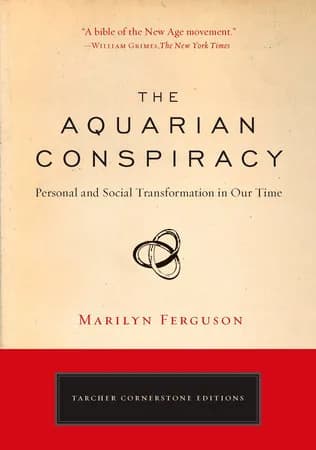
Spending is an opiate to many people, a balm to disappointments, frustrations, emptiness. If the individual transforms that inner distress, there is less need for drugs and distractions.
Gandhi carried the concept of the powerful committed minority into the twentieth century, first gaining recognition of the rights of Indians living in South Africa and then achieving India's independence from British domination. "It is a superstitious and ungodly thing to believe that an act of a majority binds a minority," he said. "It is not numbers that count but quality.... I do not regard the force of numbers as necessary in a just cause."
It's like the old dilemma: You can't get a job without experience, but you can't get experience because no one will give you a job.
Generation after generation, humankind fights to preserve the status quo, maintaining "better the devil you know than the devil you don't know," a bit of folk cynicism that assumes the unknown to be dangerous. p. 197
Satyagraha is the strategy of those who reject solutions that compromise the freedom or integrity of any participant. Gandhi always said it is the weapon of the strong because it requires heroic restraint and the courage to forgive. He turned the whole idea of power upside down. When he visited the mountain hideout of Indian militants and saw their guns, he said, "You must be very frightened." p. 200
Satyagraha derives its power from two apparently opposite attributes: fierce autonomy and total compassion. It says, in effect: I will not coerce you. Neither will I be coerced by you. If you behave unjustly, I will not oppose you by violence (bodyforce) but by the force of truth—the integrity of my beliefs. My integrity is evident in my willingness to suffer, to endanger myself, to go to prison, even to die if necessary. But I will not cooperate with injustice.
If we are not learning and teaching we are not awake and alive. Learning is not only like health, it is health. p. 282
Making a life, not just a living, is essential to one seeking wholeness. Our hunger turns out to be for something different, not something more. p. 323
Long before Thomas Kuhn observed that new ideas may have to wait for a new generation's acceptance, folk wisdom made this bittersweet point. A Hebrew proverb warns, Do not confine your children to your own learning, for they were born in another time. Karl Pribram once commented that a new generation will learn about paradox in the early grades and will grow up understanding concepts of primary and secondary levels of reality. p. 321
Inner listening makes clearer to us what we really want, as distinct from what we have been talked into, and it might not have a price tag. We may also discover that "ownership" is in some sense an illusion, that holding on to things can keep us from freely enjoying them. Greater awareness may give us new appreciation for simple things.
There are no passengers on Spaceship Earth. Everybody's crew.
Or, as Kazantzakis expressed it, the real meaning of enlightenment is "to gaze with undimmed eyes on all darknesses."