Leafy Quotes
Recently added
The newest book quotes in the Leafy Quotes collection — passages readers have just added, each with its author, book and the page it came from.
So what's to be said … for a curriculum devoted to a study of a more-or-less-agreed-upon roster of "the best that has been thought and said," in Matthew Arnold's famous formulation — or at least as representatively much of that Best as the ever-evolving consensus of a good college faculty believes can be fruitfully addressed between undergraduate matriculation and the baccalaureate?Well: what's to be said for it, needless to say, is that it not only edifies and instructs — any good old curriculum does that — but permits discourse within a shared frame of reference richer and more stable than this season's pop music, films, and TV shows, which a colleague of mine used to lament were the only points of cultural reference that he could assume to be shared by his undergraduate students.
p. 185
Humans have spent (10k+) years learning to fight and debate with the other side, and almost no time learning to listen and empathize.
p. 18
[R]eading a splendid writer, or even just a very entertaining writer, is not a particularly passive business. An accomplished artist is giving us his or her best shots, in what she or he regards as their most effective sequence—of words, of actions, of foreshadowings and plot-twists and insights and carefully prepared dramatic moments. It's up to us to respond to those best shots with our minds and hearts and spirits and our accumulated experience of life and of art.
p. 27
'Tis e'er the lot of the innocent in the world to fly to the wolf for succor from the lion.
When either sex suppresses the expression of feelings, it’s almost always b/c they don’t feel there is a safe environment to express them.
p. 16
A man fears that conflict with his wife will lead to less intimacy, not more intimacy.
p. 17
More history's made by secret handshakes than by battles, bills, and proclamations.
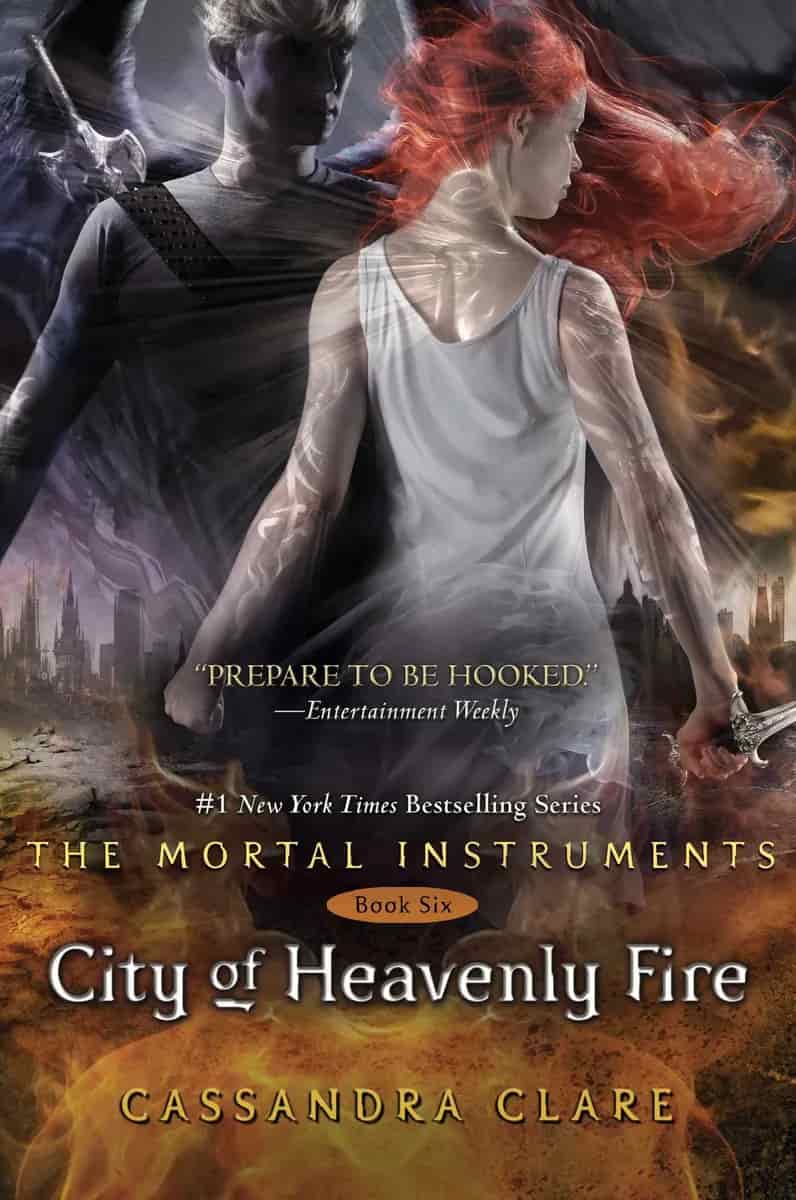
"I feel a kinship with you, too, you who have lost both brother and father. I know you have been judged and spoken of as the daughter of Valentine Morgenstern, and now the sister of Jonathan. There will always be those who want to tell you who you are based on your name or the blood in your veins. Do not let people decide who you are. Decide for yourself. That freedom is not a gift; it is a birthright. I hope that you and Jace will use it."
[T]o a greater or lesser extent our knowledge even of close kin is often fragmentary, inferred like a fossil skeleton or an ancient vase from whatever always-limited experience and shards of memory we have of them.
p. 297
[B]y writing an Aenead that combines an Odyssey with an Iliad, Virgil gives the impression of wanting to outdo the Homer of whom he is the self-conscious heir and to whom his Latin epic is also a homage, just as Augustan Rome is at once the cultural heir and political master of classical Greece. You want to be a great epic poet? Here are your models. Virgil follows them—programmatically but not slavishly—and because he happens to be a great epic poet, his Aenead turns out to be not a monumental Case-1 imitation of the great model, but a great epic poem. Thirteen centuries later, Dante compounds the stunt, taking as his literal and figurative guide not "unselfconscious" Homer but self-conscious (and Homer-conscious) Virgil, and not only scripts himself into the wandering hero role but orchestrates his own welcome … into the company of the immortals—in a Limbo, moreover, where they must ineluctably remain, but from which he will proceed through Purgatory to Paradise. Talk about chutzpah! Happening to be a great poet, Dante brings the thing off.
p. 54
In more than thirty years of conducting workshops, no one has ever said to me, “Warren, I want a divorce – my partner understands me.”
p. 15
Our choice of partners is perhaps the clearest single statement of our choice of values. Therefore, when we blame our partner for anything, we should really be confronting ourselves. Not as in “Yes, I made a bad choice,” but as in “How does this choice reflect my values?”
p. 17