 Leafy Quotes
Recently added
The newest book quotes in the Leafy Quotes collection — passages readers have just added, each with its author, book and the page it came from.
Just you think first, and don't bother to speak afterward, either.
p. 71
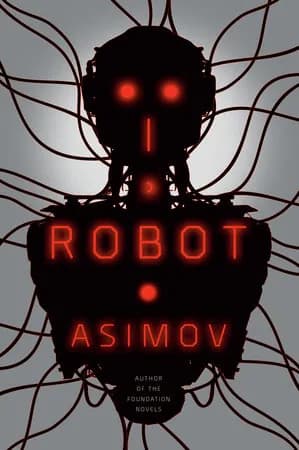
“You can prove anything you want by coldly logical reason—if you pick the proper postulates. We have ours and Cutie [robot QT-1] has his.”
“Then let’s get at those postulates in a hurry. The storm’s due tomorrow.”
Powell sighed wearily. “That’s where everything falls down. Postulates are based on assumptions and adhered to by faith. Nothing in the Universe can shake them. ...”
p. 63
Francis Quinn was a politician of the new school. That, of course, is a meaningless expression, as are all expressions of the sort. Most of the “new schools” we have were duplicated in the social life of ancient Greece, and perhaps, if we knew more about it, in the social life of ancient Sumeria and in the lake dwellings of prehistoric Switzerland as well.
p. 148
Slickness of presentation didn’t imply comprehensiveness of knowledge.
p. 77
“You’re the U. S. Robot’s psychologist, aren’t you?”
“Robopsychologist, please.”
“Oh, are robots so different from men, mentally?”
“Worlds different.” She allowed herself a frosty smile, “Robots are essentially decent.”
p. 151
When the pious fools come up against the godless pagans who own Judea, the result is what might be called diplomatic incidents.
p. 172
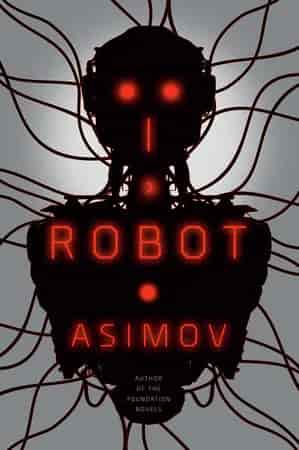
"Why, Stephen, if I am right, it means that the Machine is conducting our future for us not only simply in direct answer to our direct questions, but in general answer to the world situation and to human psychology as a whole. And to know that may make us unhappy and may hurt our pride. The Machine cannot, must not, make us unhappy.
"Stephen, how do we know what the ultimate good of Humanity will entail? We haven't at our disposal the infinite factors that the Machine has at its! Perhaps, to give you a not unfamiliar example, our entire technical civilization has created more unhappiness and misery than it has removed. Perhaps an agrarian or pastoral civilization, with less culture and less people would be better. If so, the Machines must move in that direction, preferably without telling us, since in our ignorant prejudices we only know that what we are used to, is good—and we would then fight change. Or perhaps a complete urbanization, or a completely caste-ridden society, or complete anarchy, is the answer. We don't know. Only the Machines know, and they are going there and taking us with them."
"But you are telling me, Susan, that the 'Society for Humanity' is right; and that Mankind has lost its own say in its future."
"It never had any, really. It was always at the mercy of economic and sociological forces it did not understand—at the whims of climate, and the fortunes of war. Now the Machines understand them; and no one can stop them, since the Machines will deal with them as they are dealing with the Society,—having, as they do, the greatest of weapons at their disposal, the absolute control of our economy."
"How horrible!"
"Perhaps how wonderful! Think, that for all time, all conflicts are finally evitable. Only the Machines, from now on, are inevitable!"
p. 192
Maybe it’s a mark of a maturing culture, do you think, that secrets aren’t kept, that truth is told, that things are talked out?
p. 313
“Censorship does raise some very difficult problems, doesn’t it? I’ve always argued that there’s an inverse correlation between a country’s degree of civilisation and the restraints it puts on its press.”
A New English voice from the back of the room cut in: “On that argument, Paris is a more civilised place than Boston.”
“Precisely,” answered Purvis. For once, he waited for a reply.
“OK,” said the New England voice mildly. “I’m not arguing. I just wanted to check.”
p. 500
We have no idea what waits for us out there. We did not choose this situation, and whatever manner of creature or accident has stranded us here did not take much notice of our welfare. I would say nice moral questions are beside the point, and that pragmatism is the order of the day.
p. 181
You won’t be an artist if you live a thousand years. You’re merely an expert, and you know it. Those who can—do, those who can’t—criticise.
p. 294
Great art and domestic bliss are mutually incompatible. Sooner or later, you'll have to make your choice.
p. 298