Leafy Quotes
Recently added
The newest book quotes in the Leafy Quotes collection — passages readers have just added, each with its author, book and the page it came from.
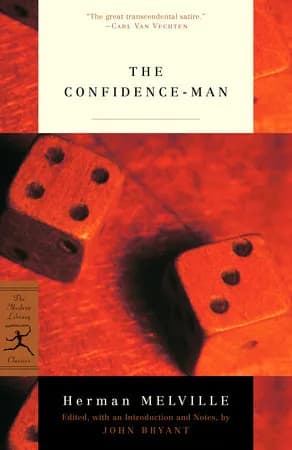
There is no bent of heart or turn of thought which any man holds by virtue of an unalterable nature or will. Even those feelings and opinions deemed most identical with eternal right and truth, it is not impossible but that, as personal persuasions, they may in reality be but the result of some chance tip of Fate's elbow in throwing her dice. For, not to go into the first seeds of things, and passing by the accident of parentage predisposing to this or that habit of mind, descend below these, and tell me, if you change this man's experiences or that man's books, will wisdom go surety for his unchanged convictions? As particular food begets particular dreams, so particular experiences or books particular feelings or beliefs. I will hear nothings of that fine babble about development and its laws; there is no development in opinion and feeling but the developments of time and tide. You may deem all this talk idle, Frank; but conscience bids me show you how fundamental the reasons for treating you as I do."
A reply must in civility be made to a certain voice which methinks I hear, that, in view of past chapters, and more particularly the last, where certain antics appear, exclaims: How unreal all this is! Who did ever dress or act like your cosmopolitan? And who, it might be returned, did ever dress or act like harlequin?
Strange, that in a work of amusement, this severe fidelity to real life should be exacted by any one, who, by taking up such a work, sufficiently shows that he is not unwilling to drop real life, and turn, for a time, to something different. Yes, it is, indeed, strange that any one should clamor for the thing he is weary of; that any one, who, for any cause, finds real life dull, should yet demand of him who is to divert his attention from it, that he should be true to that dullness.
Pardon me, but you must admit, that just now, an unpleasant distrust, however vague, was yours. Ah, shallow as it is, yet, how subtle a thing is suspicion, which at times can invade the humanest of hearts and wisest of heads. But, enough. My object, sir, in calling your attention to this stock, is by way of acknowledgment of your goodness. I but seek to be grateful; if my information leads to nothing, you must remember the motive.
Yes, learn from me that, though the sorrows of the world are great, its wickedness — that is, its ugliness — is small.
"QUITE AN ORIGINAL:" A phrase, we fancy, rather oftener used by the young, or the unlearned, or the untraveled, than by the old, or the well-read, or the man who has made the grand tour. Certainly, the sense of originality exists at its highest in an infant, and probably at its lowest in him who has completed the circle of the sciences.
Now, young friend, perhaps you think that Tacitus, like me, is only melancholy; but he's more — he's ugly. A vast difference, young sir, between the melancholy view and the ugly. The one may show the world still beautiful, not so the other. The one may be compatible with benevolence, the other not. The one may deepen insight, the other shallows it.
Well, there is sorrow in the world, but goodness too; and goodness that is not greenness, either, no more than sorrow is.
Admit, as you must, that mankind is not mad, and my project is practicable. For, what creature but a madman would not rather do good than ill, when it is plain that, good or ill, it must return upon himself?
If reason be judge, no writer has produced such inconsistent characters as nature herself has. It must call for no small sagacity in a reader unerringly to discriminate in a novel between the inconsistencies of conception and those of life as elsewhere. Experience is the only guide here; but as no one man can be coextensive with what is, it may be unwise in every case to rest upon it.
For much the same reason that there is but one planet to one orbit, so can there be but one such original character to one work of invention.
Two would conflict to chaos. In this view, to say that there are more than one to a book, is good presumption there is none at all. But for new, singular, striking, odd, eccentric, and all sorts of entertaining and instructive characters, a good fiction may be full of them. To produce such characters, an author, beside other things, must have seen much, and seen through much: to produce but one original character, he must have had much luck.
I had seen a great deal of barristers by now. I realized that their profession was closely akin to that of actors, and that insincerity was the stock-in-trade of most of them. But how could they be sincere, alternating as they did between Crown and defence, knowing the tricks of both sides? It would be as unreasonable to expect sincerity from a prostitute. Year in, year out, these men stood, now on one side, now on the other, pleading the cause of the Crown and criminal with equal vehemence. At the end of a long career at the Bar they must have become like stones, washed clean of all sympathy, all hope for humanity, all regard for truth – and it was then, by a singular stroke of irony, that they were made into judges.
p. 88
Man came into this world, not to sit down and muse, not to befog himself with vain subtleties, but to gird up his loins and to work. Mystery is in the morning, and mystery in the night, and the beauty of mystery is everywhere; but still the plain truth remains, that mouth and purse must be filled. If, hitherto, you have supposed me a visionary, be undeceived. I am no one-ideaed one, either; no more than the seers before me.