 Leafy Quotes
Recently added
The newest book quotes in the Leafy Quotes collection — passages readers have just added, each with its author, book and the page it came from.
Enterrado junto al cocotero hallarás más tarde
el cuchillo que escodí allí por temor de que me mataras,
y ahora repentinamente quisiera oler su acero de cocina
acostumbrado al peso de tu mano y al brillo de tu pie:
bajo la humedad de la tierra, entre las sordas raíces,
de los lenguajes humanos el pobre sólo sabría tu nombre,
y la espesa tierra no comprende tu nombre
hecho de impenetrables y substancias divinas.
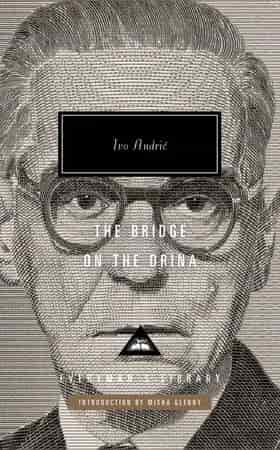
The people were divided into the persecuted and those who persecuted them. That wild beast, which lives in man and does not dare to show itself until the barriers of law and custom have been removed, was now set free. The signal was given, the barriers were down. As has so often happened in the history of man, permission was tacitly granted for acts of violence and plunder, even for murder, if they were carried out in the name of higher interests, according to established rules, and against a limited number of men of a particular type and belief. A man who saw clearly and with open eyes and was then living could see how this miracle took place and how the whole of a society could, in a single day, be transformed. In a few minutes the business quarter, based on centuries of tradition, was wiped out. It is true that there had always been concealed enmities and jealousies and religious intolerance, coarseness and cruelty, but there had also been courage and fellowship and a feeling for measure and order, which restrained all these instincts within the limits of the supportable and, in the end, calmed them down and submitted them to the general interest of life in common. Men who had been leaders in the commercial quarter for forty years vanished overnight as if they had all died suddenly, together with the habits, customs and institutions which they represented.
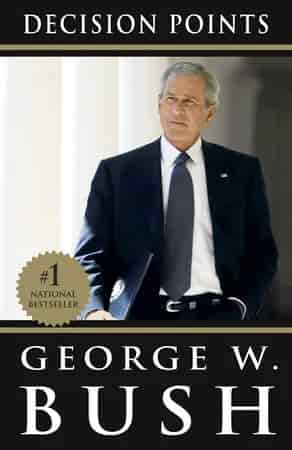
We flew to Crawford that night and were up at dawn the next morning for what Laura had termed "the afterlife." I was struck by the calm. There was no CIA briefing to attend and no blue sheet from the Situation Room. I felt like I had gone from a hundred miles an hour to about ten. I had to force myself to relax. I would read the news and instinctively think about how we would have to respond. Then I remembered that decision was on someone else's desk.
p. 475
Barack and Michelle Obama arrived on the North Portico just before 10:00 a.m. Laura and I had invited them for a cup of coffee in the Blue Room, just as Bill and Hillary Clinton had done for us eight years earlier. The Obamas were in good spirits and excited about the journey ahead. Meanwhile, in the Situation Room, homeland security aides from both our teams monitored intelligence on a terrorist threat to Washington. It was a stark reminder that evil men still want to harm our country, no matter who is serving as president. After our visit, we climbed into the motorcade for the trip up Pennsylvania Avenue. I thought back to the drive I'd made with Bill Clinton eight years earlier. That day in January 2001, I could never have imagined what would unfold over my time in office. I knew some of the decisions I had made were not popular with many of my fellow citizens. But I felt satisfied that I had been willing to make the hard decisions, and I had always done what I believed was right. At the Capitol, Laura and I took our seats for the Inauguration. I marveled at the peaceful transition of power, one of the defining features of our democracy. The audience was riveted with anticipation for he swearing-in. Barack Obama had campaigned on hope, and that was what he had given many Americans. For our new president, the Inauguration was a thrilling beginning. For Laura and me, it was an end. It was another president's turn, and I was ready to go home.
p. 474
The common people remember and tell of what they are able to grasp and what they are able to transform into legend. Anything else passes them by without deeper trace, with the dumb indifference of nameless natural phenomena, which do not touch the imagination or remain in the memory. This hard and long building process was for them a foreign task undertaken at another's expense. Only when, as the fruit of this effort, the great bridge arose, men began to remember details and to embroider the creation of a real, skilfully built and lasting bridge with fabulous tales which they well knew how to weave and to remember.
Si me preguntáis en dónde he estado
debo decir "Sucede."
Debo de hablar del suelo que oscurecen las piedras,
del río que durando se destruye:
no sé sino las cosas que los pájaros pierden,
el mar dejado atrás, o mi hermana llorando.
¿Por qué tantas regiones, por qué un día
se junta con un día? ¿Por qué una negra noche
se acumula en la boca? ¿Por qué muertos?
From the beginning, I knew the public reaction to my decisions would be colored by whether there was another attack. If none happened, whatever I did would probably look like an overreaction. If we were attacked again, people would demand to know why I hadn't done more. That is the nature of the presidency. Perceptions are shaped by the clarity of hindsight. In the moment of decision, you don't have that advantage. On 9/11, I vowed that I would do what it took to protect America, within the Constitution and laws of our nation. History can debate the decisions I made, the policies I chose, and the tools I left behind. But there can be no debate about one fact: After the nightmare of September 11, America went seven and a half years without another successful terrorist attack on our soil. If I had to summarize my most meaningful accomplishment as president in one sentence, that would be it.
p. 181
Lost in his thoughts he looked out from his shop at the shining loveliness of that first day of March. Opposite him, a little to the side, stood the eternal bridge, everlastingly the same; through its white arches could be seen the green, sparkling, tumultous waters of the Drina, so that they seemed like some strange diadem in two colours which sparkled in the sun.
Perhaps the most concise summary of enlightenment would be: transcending dualism. … Dualism is the conceptual division of the world into categories … human perception is by nature a dualistic phenomenon—which makes the quest for enlightenment an uphill struggle, to say the least.
If men cease to believe that they will one day become gods then they will surely become worms.
p. 235
One day I heard that The Eye had left Mexico. I wasn't surprised that he hadn't said good-bye. The Eye never said good-bye to anyone. I never said good-bye to anyone either.
That night when he went back to his hotel, he wept for his dead children and all the other castrated boys, for his own lost youth, for those who were young no longer and those who died young, for those who fought for Salvador Allende and those who were too scared to fight.