Leafy Quotes
Recently added
The newest book quotes in the Leafy Quotes collection — passages readers have just added, each with its author, book and the page it came from.
After everything that's happened, how can the world still be so beautiful? Because it is.
Everybody knew. Nobody admitted to knowing. If other people began to discuss it, you tuned them out, because what they were saying was both so obvious and so unthinkable.
We are using up the Earth. It is almost gone.
He doesn't know which is worse, a past he can't regain or a present that will destroy him if he looks at it too clearly. Then there's the future. Sheer vertigo.
“we must be a beacon of hope, because if you tell people there's nothing they can do, they will do worse than nothing.”
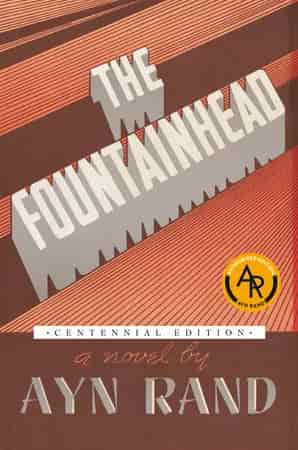
"As poles of good and evil, he was offered two conceptions: egoism and altruism. Egoism was held to mean the sacrifice of others to self. Altruism—the sacrifice of self to others. This tied man irrevocably to other men and left him nothing but a choice of pain: his own pain borne for the sake of others or pain inflicted upon others for the sake of self. […] Man was forced to accept masochism as his ideal—under the threat that sadism was his only alternative."
p. 739
"Every major horror of history was committed in the name of an altruistic motive."
p. 741
"The creators were not selfless. It is the whole secret of their power—that it was self-sufficient, self-motivated, self-generated. A first cause, a fount of energy, a life force, a Prime Mover. The creator served nothing and no one. He had lived for himself. And only by living for himself was he able to achieve the things which are the glory of mankind. Such is the nature of achievement."
p. 737
All stories are about wolves. All worth repeating, that is. Anything else is sentimental drivel. …Think about it. There's escaping from the wolves, fighting the wolves, capturing the wolves, taming the wolves. Being thrown to the wolves, or throwing others to the wolves so the wolves will eat them instead of you. Running with the wolf pack. Turning into a wolf. Best of all, turning into the head wolf. No other decent stories exist.
"Men have been taught that their first concern is to relieve the suffering of others. […] To make that the highest test of virtue is to make suffering the most important part of life. Then man must wish to see others suffer—in order that he may be virtuous. Such is the nature of altruism."
p. 739
"Man cannot survive except through the use of his mind. He comes on earth unarmed. His brain is his only weapon. Animals obtain food by force. Man has no claws, no fangs, no horns, no great strength of muscle. He must plant his food or hunt it. To plant, he needs a process of thought. To hunt, he needs weapons, and to make weapons—a process of thought. From this simplest necessity to the highest religious abstraction, from the wheel to the skyscraper, everything we are and everything we have comes from a single attribute of man—the function of his reasoning mind.
But the mind is an attribute of the individual. There is no such thing as a collective brain. There is no such thing as a collective thought. An agreement reached by a group of men is only a compromise or an average drawn upon many individual thoughts. It is a secondary consequence. The primary act—the process of reason—must be performed by each man alone. We can divide a meal among many men. We cannot digest it in a collective stomach. No man can use his lungs to breathe for another man. No man can use his brain to think for another. All the functions of body and spirit are private. They cannot be shared or transferred."
p. 737
"The basic need of the creator is independence. The reasoning mind cannot work under any form of compulsion. It cannot be curbed, sacrificed or subordinated to any consideration whatsoever. It demands total independence in function and in motive. To a creator, all relations with men are secondary."
p. 738
"I came here to say that I do not recognize anyone's right to one minute of my life. Nor to any part of my energy. Nor to any achievement of mine. No matter who makes the claim, how large their number or how great their need."
p. 743