Leafy Quotes
Recently added
The newest book quotes in the Leafy Quotes collection — passages readers have just added, each with its author, book and the page it came from.
"reading is at the beginning of the social contract"
I never talked to anyone about my reading; the need to share came afterwords.
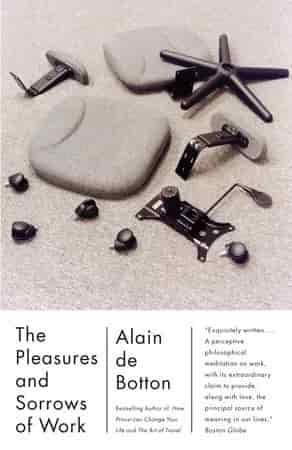
I … thought about societies where exceptional fortunes are built up in industries with very little connection to out sincere and significant needs, industries where it is difficult to escape from the disparity between a seriousness of means and a triviality of ends.
p. 102
Death is hard to keep in mind when there is work to be done. … Work does not by its nature permit us to do anything other than take it too seriously. It must destroy our sense of perspective, and we should be grateful to it for precisely this reason, for allowing us to mingle ourselves promiscuously with events, for letting us wear thoughts of our own death and the destruction of our enterprises with beautiful lightness, as mere intellectual propositions. … We function of the basis of a necessary myopia. Therein is the sheer energy of existence, a blind will no less impressive than that which we find in a moth arduously crossing a window ledge, … refusing to contemplate the broader scheme in which he will be dead by nightfall. The arguments for our triviality and vulnerability are too obvious, too well known and tedious to rehearse. What is interesting is that we may take it upon ourselves to approach tasks with utter determination and gravity even when their wider non-sense is clear. The impulse to exaggerate the significance of what we are doing, far from being an intellectual error, is really life itself coursing through us.
p. 324
I quickly learned that reading is cumulative and proceeds by geometric progression: each new reading builds upon whatever the reader has read before.
It would be foolish to describe the logistics hub as merely ugly, for it has the horrifying, soulless, immaculate beauty characteristic of many of the workplaces of the modern world.
p. 39
Socrates affirmed that only that which the reader already knows can be sparked by a reading, and that the knowledge cannot be acquired through dead letters.
Nothing moves except my eyes and my hand occasionally turning a page, and yet something not exactly defined by the word "text" unfurls, progresses, grows and takes root as I read. But how does this process take place?
By travelling across frontiers, on horseback and in the imagination, Montaigne invited us to to exchange local prejudices and the self division they induced for less constraining identities as citizens of the world.
p. 146
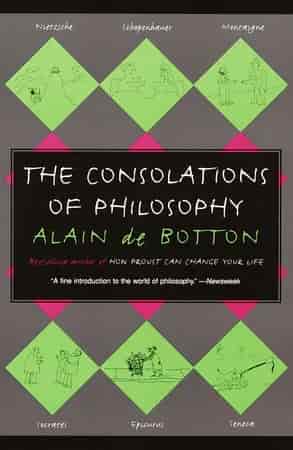
To cut out every negative root would simultaneously mean choking off positive elements that might arise from it further up the stem of the plant.
We should not feel embarrassed by our difficulties, only by our failure to grow anything beautiful from them.
p. 228
In their different ways, art and philosophy help us, in Schopenhauer's words, to turn pain into knowledge.
p. 199
The great defect, for Chamfort, consisted in the public’s reluctance to submit its thinking to the rigors of rational examination, and its tendency to rely instead on intuition, emotion, and custom. “One can be certain that every generally held idea, every received notion, will be an idiocy, because it has been able to appeal to a majority,” the Frenchman observed, adding that what is flatteringly called common sense is usually little more than common nonsense, suffering as it does from simplification and illogicality, prejudice and shallowness: “The most absurd customs and the most ridiculous ceremonies are everywhere excused by an appeal to the phrase, but that’s the tradition.”
p. 116