Leafy Quotes
Recently added
The newest book quotes in the Leafy Quotes collection — passages readers have just added, each with its author, book and the page it came from.
The fundamental core of contemporary Darwinism, the theory of DNA-based reproduction and evolution, is now beyond dispute among scientists. It demonstrates its power every day, contributing crucially to the explanation of planet-sized facts of geology and meteorology, through middle-sized facts of ecology and agronomy, down to the latest microscopic facts of genetic engineering. It unifies all of biology and the history of our planet into a single grand story. Like Gulliver tied down in Lilliput, it is unbudgable, not because of some one or two huge chains of argument that might — hope against hope — have weak links in them, but because it is securely tied by thousands of threads of evidence anchoring it to virtually every other area of human knowledge. New discoveries may conceivably lead to dramatic, even "revolutionary" shifts in the Darwinian theory, but the hope that it will be "refuted" by some shattering breakthrough is about as reasonable as the hope that we will return to a geocentric vision and discard Copernicus.
Philosophers are never quite sure what they are talking about — about what the issues really are — and so often it takes them rather a long time to recognize that someone with a somewhat different approach (or destination, or starting point) is making a contribution.
p. 350
From what can "ought" be derived. The most compelling answer is this: ethics must be somehow based on an appreciation of human nature — on a sense of what a human being is or might be, and on what a human being might want to have or want to be. If that is naturalism, then naturalism is no fallacy. No one could seriously deny that ethics is responsive to such facts about human nature. We may just disagree about where to look for the most compelling facts about human nature -n novels, in religious texts, in psychological experiments, in biological or anthropological investigations. The fallacy is not naturalism but, rather, any simple-minded attempt to rush from facts to values. In other words, the fallacy is greedy reductionism of values to facts, rather than reductionism considered more circumspectly, as the attempt to unify our world-view so that out ethical principles don't clash irrationally with the way the world is.
[I]n all mammalian species that have so far been carefully studied, the rate at which their members engage in the killing of conspecifics is several thousand times greater than the highest homicide rate in any American city.
A prosthetically enhanced imagination is still liable to failure, especially if it is not used with sufficient rigor.
Are zombies possible? They're not just possible, they're actual. We're all zombies.* Nobody is conscious – not in the systematically mysterious way that supports such doctrines as epiphenomenalism.* It would be an act of desperate intellectual dishonesty to quote this assertion out of context!
p. 406
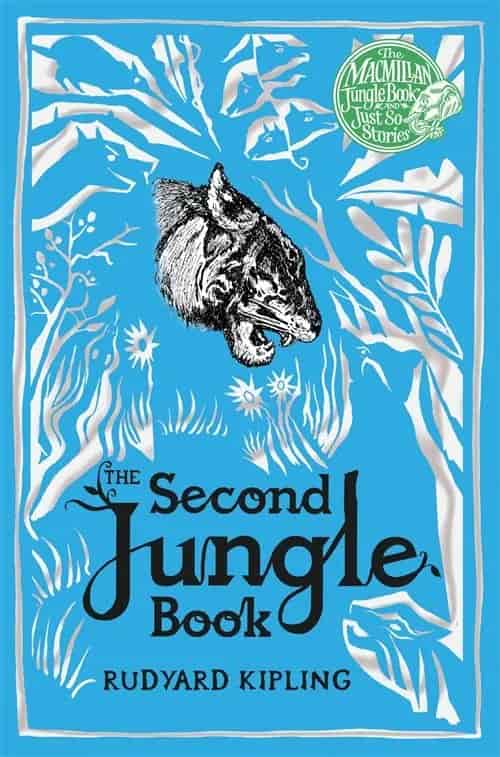
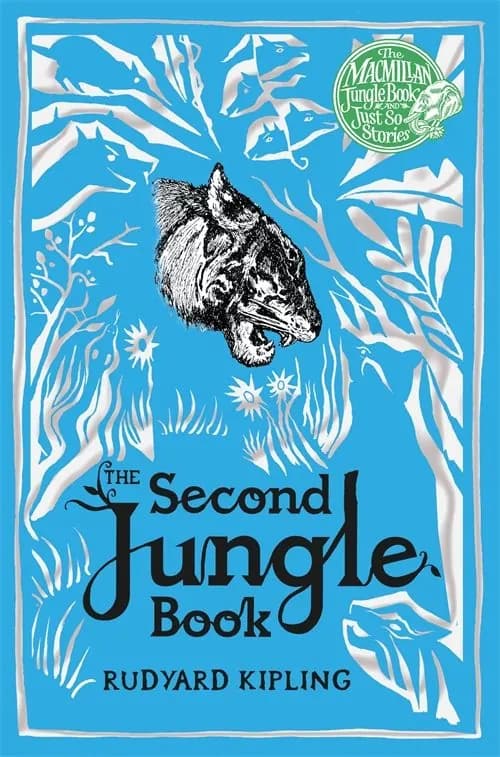
I am the cat who walks by himself, and all places are alike to me.
I keep six honest serving-men:
(They taught me all I knew)
Their names are What and Where and When
And How and Why and Who.
Cities and Thrones and Powers,
Stand in Time's eye,
Almost as long as flowers,
Which daily die:
But, as new buds put forth
To glad new men,
Out of the spent and unconsidered Earth,
The Cities rise again.
Now these are the Laws of the jungle, and many and mighty are they;
But the head and the hoof of the Law and the haunch and the hump is—Obey!
Now this is the Law of the Jungle—as old and as true as the sky;
And the Wolf that shall keep it may prosper, but the Wolf that shall break it must die.As the creeper that girdles the tree trunk, the Law runneth forward and back;
For the strength of the Pack is the Wolf, and the strength of the Wolf is the Pack.
‘There is none like to me!' says the Cub in the pride of his earliest kill;
But the jungle is large and the Cub he is small. Let him think and be still.