Leafy Quotes
Recently added
The newest book quotes in the Leafy Quotes collection — passages readers have just added, each with its author, book and the page it came from.
For many years, I have been moved by the blue at the far edge of what can be seen, that color of horizons, of remote mountain ranges, of anything far away. The color of that distance is the color of an emotion, the color of solitude and of desire, the color of there seen from here, the color of where you are not. And the color of where you can never go.
I believe in hope as an act of defiance, or rather as the foundation for an ongoing series of acts of defiance, those acts necessary to bring about some of what we hope for while we live by principle in the meantime. There is no alternative, except surrender. And surrender not only abandons the future, it abandons the soul. (p137)
What lies ahead seems unlikely; when it becomes the past, it seems inevitable.
Writing is lonely, it’s an intimate talk with the dead, with the unborn, with the absent, with strangers, with the readers who may never come to be and who even if they read you will do so weeks, years, decades later. An essay, a book, is one statement in a long conversation you could call culture or history; you are answering something or questioning something that may have fallen silent long ago, and the response to your words may come long after you’re gone and never reach your ears, if anyone hears you in the first place. (p64)
Inside the word "emergency" is "emerge"; from an emergency new things come forth. The old certainties are crumbling fast, but danger and possibility are sisters. (p12)
Cause-and-effect assumes history marches forward, but history is not an army. It is a crab scuttling sideways, a drip of soft water wearing away stone, an earthquake breaking centuries of tension. Sometimes one person inspires a movement, or her words do decades later, sometimes a few passionate people change the world; sometimes they start a mass movement and millions do; sometimes those millions are stirred by the same outrage or the same ideal, and change comes upon us like a change of weather. All that these transformations have in common is that they begin in the imagination, in hope. To hope is to gamble. It's to bet on the future, on your desires, on the possibility that an open heart and uncertainty is better than gloom and safety. To hope is dangerous, and yet it is the opposite of fear, for to live is to risk. (p4)
The revolutionary days I have been outlining are days in which hope is no longer fixed on the future: it becomes an electrifying force in the present. (p108)
What distinguishes a technological world is that the terms of nature are obscured; one need not live quite in the present or the local.
The assumption that whatever we now believe is just common sense, or what we always knew, is a way to save face. It's also a way to forget the power of a story and of a storyteller, the power in the margins, and the potential for change.
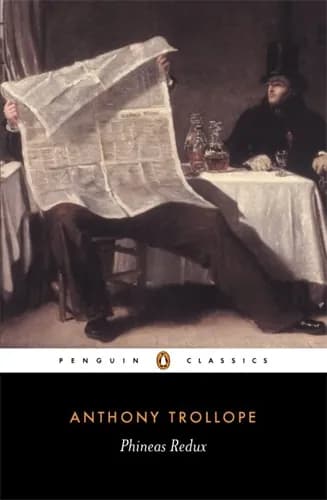
“Isn‘t there some trouble about money?”
“They wouldn‘t be very rich, Duchess.”
“What a blessing for them! But then, perhaps, they‘d be very poor.”
“They would be rather poor.”
“Which is not a blessing.”
The natural man will probably be manly. The affected man cannot be so.
The property of manliness in a man is a great possession, but perhaps there is none that is less understood, — which is more generally accorded where it does not exist, nor more frequently disallowed where it prevails.