Leafy Quotes
Recently added
The newest book quotes in the Leafy Quotes collection — passages readers have just added, each with its author, book and the page it came from.
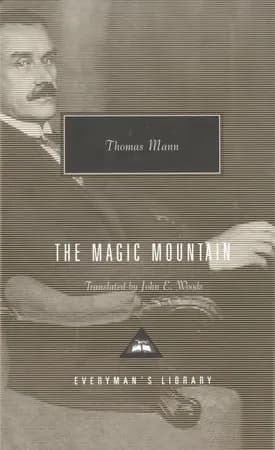
What was life? It was warmth, the warmth generated by a form-preserving instability, a fever of matter, which accompanied the process of ceaseless decay and repair of protein molecules that were too impossibly ingenious in structure.
One always has the idea of a stupid man as perfectly healthy and ordinary, and of illness as making one refined and clever and unusual.
Irony, forsooth! Guard yourself, Engineer, from the sort of irony that thrives up here; guard yourself altogether from taking on their mental attitude! Where irony is not a direct and classic device of oratory, not for a moment equivocal to a healthy mind, it makes for depravity, it becomes a drawback to civilization, an unclean traffic with the forces of reaction, vice and materialism.
Hans Castorp loved music from his heart; it worked upon him much the same way as did his breakfast porter, with deeply soothing, narcotic effect, tempting him to doze.
There is both rhyme and reason in what I say, I have made a dream poem of humanity. I will cling to it. I will be good. I will let death have no mastery over my thoughts. For therein lies goodness and love of humankind, and in nothing else.
I, for one, have never in my life come across a perfectly healthy human being.
I never can understand how anyone can not smoke — it deprives a man of the best part of life … with a good cigar in his mouth a man is perfectly safe, nothing can touch him — literally.
The invention of printing and the Reformation are and remain the two outstanding services of central Europe to the cause of humanity.
The beautiful word begets the beautiful deed.
The gods we stand by are the gods we need and can use, the gods whose demands on us are reinforcements of our demands on ourselves and on one another. What I then propose to do is, briefly stated, to test saintliness by common sense, to use human standards to help us decide how far the religious life commends itself as an ideal kind of human activity . ... It is but the elimination of the humanly unfit, and the survival of the humanly fittest, applied to religious beliefs; and if we look at history candidly and without prejudice, we have to admit that no religion has ever in the long run established or proved itself in any other way. Religions have approved themselves; they have ministered to sundry vital needs which they found reigning. When they violated other needs too strongly, or when other faiths came which served the same needs better, the first religions were supplanted.
But petitional prayer is only one department of prayer; and if we take the word in the wider sense as meaning every kind of inward communion or conversation with the power recognized as divine, we can easily see that scientific criticism leaves it untouched. Prayer in this wide sense is the very soul and essence of religion.
We must frankly confess, then, using our empirical common sense and ordinary practical prejudices, that in the world that actually is, the virtues of sympathy, charity, and non-resistance may be, and often have been, manifested in excess. ... You will agree to this in general, for in spite of the Gospel, in spite of Quakerism, in spite of Tolstoi, you believe in fighting fire with fire, in shooting down usurpers, locking up thieves, and freezing out vagabonds and swindlers.