Leafy Quotes
Recently added
The newest book quotes in the Leafy Quotes collection — passages readers have just added, each with its author, book and the page it came from.
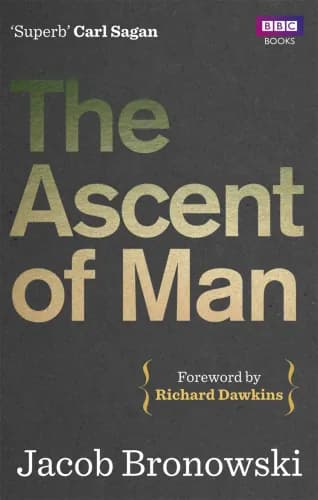
The Principle of Uncertainty is a bad name. In science, or outside of it, we are not uncertain; our knowledge is merely confined, within a certain tolerance. We should call it the Principle of Tolerance. And I propose that name in two senses. First, in the engineering sense: Science has progressed, step by step, the most successful enterprise in the ascent of man, because it has understood that the exchange of information between man and nature, and man and man, can only take place with a certain tolerance. But second, I also use the word, passionately, about the real world. All knowledge – all information between human beings – can only be exchanged within a play of tolerance. And that is true whether the exchange is in science, or in literature, or in religion, or in politics, or in any form of thought that aspires to dogma. It's a major tragedy of my lifetime and yours that scientists were refining, to the most exquisite precision, the Principle of Tolerance – and turning their backs on the fact that all around them, tolerance was crashing to the ground beyond repair. The Principle of Uncertainty or, in my phrase, the Principle of Tolerance, fixed once for all the realization that all knowledge is limited. It is an irony of history that at the very time when this was being worked out, there should rise, under Hitler in Germany and other tyrants elsewhere, a counter-conception: a principle of monstrous certainty. When the future looks back on the 1930's, it will think of them as a crucial confrontation of culture as I have been expounding it – the ascent of man against the throwback to the despots' belief that they have absolute certainty.
The first few days I felt trapped in a constant twilight of vertigo, like in the dream where you're suddenly falling... only I was constantly falling. In moments of fitful sleep I was aware of the dim possibility that I would wake up, truly wake up, and this would not have happened.
p. 80
Fifty years from now, if an understanding of man's origins, his evolution, his history, his progress is not in the common place of the school books, we shall not exist.
I liked to go at night when I thought there was a better chance of finding a fight. I was always looking for a fight. I had not known I was capable of such rage. I knew I had been cheated of a future, but I felt I'd been cheated of a past, too. The underpinnings of my life had been kicked out from under me... and it wasn't just the loss of Neilia and Naomi. All my life I'd been taught about our benevolent God. This is a forgiving God, a just God, a God who knows people make mistakes. This is a God who is tolerant. This is a God who gave us free will to be able to doubt. This was a loving God, a God of comfort. Well, I didn't want to hear anything about a merciful God. No words, no prayer, no sermon gave me ease. I felt God had played a horrible trick on me, and I was angry. I found no comfort in the Church. So I kept walking the dark streets to try to exhaust the rage.
p. 81
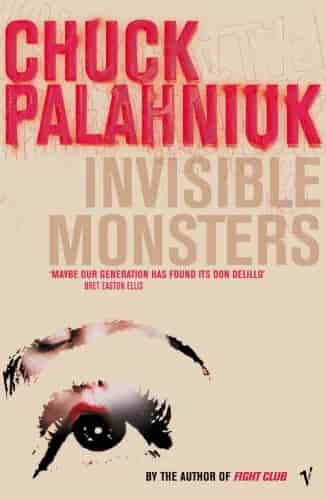
You see, I can handle the baby food and the not talking and being homeless and invisible, but I have to know that I can love somebody. Completely and totally, permanently and without hope of reward, just as an act of will, I will love somebody.
We'll be remembered more for what we destroy than what we create.
The future is just wasted on some people.
I wanted to give up the idea I had any control. Shake things up. To be saved by chaos. To see if I could cope, I wanted to force myself to grow again. To explode my comfort zone.
The truth is I was addicted to being beautiful, and that's not something you just walk away from. Being addicted to all that attention, I had to quit cold turkey.
If I can't be beautiful, I want to be invisible.
Only when we eat up this planet will God give us another.
Of course it's tempting to close one's eyes to history, and instead speculate about the roots of war in some possible animal instinct: as if, like the tiger, we still had to kill to live, or, like the robin redbreast, to defend a nesting territory. But war, organized war, is not a human instinct. It is a highly planned and cooperative form of theft. And that form of theft began 10,000 years ago when the harvesters of wheat accumulated a surplus and the nomads rose out of the desert to rob them of what they themselves could not provide. The evidence for that, we saw, in the walled city of Jericho and its prehistoric tower... That is the beginning of war.