

Quotes
The carnage was over, but there was still a bitter taste in my mouth.
p. 284
I think you're a damn war criminal and you should be tried as one.
p. 266
I believe all Americans are born with certain inalienable rights. As a child of God, I believe my rights are not derived from the Constitution. My rights are not derived from any government. My rights are not denied by any majority. My rights are because I exist. They were given to me and each of my fellow citizens by our creator, and they represent the essence of human dignity....
p. 194
My own father had always said the measure of a man wasn't how many times or how hard he got knocked down, but how fast he got back up.
p. 208
It was that hard; I still feel that way. But I believe that President Bush failed to lead. History will judge him harshly not for the mistakes he made- we all make mistakes- but for the opportunities he squandered.
p. 352
I made a mistake. I underestimated the influence of Vice President Cheney, Secretary of Defense Rumsfeld, and the rest of the neocons; I vastly underestimated their disingenuousness and incompetence. So George W. Bush went to war again, and just the way the neocons wanted him to- without significant international backing.
p. 342
For the world to follow, we must do more than rattle our sabers and demand allegienace to our vision simply because we believe we are right. We must provide a reason for others to aspire to that vision. And that reason must come with more than the repetition of a bumper-sticker phrase about freedom and democracy. It must come with more than the restatement of failed policy. It must come with the wisdom to admit when we are wrong and resolve to change course and get it right.
p. 353
In spite of the president's phone call, I remained a vocal critic of the Bush administration's foreign policy priorities through that summer because I didn't trust most of the people he had around him. The civilians in the Department of Defense were unlike any I'd ever seen. They seemed to think our nation was so powerful that we could simply impose our will on the rest of the world with almost no ill consequence. It seemed to me that Rumsfeld and his chief deputy at Defense, Paul Wolfowitz, were so totally in thrall to that conservative think-tank-generated ideology that they were steering the president down a dangerous path. And they were so intent on overturning President Clinton's foreign policy initiatives that they were losing sight of the bigger goal, which was keeping America safe at home and engaged in doing good in the world.
p. 298
Things never got better, and Rumsfeld and Cheney never got any wiser. It became increasingly clear that those two men had eroded our country's claim to any moral high ground by flouting the Geneva Conventions. They forced policy decisions that allowed the hideous prisoner abuse at Abu Ghraib in Iraq and encouraged the mistreatment of Muslim prisoners at our facility in Guantánamo in Cuba. I wasn't shy about hammering Rumsfeld.
p. 351
Given Iraq's strategic location, its large oil reserves, and the suffering of the Iraqi people, we cannot afford to replace a despot with chaos. It would be a tragedy if we removed a tyrant in Iraq only to leave chaos in its wake.
p. 335
There is never a time when a president can act to stop a tragedy from occurring without being held politically accountable one way or the other. If he does it and fails, he's wrong. If he does it and succeeds, he was never right because it didn't happen. If we go in and stop an act of genocide, we can't prove what we stopped.
p. 281
These were al-Qaeda fighters, the first I'd ever seen up close, and they looked like badasses. As I passed on the outskirts of the grid, many of the prisoners stared directly at me. None of them cowered. I've been in a lot of prisons, but these guys showed a ferocity and a hatred unlike any I'd ever seen.
p. 321
I learned later that the surgeon who put Dole back together after he was so badly injured in World War II was an Armenian whose family had deep memories of the genocidal campaign the Turks had waged against them.
p. 281
I had no place to go. It was up or out.
p. 58
I wasn't built to look the other way because the law demanded it. The law might be wrong.
p. 42
I mark the last days of Hubert Humphrey as the high point of bipartisan decency in my career. Hubert Humphrey died a senator, and in his last months in the Capitol, cancer was wasting him. We all watched it happen. His hair was gone; he was emaciated. He was too diminished to take part in real debate, but he’d show up to vote. He loved the Senate. "The Senate is a place filled with goodwill and good intentions," Humphrey once said, "and if the road to hell is paved with them, then it’s a pretty good detour." In his last days it was like he didn’t want to leave the chamber. He’d stay on the floor late into the night, and he and his friend Senator Barry Goldwater would talk about things they’d accomplished together and separately in the Senate. Politically, the two men could not have been further apart. Humphrey had been the vice presidential candidate in 1964 when Goldwater ran as the Republican presidential nominee. And the Boss’s convention speech that year was a shot across the bow of Gold-waterism. He’d listed the many programs that moderate Republicans in the Senate had voted for, following each with "but not Senator Barry Goldwater." They’d unexpectedly run into each other in an airport on the campaign trail a few weeks later and stopped for a friendly greeting. As they parted, somebody overheard Goldwater say, "Well, keep punching, Hubert."
By the end of 1977, it became increasingly clear that the Boss would not be around much longer. And on the Senate floor one day, Barry Goldwater walked across the aisle and enveloped Hubert Humphrey. Goldwater was so big and Humphrey so frail that Humphrey almost disappeared. The two men stood for a long moment, locked in a hug, and I could see that both men were crying. They made no effort to hide it.
p. 135
Most of all I was numb, but there were moments when the pain cut through like a shard of broken glass. I began to understand how despair led people to just cash it in; how suicide wasn't just an option but a rational option.
p. 80
When seagull droppings landed on my head at a campaign event at Bowers Beach two days before Election Day, I chose to read it as a sign of a coming success.
p. 73
I knew I had to be sure-footed about the issues I was talking about. When you're twenty-nine years old, who the hell is going to think you're credible? It wasn't enough to have ideas; I had to know my facts. I had to demonstrate command from the minute I started running. I understood that was the test I had to pass.
p. 63
We all know- or at least we are told continually- that we are a divided people. And we know there's a degree of truth in it. We have too often allowed our differences to prevail among us. We have too often allowed ambitious men to play off those differences for political gain. We have too often retreated behind our differences when no one really tried to lead us beyond them. But all our differences hardly measure up to the values we all hold in common... I am running for the Senate because... I want to make the system work again, and I am convinced that is what all Americans really want.
Just because our political heroes were murdered does not mean that the dream does not still live, buried deep in our broken hearts.
p. 141
The system wasn't working, and I thought it was time to err on the side of a new model. What might work, I thought, was a system that promoted personal accountability, consistency, and certainty. Congress could say people who committed the same federal crime, under the same circumstances, were going to jail for the same amount of time. We could give judges a narrower set of sentencing guidelines to work with, and felons would be required to pay the same price. We'd be judging the crime, not the person.
p. 123
Sleep was like a phantom I was too tired to chase.
p. 96
I didn't argue that the war in Vietnam was immoral; it was merely stupid and a horrendous waste of time, money, and lives based on a flawed premise.
They didn’t take on the welfare programs directly; they didn’t talk about eliminating welfare. They just kept up a steady drumbeat about welfare cheats and how the federal government was wasting the money taken from hardworking taxpayers.
I’ll give the Republicans this much: It was a mercenary message, but it resonated. And they had taken the easy way out. It required a lot less energy, intelligence, and competence to run against government than to try to make government work. But there was also a blowback effect in Congress: Respect for the institution and civility among its members began to ebb.
p. 134
The fabric of our complex society is woven too tightly to permit any part of it to be damaged without damaging the whole.
p. 64
No matter how well intended our country is, we cannot expect other nations to trust us as much as we trust ourselves.
p. 145
He wanted me to understand two big things: First, that nobody, no group, is above others. Public servants are obliged to level with everybody, whether or not they'll like what he has to say. And second, that politics was a matter of personal honor. A man's word is his bond. You give your word, you keep it. For as long as I can remember, I've had a sort of romantic notion of what politics should be- and can be. If you do politics the right way, I believe, you can actually make people's lives better. And integrity is the minimum ante to get into the game. Nearly forty years after I first got involved, I remain captivated by the possibilities of politics and public service. In fact, I believe- as I know my grandpop did- that my chosen profession is a noble calling.
I think I instinctively understood that my most important duty was to be a target. People were desperate to vent their anger, and if they could yell at a united States senator, all the better. Part of being a public servant, I came to understand in 1978, was absorbing the anger of people who don't know where to turn. If I couldn't solve the problem for them, I had to at least be an outlet.
p. 127
A convicted felon who had strong family ties, a stake in the community, and an education might get probation, while a man who had few family ties, little stake in the community, and little education might draw a ten-year sentence for the same crime.
p. 122
I, too, believe there are natural rights that predate any written political or legal documents; we have these rights merely because we're children of God.
p. 178
There is a great deal of pressure, in the one particular area at least, to prostitute our ideas, if not our integrity.
p. 93
Full disclosure: I do not have absolute faith in the judgment and wisdom of the American people. We're all human, and we can all be misled. When leaders don't level with citizens, we can't expect them to make good judgments. But I do have absolute faith in the heart of the American people. The greatest resource in this country is the grit, the resolve, the courage, the basic decency, and the stubborn pride of its citizens.
The first few days I felt trapped in a constant twilight of vertigo, like in the dream where you're suddenly falling... only I was constantly falling. In moments of fitful sleep I was aware of the dim possibility that I would wake up, truly wake up, and this would not have happened.
p. 80
I kept trying to tell people that just because I was young didn't mean I could speak for all young people.
p. 84
As I pushed through to the podium, I could hear people murmuring under their breath: "There he is... Goddam Biden.... Kill the sonofabitch." And these were my voters- working-class Democrats.
p. 127
A better man might have handled the situation with more grace than I did. A better man would have been able to separate his personal life from his career.
p. 87
I liked to go at night when I thought there was a better chance of finding a fight. I was always looking for a fight. I had not known I was capable of such rage. I knew I had been cheated of a future, but I felt I'd been cheated of a past, too. The underpinnings of my life had been kicked out from under me... and it wasn't just the loss of Neilia and Naomi. All my life I'd been taught about our benevolent God. This is a forgiving God, a just God, a God who knows people make mistakes. This is a God who is tolerant. This is a God who gave us free will to be able to doubt. This was a loving God, a God of comfort. Well, I didn't want to hear anything about a merciful God. No words, no prayer, no sermon gave me ease. I felt God had played a horrible trick on me, and I was angry. I found no comfort in the Church. So I kept walking the dark streets to try to exhaust the rage.
p. 81
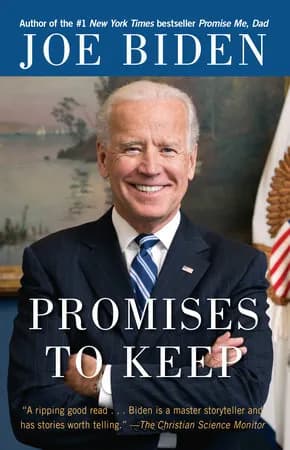
That’s all the quotes.
38 quotes in the collection · come back when we add more