Leafy Quotes
Recently added
The newest book quotes in the Leafy Quotes collection — passages readers have just added, each with its author, book and the page it came from.
By religion, then, I understand a propitiation or conciliation of powers superior to man which are believed to direct and control the course of nature and of human life.
If the test of truth lay in a show of hands or a counting of heads, the system of magic might appeal, with far more reason than the Catholic Church, to the proud motto, Quod semper, quod ubique, quod ab omnibus [always, everywhere, and by all], as the sure and certain credential of its own infallibility.
The old poets little knew what comfort they could be to a man.
Tact is after all a kind of mind-reading.
The road was new to me, as roads always are, going back.
Captain Littlepage had overset his mind with too much reading.
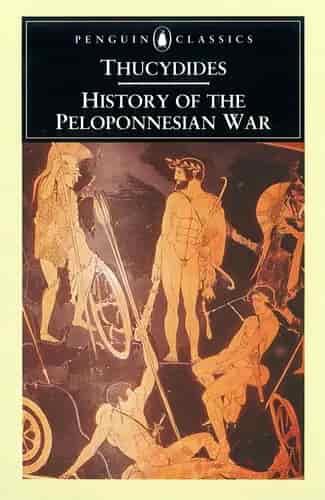
The dead lay unburied, and each man as he recognized a friend among them shuddered with grief and horror; while the living whom they were leaving behind, wounded or sick, were to the living far more shocking than the dead, and more to be pitied than those who had perished.
'Tain't worthwhile to wear a day all out before it comes.
Yes'm, old friends is always best, 'less you can catch a new one that's fit to make an old one out of.
And the rarest dangers are those in which failure brings little loss and success the greatest advantage.
If we analyze the principles of thought on which magic is based, they will probably be found to resolve themselves into two: first, that like produces like, or that an effect resembles its cause; and, second, that things which have once been in contact with each other continue to act on each other at a distance after the physical contact has been severed. The former principle may be called the Law of Similarity, the latter the Law of Contact or Contagion. From the first of these principles, namely the Law of Similarity, the magician infers that he can produce any effect he desires merely by imitating it: from the second he infers that whatever he does to a material object will affect equally the person with whom the object was once in contact, whether it formed part of his body or not.
When men are once checked in what they consider their special excellence, their whole opinion of themselves suffers more than if they had not at first believed in their superiority, the unexpected shock to their pride causing them to give way more than their real strength warrants; and that is probably now the case with the Athenians.