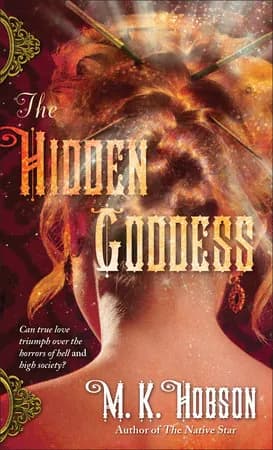
M. K. Hobson
Quotes
Emily already knew there was going to be hell to pay, and she supposed there was no use allowing it to accrue interest.
p. 57
“It is a great weakness of credomancers, Miss Edwards. They often believe their own press.”
”You’re a credomancer, too,” Emily said.
“I’m also a woman. Failure, struggle, and doubt are my constant companions. They are not always pleasant, but they inoculate me against overconfidence. As such, I would not trade them for all the arrogant bravado in the world.”
p. 282
She was painfully aware that doing one’s best was never assurance that it wasn’t the wrong choice anyway.
p. 42
Nothing is ever what you want it to be. The harder you grab for it, the more deeply it cuts. And it mocks you for being foolish enough to reach for it at all. You come to fear touching anything at all, because you know that if you do, it will become terrible.
p. 310
“Credomancy may seek to exploit the human desire for a tidy narrative where an unblemished romantic hero vanquishes all obstacles, but such ideals have very little to do with reality. Reality requires pragmatism and compromise. Men fail. Women fail. There are no heroes, only human beings who somehow find the strength to behave heroically, no matter how many times they have been unable to do so in the past. If you understand that, Miss Edwards—if you truly and deeply understand that, then you will understand the most powerful thing anyone with a heart can understand.”
“And what’s that?” Emily said softly.
“That love is not enough. But it’s a start.”
p. 291
There is a difference between not understanding and being willfully obtuse.
p. 275
It was disappointing, as if a wish she didn’t know she’d made hadn’t come true.
p. 46
“What kind of idiot do you think I am?”
”I have no idea what kind of idiot you are,” Miss Jesczenka said. “That’s why I’m asking.”
p. 133
Could one die from boredom, she wondered? From complete, oppressive, crushing, unmitigated boredom, the likes of which made all other boredom seem like ecstasy’s sweet thrilling embrace? And in such a case, if one happened to have a life insurance policy, would it pay?
p. 17
It was her own evil assumptions that had done her in. She hadn’t even considered the third possible explanation for his strange behavior—that he was a perfectly nice man, without an ounce of guile, just trying to be helpful. People helped people in California. Why hadn’t she thought of that? She’d only been in New York a few weeks, and already she was turning hard and suspicious.
p. 33
Having engaged in vigorous and passionate debate while on their honeymoon trip from New York, they had arrived at the startling—and rather liberating—conclusion that the marriage itself was not at all necessary. Stanton no longer had a name to give, and taking Emily’s would have involved all the tedium of authority and nonsense they’d hoped to avoid. So, in the end, he had returned to her the simple gold band she had worn for so long, sliding it onto the ring finger of her new right hand. And she had given him a soft slow kiss. They were the only vows required.
p. 373
“Was your mother furious?”
“She’ll get over it,” Stanton said. “Perhaps not in this lifetime, but I happen to believe in reincarnation, so there’s still hope.”
p. 65