


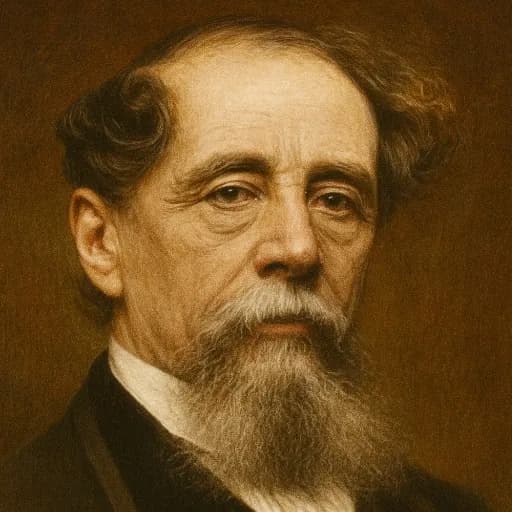
Charles Dickens
Quotes
Waste forces within him, and a desert all around, this man stood still on his way across a silent terrace, and saw for a moment, lying in the wilderness before him, a mirage of honourable ambition, self-denial, and perseverance. In the fair city of this vision, there were airy galleries from which the loves and graces looked upon him, gardens in which the fruits of life hung ripening, waters of Hope that sparkled in his sight. A moment, and it was gone. Climbing to a high chamber in a well of houses, he threw himself down in his clothes on a neglected bed, and its pillow was wet with wasted tears.
Defarge, a weak minority interposed a few words for the memory of the compassionate wife of the Marquis; but only elicited from his own wife a repetition of her last reply. "Tell the Wind and the Fire where to stop; not me!"
"Do you think:" the uncomplaining eyes in which there is so much endurance, fill with tears, and the lips part a little more and tremble: "that it will seem long to me, while I wait for her in the better land where I trust both you and I will be mercifully sheltered?"
"It cannot be, my child; there is no Time there, and no trouble there."
As these ruffians turned and turned, their matted locks now flung forward over their eyes, now flung backward over their necks, some women held wine to their mouths that they might drink; and what with dropping blood, and what with dropping wine, and what with the stream of sparks struck out of the stone, all their wicked atmosphere seemed gore and fire. The eye could not detect one creature in the group free from the smear of blood.
Looking at the Jury and the turbulent audience, he might have thought that the usual order of things was reversed, and that the felons were trying the honest men.
"The boy’s eyes, which had been fixed on mine, slowly turned to the looker-on, and I saw in the two faces that all he said was true. The two opposing kinds of pride confronting one another, I can see, even in this Bastille; the gentleman’s, all negligent indifference; the peasants, all trodden-down sentiment, and passionate revenge."
So wicked do destruction and secrecy appear to honest minds, that Mr. Lorry and Miss Pross, while engaged in the commission of their deed [hiding Dr Manette's shoe-making bench] and in the removal of its traces, almost felt, and almost looked, like accomplices in a horrible crime.
A beautiful world we live in, when it IS possible, and when many other such things are possible, and not only possible, but done—done, see you!—under that sky there, every day. Long live the Devil. Let us go on.
Sadly, sadly, the sun rose; it rose upon no sadder sight than the man of good abilities and good emotions, incapable of their directed exercise, incapable of his own help and his own happiness, sensible of the blight on him, and resigning himself to let it eat him away.
It was remembered afterwards that when he bent down and touched her face with his lips, he murmured some words. The child, who was nearest to him, told them afterwards, and told her grandchildren when she was a handsome old lady, that she heard him say, "A life you love."
Before that unjust Tribunal, there was little or no order of procedure, ensuring to any accused person any reasonable hearing. There could have been no such Revolution, if all laws, forms, and ceremonies, had not first been so monstrously abused, that the suicidal vengeance of the Revolution was to scatter them all to the winds.
But indeed, at that time, putting to death was a recipe much in vogue with all trades and professions, and not least of all with Tellson's. Death is Nature's remedy for all things, and why not Legislation's?