Aldous Huxley
Quotes
All gods are homemade, and it is we who pull their strings, and so, give them the power to pull ours
One Folk, One Realm, One Leader. Union with the unity of an insect swarm. Knowledgeless understanding of nonsense and diabolism. And then the newsreel camera had cut back to the serried ranks, the swastikas, the brass bands, the yelling hypnotist on the rostrum. And here once again, in the glare of his inner light, was the brown insectlike column, marching endlessly to the tunes of this rococo horror-music. Onward Nazi soldiers, onward Christian soldiers, onward Marxists and Muslims, onward every chosen People, every Crusader and Holy War-maker. Onward into misery, into all wickedness, into death!
“If a nation expects to be ignorant and free,” said Jefferson, “it expects what never was and never will be.”
p. 34
In the course of evolution nature has gone to endless trouble to see that every individual is unlike every other individual.... Physically and mentally, each one of us is unique. Any culture which, in the interests of efficiency or in the name of some political or religious dogma, seeks to standardize the human individual, commits an outrage against man's biological nature.
p. 21
Unlike the masses, intellectuals have a taste for rationality and an interest in facts.
p. 43
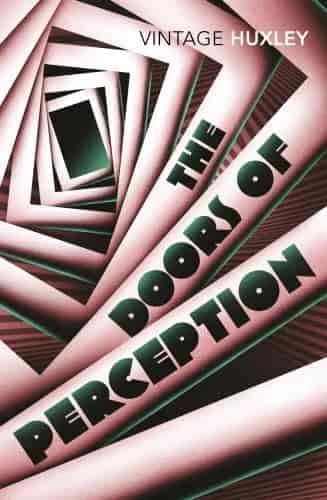
The man who comes back through the Door in the Wall will never be quite the same as the man who went out. He will be wiser but less sure, happier but less self-satisfied, humbler in acknowledging his ignorance yet better equipped to understand the relationship of words to things, of systematic reasoning to the unfathomable mystery which it tries, forever vainly, to comprehend.
All that the conscious ego can do is to formulate wishes, which are then carried out by forces which it controls very little and understands not at all.
Death is the only thing we haven't succeeded in completely vulgarizing.
To see ourselves as others see us is a most salutary gift. Hardly less important is the capacity to see others as they see themselves.
Progress and Nationalism—those were the two great ideas He put into their heads. Progress—the theory that you can get something for nothing; the theory that you can gain in one field without paying for your gain in another; the theory that you alone understand the meaning of history; the theory that you know what’s going to happen fifty years from now; the theory that, in the teeth of all experience, you can foresee all the consequences of your present actions; the theory that Utopia lies just ahead and that, since ideal ends justify the most abominable means, it is your privilege and duty to rob, swindle, torture, enslave and murder all those who, in your opinion (which is, by definition, infallible), obstruct the onward march to the earthly paradise. Remember that phrase of Karl Marx’s: ‘Force is the midwife of Progress.’ He might have added—but of course Belial didn’t want to let the cat out of the bag at that early stage of the proceedings—that Progress is the midwife of Force. Doubly the midwife, for the fact of technological progress provides people with the instruments of ever more indiscriminate destruction, while the myth of political and moral progress serves as the excuse for using those means to the very limit. I tell you, my dear sir, an undevout historian is mad. The longer you study modern history, the more evidence you find of Belial’s Guiding Hand.
p. 94
In the days before machinery men and women who wanted to amuse themselves were compelled, in their humble way, to be artists. Now they sit still and permit professionals to entertain them by the aid of machinery. It is difficult to believe that general artistic culture can flourish in this atmosphere of passivity.
Art, I suppose, is only for beginners, or else for those resolute dead-enders, who have made up their minds to be content with the ersatz of Suchness, with symbols rather than with what they signify, with the elegantly composed recipe in lieu of actual dinner.