Quotes about stories
71 quotes · 45 authors
Quotes
Like Creation stories everywhere, cosmologies are a source of identity and orientation to the world. They tell us who we are. We are inevitably shaped by them no matter how distant they may be from our consciousness.
p. 7
There is no formula complex enough to hold the birthplace of stories.
Who says stories cannot bring things to life?
Stories, like food, lose their flavor if cooked in a hurry.
There is no difference between old and modern stories. Stories are stories. All stories are old. All stories are new. All stories belong to tomorrow. And stories are not about ogres or about animals or about men. All stories are about human beings."
p. 64
I don’t like to contaminate a good story with truth, Em. That’d be a violation of my artistic integrity, wouldn’t it?
Human beings want to know where things come from, how they were made, and who made them. The stories you tell about the work you do have a huge effect on how people feel and what they understand about your work, and how people feel and what they understand about your work effects how they value it.
“I think my point holds. People want stories. You should know that more than anybody. They want their lives to have meaning. They want to be part of something greater than themselves. Even you, Miss Winters, want to be a heroic Librarian—don’t you? And if you’re going to say that people need to have the freedom to be unhappy, something that’s forced on them whether they like it or not, I would question your motivation.” She paused for a single deadly second. “Most people don’t want a brave new world. They want the story that they know.”
p. 217
"Our stories. We store them where moth and rust destroy. We're precious about them, no? Not because we treasure them at all, but because it's safer to hold them close. Am I reading you right? Do we have that much in common?"
p. 134
Everything to Fontaine, had a story. Each object, each fragment comprising the built world. A chorus of voices, the past alive in everything, that sea upon which the present tossed and rode. When he’d built Skinner’s funicular, the elevator that crawled like a small cable car up the angled iron of the tower, Fontaine had a story about the derivation of each piece. He wove their stories together, applied electricity: the thing rose, clicking, to the hatch in the floor of Skinner’s room.
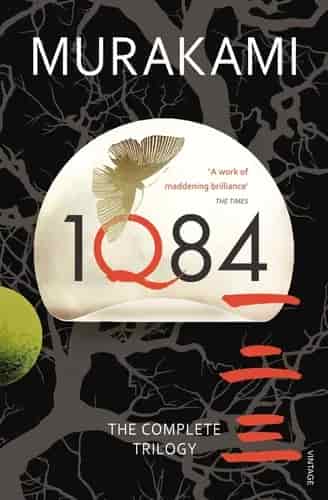
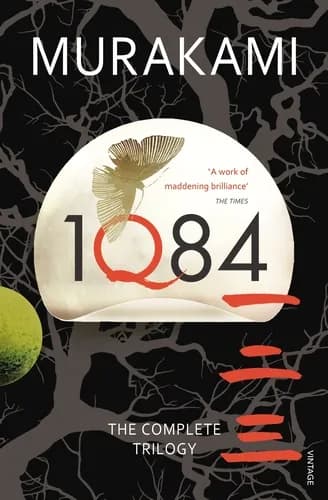
Of course, reading novels was just another form of escape. As soon as he closed their pages he had to come back to the real world. But at some point Tengo noticed that returning to reality from the world of a novel was not as devastating a blow as returning from the world of mathematics. Why should that have been? After much deep thought, he reached a conclusion. No matter how clear the relationships of things might become in the forest of story, there was never a clear-cut solution. That was how it differed from math. The role of a story was, in the broadest terms, to transpose a single problem into another form. Depending on the nature and direction of the problem, a solution could be suggested in the narrative. Tengo would return to the real world with that suggestion in hand. It was like a piece of paper bearing the indecipherable text of a magic spell. At times it lacked coherence and served no immediate practical purpose. But it would contain a possibility. Someday he might be able to decipher the spell. That possibility would gently warm his heart from within.
p. 222
We are not alone. Our stories are not anomalies. (page xvii)