Quotes
Every songwriter in their smallest song seems to possess some monumental grief clarified and dignified by melody, Bill thinks. His own sadnesses, on the other hand, slosh about in his life in a low-key way, formless and self-consuming.
Every arrangement in life carried with it the sadness, the sentimental shadow, of its not being something else, but only itself.
I spent my life learning to feel less.
Every day I felt less.
Is that growing old? Or is it something worse?
You can not protect yourself from sadness without protecting yourself from happiness.
p. 180
But sorry is the Kool-Aid of human emotions. It's what you say when you spill a cup of coffee or throw a gutterball when you're bowling with the girls in the league. True sorrow is as rare as true love.
Of all fruitless errands, sending a tear to look after a day that is gone is the most fruitless.
There is an old Sysan saying that the soup of life is salty enough without adding tears to it.
p. 324
Do not think that I am not sad, though I laugh. See, I have cried even when the laugh did choke me. But no more think that I am all sorry when I cry, for the laugh he come just the same. Keep it always with you that laughter who knock at your door and say, ‘May I come in?’ is not the true laughter. No! he is a king, and he come when and how he like. He ask no person; he choose no time of suitability. He say, ‘I am here.’ Behold, in example I grieve my heart out for that so sweet young girl; I give my blood for her, though I am old and worn; I give my time, my skill, my sleep; I let my other sufferers want that so she may have all. And yet I can laugh at her very grave — laugh when the clay from the spade of the sexton drop upon her coffin and say ‘Thud, thud!’ to my heart, till it send back the blood from my cheek. My heart bleed for that poor boy — that dear boy, so of the age of mine own boy had I been so blessed that he live, and with his hair and eyes the same. There, you know now why I love him so. And yet when he say things that touch my husband-heart to the quick, and make my father-heart yearn to him as to no other man — not even you, friend John, for we are more level in experiences than father and son — yet even at such a moment King Laugh he come to me and shout and bellow in my ear, ‘Here I am! here I am!’ till the blood come dance back and bring some of the sunshine that he carry with him to my cheek. Oh, friend John, it is a strange world, a sad world, a world full of miseries, and woes, and troubles; and yet when King Laugh come, he make them all dance to the tune he play. Bleeding hearts, and dry bones of the churchyard, and tears that burn as they fall — all dance together to the music that he make with that smileless mouth of him. And believe me, friend John, that he is good to come, and kind. Ah, we men and women are like ropes drawn tight with strain that pull us different ways. Then tears come; and, like the rain on the ropes, they brace us up, until perhaps the strain become too great, and we break. But King Laugh he come like the sunshine, and he ease off the strain again; and we bear to go on with our labour, what it may be.”
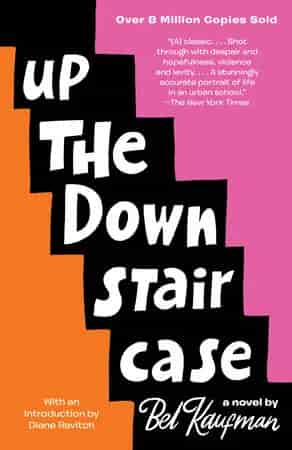
Paul asks how I would have handled a love letter from a student. I don't know — by talking, maybe, by listening. I don't know.
How sad that we don't hear each other — any of us.
Major issues are submerged by minor ones; catastrophes by absurdities.
Your tears come easy , when you're young, and beginning the world. Your tears come easy, when you're old, and leaving it.
p. 86
Why does my Muse only speak when she is unhappy?
She does not, I only listen when I am unhappy.
My guess is that you can only be so happy. While there seems to be no floor to sorrow.
Even though life is hard, even though it is sometimes difficult to smile, we have to try. Just as when we wish each other "Good morning," it must be a real "Good morning." Recently, one friend asked me, "How can I force myself to smile when I am filled with sorrow? It isn't natural." I told her she must be able to smile to her sorrow, because we are more than our sorrow. A human being is like a television set with millions of channels. If we turn the Buddha on, we are the Buddha. If we turn sorrow on, we are sorrow. If we turn a smile on, we really are the smile. We can't let just one channel dominate us.