Quotes
... for the sin of the idolator is not that he worships stone, but that he worships one stone over others.
Jesus hath many lovers of His heavenly kingdom, but few bearers of His Cross.
Of a surety, at the Day of Judgment it will be demanded of us, not what we have read, but what we have done; not how well we have spoken, but how holily we have lived.
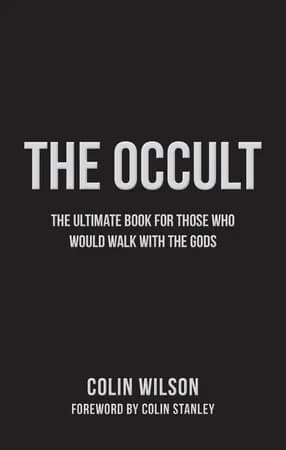
Religion, mysticism and magic all spring from the same basic 'feeling' about the universe: a sudden feeling of meaning, which human beings sometimes 'pick up' accidentally, as your radio might pick up some unknown station. Poets feel that we are cut off from meaning by a thick, lead wall, and that sometimes for no reason we can understand the wall seems to vanish and we are suddenly overwhelmed with a sense of the infinite interestingness of things.
p. 28
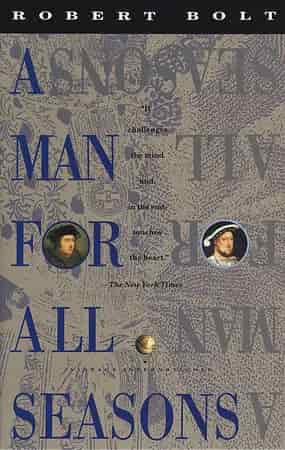
More: You want me to swear to the Act of Succession?
Margaret: "God more regards the thoughts of the heart than the words of the mouth." Or so you've always told me.
More: Yes.
Margaret: Then say the words of the oath and in your heart think otherwise.
More: What is an oath then but words we say to God?
Humanism is only another name for spiritual laziness, or a vague half-creed adopted by men of science and logicians whose heads are too occupied with the world of mathematics and physics to worry about religious categories.
Those who claim a natural link between capitalism and democracy are cheating with the facts in the same way the Catholic Church cheats when it presents itself as the "natural"advocate of democracy and human rights against the threat of totalitarianism - as if it were not the case that the Church accepted democracy only at the end of the nineteenth century, and even then with clenched teeth, as a desperate compromise, making it clear that it preferred monarchy, and that it was making a reluctant concession to new times.
Most important on the bearings of their life and the peace of their commonwealths, is their universal agreement in the existence of a merciful beneficent Diety, and of a future world to the duration of which a century or two are moments too brief to waste upon thoughts of fame and power and avarice; while with that agreement is combined another—viz., since they can know nothing as to the nature of that Diety beyond the fact of His supreme goodness, nor of that future world beyond the fact of its felicitous existence, so their reason forbids all angry disputes on insoluble questions. Thus they secure for that state in the bowels of the earth what no community ever secured under the light of the stars—all the blessings and consolations of a religion without any of the evils and calamities which are engendered by strife between one religion and another. (Chapter XXVI)
Now if you will stop here and ask yourself why you are not as pious as the primitive Christians were, your own heart will tell you that it is neither through ignorance nor inability, but purely because you never thoroughly intended it.
In politics, as in religion, it is equally absurd to aim at making proselytes by fire and sword. Heresies in either can rarely be cured by persecution.
It is commonly said that no man was ever converted by argument, but there is a single one which will make any Laodicean in England, let him be once love-sick, wear prayer-books and become a zealous Episcopalian – the argument that his sweetheart can be seen from his pew.
The Yen Buddhists are the richest religious sect in the universe. They hold that the accumulation of money is a great evil and a burden to the soul. They therefore, regardless of personal hazard, see it as their unpleasant duty to acquire as much as possible in order to reduce the risk to innocent people. (p. 125)