Quotes
A number of religions in Ankh-Morpork still practiced human sacrifice, except that they didn't really need to practice any more because they had got so good at it. (p. 265)
No gods anywhere play chess. They haven't got the imagination. Gods prefer simple, vicious games, where you Do Not Achieve Transcendence but Go Straight to Oblivion; A key to the understanding of all religion is that a god's idea of amusement is Snakes and Ladders with greased rungs.
There were temples, their doors wide open, filling the streets with the sound of gongs, cymbals and, in the case of some of the more conservative fundamentalist religions, the brief screams of the victims.
Pax vobiscum will answer all queries. If you go or come, eat or drink, bless or ban, Pax vobiscum carries you through it all. It is as useful to a friar as a broom-stick to a witch, or a wand to a conjuror.
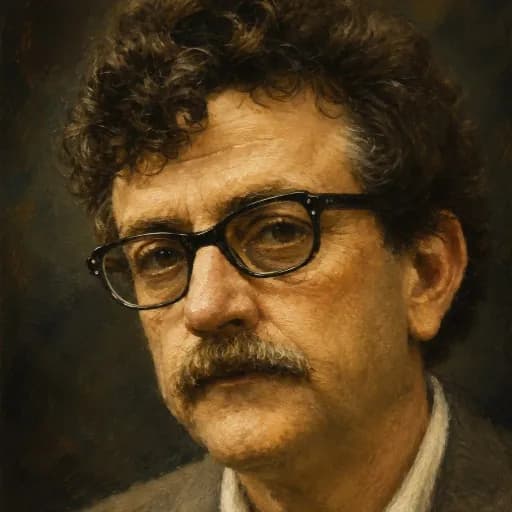
It was The Gospel From Outer Space, by Kilgore Trout. It was about a visitor from outer space... [who] made a serious study of Christianity, to learn, if he could, why Christians found it so easy to be cruel. He concluded that at least part of the trouble was slipshod storytelling in the New Testament. He supposed that the intent of the Gospels was to teach people, among other things, to be merciful, even to the lowest of the low.
But the Gospels actually taught this:
Before you kill somebody, make absolutely sure he isn't well connected. So it goes.
The flaw in the Christ stories, said the visitor from outer space, was that Christ, who didn't look like much, was actually the Son of the Most Powerful Being in the Universe. Readers understood that, so, when they came to the crucifixion, they naturally thought...:
Oh, boy — they sure picked the wrong guy to lynch that time!
And that thought had a brother: "There are right people to lynch." Who? People not well connected. So it goes.
The visitor from outer space made a gift to Earth of a new Gospel. In it, Jesus really was a nobody, and a pain in the neck to a lot of people with better connections than he had. He still got to say all the lovely and puzzling things he said in the other Gospels.
So the people amused themselves one day by nailing him to a cross and planting the cross in the ground. There couldn't possibly be any repercussions, the lynchers thought. The reader would have to think that too, since the Gospel hammered home again and again what a nobody Jesus was.
And then, just before the nobody died, the heavens opened up, and there was thunder and lightning. The voice of God came crashing down. He told the people that he was adopting the bum as his son, giving him the full powers and privileges of the Son of the Creator of the Universe throughout all eternity. God said this:
From this moment on, He will punish horribly anybody who torments a bum who has no connections! (pp. 108-110)
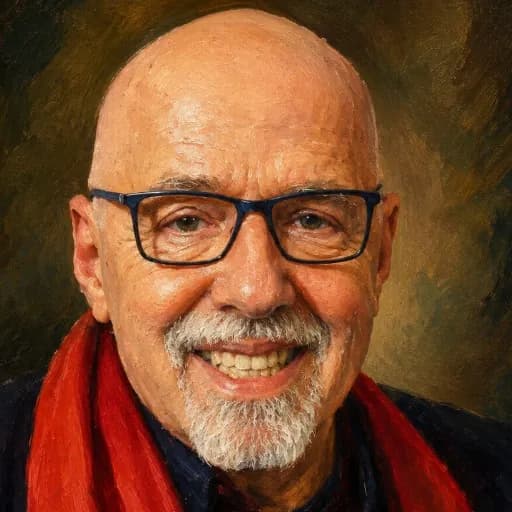
Many people find it hard to go to church if they've been away for a while. I've seen it very often. And I'd say to them, It's because it means something to you. As it should be! So, you see, there's no reason at all to be disappointed. I used to say, The Sabbath is faithful. In a week she'll be here again.
In a desperate attempt to give meaning to life, many turn to religion, because a struggle in the name of a faith is always a justification for some grand action, which could transform the world. ‘We are doing God’s work,’ they tell themselves. And they become devout followers, then evangelists, and finally, fanatics. They don’t understand that religion was created in order to share the mystery and to worship, not to oppress or convert others.
I have only one certainty: there exists a parallel spiritual universe that impinges on the world in which we live. Apart from that, everything else seems absurd to me—sacred books, revelations, guides, manuals, ceremonies … and, what is worse, they appear to have no lasting effects.
Man is the only animal that knows he's going to die, so we invent a heaven to keep from going crazy. Most people are hypnotized by organized religion from childhood.
The wise men understood that this natural world is simply a guarantee that there exists a world that is perfect. God created the world so that, through its visible objects, men could understand his spiritual teachings and the marvels of his wisdom. That's what I mean by action.
p. 151
The more a religion is aware of its opposition in principle to economic rationalization as such, the more apt are the religion’s virtuosi to reject the world, especially its economic activities.
p. 217
It is above all the impersonal and economically rationalized (but for this very reason ethically irrational) character of purely commercial relationships that evokes the suspicion, never clearly expressed but all the more strongly felt, of ethical religions. For every purely personal relationship of man to man, of whatever sort and even including complete enslavement, may be subjected to ethical requirements and ethically regulated. This is true because the structures of these relationships depend upon the individual wills of the participants, leaving room in such relations for manifestations of the virtue of charity. But this is not the situation in the realm of economically rationalised relationships, where personal control is exercised in inverse ratio to the degree of rational differentiation of the economic structure.
p. 216