Quotes
You cannot avoid the interplay of politics within an orthodox religion. This power struggle permeates the training, educating and disciplining of the orthodox community. Because of this pressure, the leaders of such a community inevitably must face that ultimate internal question: to succumb to complete opportunism as the price of maintaining their rule, or risk sacrificing themselves for the sake of the orthodox ethic.
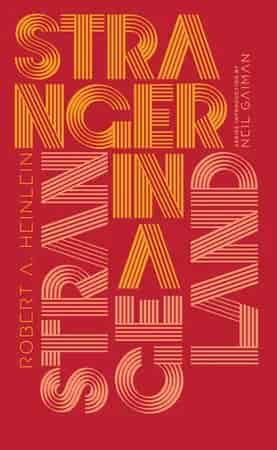
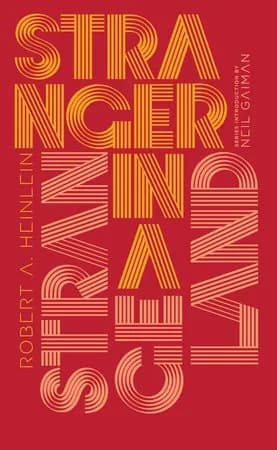
Much that was called religion has carried an unconscious attitude of hostility toward life. True religion must teach that life is filled with joys pleasing to the eye of God, that knowledge without action is empty. All men must see that the teaching of religion by rules and rote is largely a hoax. The proper teaching is recognized with ease. You can know it without fail because it awakens within you that sensation which tells you this is something you've always known.
"A poor portrayal is about as effective as a good one for most people. They don't see the defects; they see a symbol which inspires their deepest emotions; it recalls to them the Agony and Sacrifice of God."
"Jubal, I thought you weren't a Christian?"
"Does that make me blind to human emotion? I was saying that the crummiest painted plaster crucifix can evoke emotions in the human heart so strong that many have died for them. The artistry with which such a symbol is wrought is irrelevant.
Religion is a solace to many people and it is even conceivable that some religion, somewhere, really is Ultimate Truth. But in many cases, being religious is merely a form of conceit. The Bible Belt faith in which I was brought up encouraged me to think that I was better than the rest of the world; I was 'saved' and they were 'damned' — we were in a state of grace and the rest of the world were 'heathens' and by 'heathen' they meant such people as our brother Mahmoud. It meant that an ignorant, stupid lout who seldom bathed and planted his corn by the phase of the Moon could claim to know the final answers of the Universe. That entitled him to look down his nose at everybody else. Our hymn book was loaded with such arrogance — mindless, conceited, self-congratulation on how cozy we were with the Almighty and what a high opinion he had of us and us alone, and what hell everybody else was going to catch come Judgment Day.
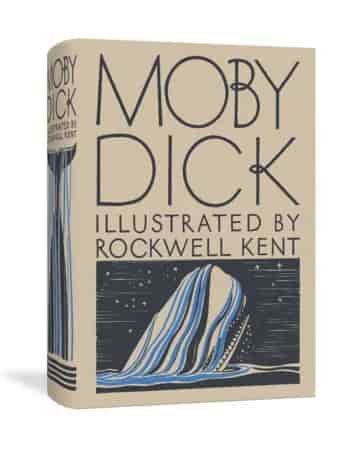
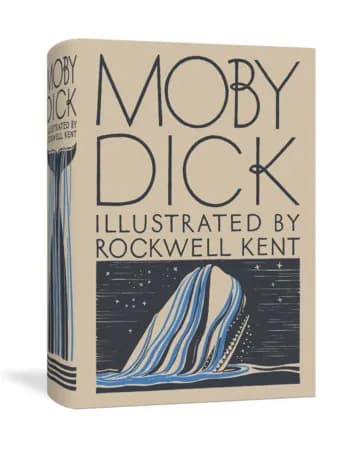
Thought he, it's a wicked world in all meridians; I'll die a pagan.
p. 62
The pulpit is ever this earth's foremost part; all the rest comes in its rear; the pulpit leads the world. From thence it is the storm of God's quick wrath is first descried, and the bow must bear the earliest brunt. From thence it is the God of breezes fair or foul is first invoked for favorable winds. Yes, the world's a ship on its passage out, and not a voyage complete; and the pulpit is its prow.
p. 43
I have no objection to any person's religion, be it what it may, so long as that person does not kill or insult any other person, because that other person don't believe it also. But when a man's religion becomes really frantic; when it is a positive torment to him; and, in fine, makes this earth of ours an uncomfortable inn to lodge in; then I think it high time to take that individual aside and argue the point with him.
p. 95
I do not think that my remarks about religion made much impression upon Queequeg. Because, in the first place, he somehow seemed dull of hearing on that important subject, unless considered from his own point of view; and, in the second place, he did not more than one third understand me, couch my ideas simply as I would; and, finally, he no doubt thought he knew a good deal more about the true religion than I did. He looked at me with a sort of condescending concern and compassion, as though he thought it a great pity that such a sensible young man should be so hopelessly lost to evangelical pagan piety.
p. 97
If it be of the highest importance to man, as an individual, that his religion should be true, the case of society is not the same. Society has no future life to hope for or to fear; and provided the citizens profess a religion, the peculiar tenets of that religion are of very little importance to its interests.
Muhammad brought down from heaven and put into the Koran not religious doctrines only, but political maxims, criminal and civil laws, and scientific theories. The Gospels, on the other hand, deal only with the general relations between man and God and between man and man. Beyond that, they teach nothing and do not oblige people to believe anything. That alone, among a thousand reasons, is enough to show that Islam will not be able to hold its power long in ages of enlightenment and democracy, while Christianity is destined to reign in such ages, as in all others.
They all attributed the peaceful dominion of religion in their country mainly to the separation of church and state. I do not hesitate to affirm that during my stay in America I did not meet a single individual, of the clergy or the laity, who was not of the same opinion on this point.
The main business of religions is to purify, control, and restrain that excessive and exclusive taste for well-being which men acquire in times of equality.