Quotes
If the truth of religious doctrines is dependent on an inner experience that bears witness to the truth, what is one to make of the many people who do not have that experience?
Religious ideas have sprung from the same need as all the other achievements of culture: from the necessity for defending itself against the crushing supremacy of nature.
Religious doctrines … are all illusions, they do not admit of proof, and no one can be compelled to consider them as true or to believe in them.
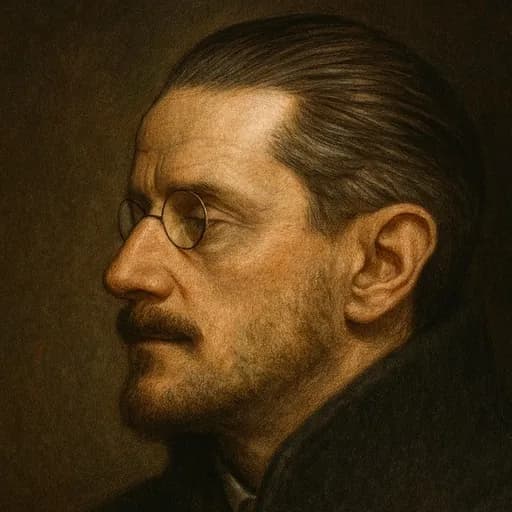
I know all about the honour of God, Mary Jane, but I think it's not at all honourable for the pope to turn out the women out of the choirs that have slaved there all their lives and put little whipper-snappers of boys over their heads. I suppose it is for the good of the Church if the pope does it. But it's not just, Mary Jane, and it's not right.
The working-man was to fix his hopes upon a future life, while his pockets were picked in this one; he was brought up to frugality, humility, obedience—in short to all the pseudo-virtues of capitalism.
It is more difficult for a modern scientist to be a serious Christian, like Polkinghorne, than to be a serious Muslim, like the Nobel Prize-winning physicisit Abdus Salam. Salam happily proclaimed his Muslim faith but did not feel any need to write books about it. For Salam, the idea of a conflict between his faith and his science was ludicrous. Muslim faith has nothing to do with science. But Polkinghorne writes books to prove to himself and to us that his theology and his science can live together harmoniously..
It is a curious accident of history that the Christian religion became heavily involved with theology. No other religion finds it necessary to formulate elaborately precise statements about the abstract qualities and relationships of gods and humans. ... The idea that God may be approached and understood through intellectual analysis is uniquely Christian.
It is probably not an accident that modern science grew explosively in Christian Europe and left the rest of the world behind. A thousand years of theological disputes nurtured the habit of analytical thinking that could also be applied to the analysis of natural phenomena. On the other hand, the close historical relations between theology and science have caused conflicts between science and Christianity that does not exist between science and other religions.
The common root of modern science and Christian theology was Greek philosophy. The historical accident that caused the Christian religion to become heavily theological was the fact that Jesus was born in the Eastern part of the Roman Empire at the time when the prevailing culture was profoundly Greek.
When all is said and done, science is about things and theology is about words. Things behave in the same way everywhere, but words do not. ... Theology works in one culture alone. If you have not grown up in Polkinghorne's culture, where words such as "incarnation" and "trinity" have a profound meaning, you cannot share his vision.
The gods had gone away, and the ritual of the religion continued senselessly, uselessly.
They knew how to live with nature and get along with nature. They didn’t try too hard to be all men and no animal. That’s the mistake we made when Darwin showed up. We embraced him and Huxley and Freud, all smiles. And then we discovered that Darwin and our religions didn’t mix. Or at least we didn’t think they did, We were fools. We tried to budge Darwin and Huxley and Freud. They wouldn’t move very well. So, like idiots, we tried knocking down religion. We succeeded pretty well. We lost our faith and went around wondering what life was for. If art was no more than a frustrated outflinging of desire, if religion was no more than self-delusion, what good was life? Faith had always given us answers to all things. But it all went down the drain with Freud and Darwin. We were and still are a lost people.