Quotes about rebellion
63 quotes · 47 authors
Quotes
I simply state that I'm a product of a versatile mind in a restless generation — with every reason to throw my mind and pen in with the radicals. Even if, deep in my heart, I thought we were all blind atoms in a world as limited as a stroke of a pendulum, I and my sort would struggle against tradition; try, at least, to displace old cants with new ones. I've thought I was right about life at various times, but faith is difficult. One thing I know. If living isn't seeking for the grail it may be a damned amusing game.
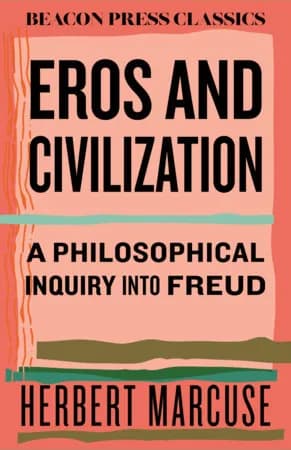
In the most advanced areas of this civilization, the social controls have been introjected to the point where even individual protest is affected at its roots. The intellectual and emotional refusal “to go along” appears neurotic and impotent. This is the socio-psychological aspect of the political event that marks the contemporary period: the passing of the historical forces which, at the preceding stage of industrial society, seemed to represent the possibility of new forms of existence. But the term “introjection” perhaps no longer describes the way in which the individual by himself reproduces and perpetuates the external controls exercised by his society. Introjection suggests a variety of relatively spontaneous processes by which a Self (Ego) transposes the “outer” into the “inner.” Thus introjection implies the existence of an inner dimension distinguished from and even antagonistic to the external exigencies—an individual consciousness and an individual unconscious apart from public opinion and behavior. The idea of “inner freedom” here has its reality: it designates the private space in which man may become and remain “himself.” Today this private space has been invaded and whittled down by technological reality. Mass production and mass distribution claim the entire individual, and industrial psychology has long since ceased to be confined to the factory. The manifold processes of introjection seem to be ossified in almost mechanical reactions. The result is, not adjustment but mimesis: an immediate identification of the individual with his society and, through it, with the society as a whole. This immediate, automatic identification (which may have been characteristic of primitive forms of association) reappears in high industrial civilization; its new “immediacy,” however, is the product of a sophisticated, scientific management and organization. In this process, the “inner” dimension of the mind in which opposition to the status quo can take root is whittled down. The loss of this dimension, in which the power of negative thinking—the critical power of Reason—is at home, is the ideological counterpart to the very material process in which advanced industrial society silences and reconciles the opposition. The impact of progress turns Reason into submission to the facts of life, and to the dynamic capability of producing more and bigger facts of the same sort of life. The efficiency of the system blunts the individuals' recognition that it contains no facts which do not communicate the repressive power of the whole. If the individuals find themselves in the things which shape their life, they do so, not by giving, but by accepting the law of things—not the law of physics but the law of their society.
p. 9
No matter how close and familiar the temple or cathedral were to the people who lived around them, they remained in terrifying or elevating contrast to the daily life of the slave, the peasant, and the artisan—and perhaps even to that of their masters. Whether ritualized or not, art contains the rationality of negation. In its advanced positions, it is the Great Refusal—the protest against that which is. The modes in which man and things are made to appear, to sing and sound and speak, are modes of refuting, breaking, and recreating their factual existence. But these modes of negation pay tribute to the antagonistic society to which they are linked. Separated from the sphere of labor where society reproduces itself and its misery, the world of art which they create remains, with all its truth, a privilege and an illusion. In this form it continues, in spite of all democratization and popularization, through the nineteenth and into the twentieth century. The “high culture” in which this alienation is celebrated has its own rites and its own style. The salon, the concert, opera. theater are designed to create and invoke another dimension of reality. Their attendance requires festive-like preparation; they cut off and transcend everyday experience. Now this essential gap between the arts and the order of the day, kept open in the artistic alienation, is progressively closed by the advancing technological society. And with its closing, the Great Refusal is in turn refused; the “other dimension” is absorbed into the prevailing state of affairs. The works of alienation are themselves incorporated into this society and circulate as part and parcel of the equipment which adorns and psychoanalyzes the prevailing state of affairs.
p. 63
[Art] can speak its own language only as long as the images are alive which refuse and refute the established order.
p. 62
Outside the academic establishment, the “far-reaching change in all our habits of thought” is more serious. It serves to coordinate ideas and goals with those exacted by the prevailing system, to enclose them in the system, and to repel those which are irreconcilable with the system. The reign of such a one-dimensional reality does not mean that materialism rules, and that the spiritual, metaphysical, and bohemian occupations are petering out. On the contrary, there is a great deal of “Worship together this week,” “Why not try God,” Zen, existentialism, and beat ways of life, etc. But such modes of protest and transcendence are no longer contradictory to the status quo and no longer negative. They are rather the ceremonial part of practical behaviorism, its harmless negation, and are quickly digested by the status quo as part of its healthy diet.
p. 13
Either one defines “personality” and “individuality” in terms of their possibilities within the established form of civilization, in which case their realization is for the vast majority tantamount to successful adjustment. Or one defines them in terms of their transcending content, including their socially denied potentialities beyond (and beneath) their actual existence; in this case, their realization would imply transgression, beyond the established form of civilization, to radically new modes of “personality” and “individuality” incompatible with the prevailing ones. Today, this would mean “curing” the patient to become a rebel or (which is saying the same thing) a martyr.
If, by being revolutionary, one means rational rebellion against intolerable social conditions, if, by being radical, one means "going to the root of things," the rational will to improve them, then fascism is never revolutionary. True, it may have the aspect of revolutionary emotions. But one would not call that physician revolutionary who proceeds against a disease with violent cursing but the other who quietly, courageously and conscientiously studies and fights the causes of the disease. Fascist rebelliousness always occurs where fear of the truth turns a revolutionary emotion into illusions.
If you are not their slaves, you are rebels.
p. 307
Hope lies in fighting back. (conclusion)
Those who are scorned today are tomorrow's visionaries. (conclusion)
Injustice makes the rules, and courage breaks them.
p. 201
To oppose something is to maintain it.
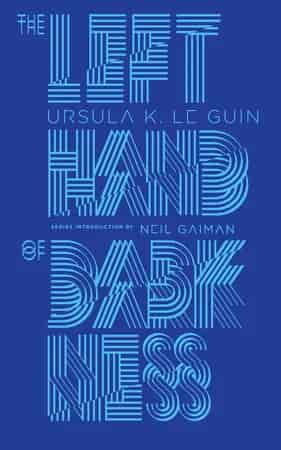
They say here “all roads lead to Mishnory.” To be sure, if you turn your back on Mishnory and walk away from it, you are still on the Mishnory road. To oppose vulgarity is inevitably to be vulgar. You must go somewhere else; you must have another goal; then you walk a different road.
p. 151