Quotes
Things are as they are, and no amount of wishful thinking will change them!
p. 432
For me, the great myth is the Greek myth of Antaeus, who had to touch Earth to regain his strength. I know I must always keep in contact with the concrete, concrete reality, the small incident and the small, specific truth, which might have wide reverberations.
p. 32
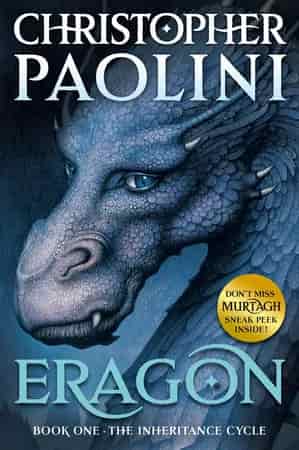
Solembum: Knowing is independent of being. I did not know you existed before you bumbled in here and ruined my nap. Yet that doesn't mean you weren't real before you woke me.
Zhuang Zi, who dreamt of being a butterfly, and after his awakening posed himself a question: how does he know that he is not now a butterfly dreaming of being Zhuang Zi?
"And the more she could imagine this island, the less she liked the real world. The more she could imagine the people, the less she liked any real people. [...] It got until she didn’t belong anywhere. It got so nobody was good enough, refined enough, real enough. [...] Nothing was as real as her imagined world."
Our own time, and by this I mean the last two or three generations, including our own, can be summed up in a way that brings into unity an immense number of details by saying of it that it is a time in which the search for the supreme truth has been a search in reality or through reality or even a search for some supremely acceptable fiction.
The humble are they that move about the world with the lure of the real in their hearts.
The world is a force, not a presence.
The imagination loses vitality as it ceases to adhere to what is real. When it adheres to the unreal and intensifies what is unreal, while its first effect may be extraordinary, that effect is the maximum effect that it will ever have.
Names are not important... To speak is to name names, but to speak is not important. A thing happens once that has never happened before. Seeing it, a man looks upon reality. He cannot tell others what he has seen. Others wish to know, however, so they question him saying, 'What is it like, this thing you have seen?' So he tries to tell them. Perhaps he has seen the very first fire in the world. He tells them, 'It is red, like a poppy, but through it dance other colors. It has no form, like water, flowing everywhere. It is warm, like the sun of summer, only warmer. It exists for a time upon a piece of wood, and then the wood is gone, as though it were eaten, leaving behind that which is black and can be sifted like sand. When the wood is gone, it too is gone.' Therefore, the hearers must think reality is like a poppy, like water, like the sun, like that which eats and excretes. They think it is like to anything that they are told it is like by the man who has known it. But they have not looked upon fire. They cannot really know it. They can only know of it. But fire comes again into the world, many times. More men look upon fire. After a time, fire is as common as grass and clouds and the air they breathe. They see that, while it is like a poppy, it is not a poppy, while it is like water, it is not water, while it is like the sun, it is not the sun, and while it is like that which eats and passes wastes, it is not that which eats and passes wastes, but something different from each of these apart or all of these together. So they look upon this new thing and they make a new word to call it. They call it 'fire.'
"If they come upon one who still has not seen it and they speak to him of fire, he does not know what they mean. So they, in turn, fall back upon telling him what fire is like. 'As they do so, they know from their own experience that what they are telling him is not the truth, but only a part of it. They know that this man will never know reality from their words, though all the words in the world are theirs to use. He must look upon the fire, smell of it, warm his hands by it, stare into its heart, or remain forever ignorant. Therefore, 'fire' does not matter, 'earth' and 'air' and 'water' do not matter. 'I' do not matter. No word matters. But man forgets reality and remembers words. The more words he remembers, the cleverer do his fellows esteem him. He looks upon the great transformations of the world, but he does not see them as they were seen when man looked upon reality for the first time. Their names come to his lips and he smiles as he tastes them, thinking he knows them in the naming. The thing that has never happened before is still happening. It is still a miracle. The great burning blossom squats, flowing, upon the limb of the world, excreting the ash of the world, and being none of these things I have named and at the same time all of them, and this is reality — the Nameless.
Making reality real is art's responsibility. It is a practical assignment, then, a self-assignment: to achieve, by a cultivated sensitivity for observing life, a capacity for receiving impressions, a lonely, unremitting, unaided, unaidable vision, and transferring this vision without distortion to it onto the pages of a novel, where, if the reader is so persuaded, it will turn into the reader's illusion. ("Place in Fiction")
Redefine the terms by which Man views the world, and thus eventually you redefine the world itself.
p. 367