Quotes about politics
184 quotes · 30 authors
Quotes
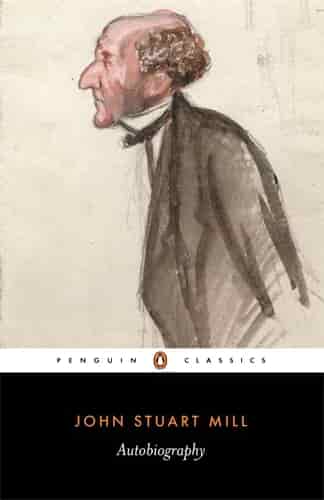
It is the character of the British people, or at least of the higher and middle classes who pass muster for the British people, that to induce them to approve of any change, it is necessary that they should look upon it as a middle course: they think every proposal extreme and violent unless they hear of some other proposal going still farther, upon which their antipathy to extreme views may discharge itself. So it proved in the present instance; my proposal was condemned, but any scheme for Irish Land reform, short of mine, came to be thought moderate by comparison.
p. 294
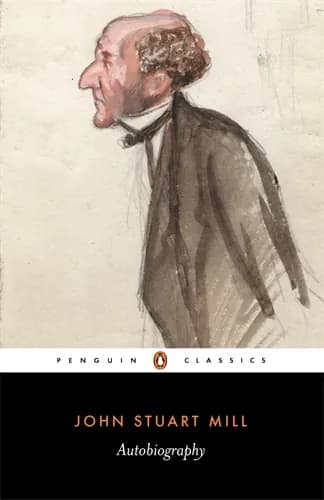 Autobiography
The writers by whom, more than by any others, a new mode of political thinking was brought home to me, were those of the St. Simonian school in France. In 1829 and 1830 I became acquainted with some of their writings. They were then only in the earlier stages of their speculations. They had not yet dressed out their philosophy as a religion, nor had they organized their scheme of Socialism. They were just beginning to question the principle of hereditary property. I was by no means prepared to go with them even this length; but I was greatly struck with the connected view which they for the first time presented to me, of the natural order of human progress; and especially with their division of all history into organic periods and critical periods.
p. 163
AutobiographyThat the human mind has a certain order of possible progress, in which some things must precede others, an order which governments and public instructors can modify to some, but not to an unlimited extent: that all questions of political institutions are relative, not absolute, and that different stages of human progress not only will have, but ought to have, different institutions: That government is always either in the hands, or passing into the hands, of whatever is the strongest power in society, and that what this power is, does not depend on institutions, but institutions on it: That any general theory or philosophy of politics supposes a previous theory of human progress, and that this is the same thing with a philosophy of history.
p. 162
AutobiographyI thought the predominance of the aristocratic classes, the noble and the rich, in the English Constitution, an evil worth any struggle to get rid of; not on account of taxes, or any such comparatively small inconvenience, but as the great demoralizing agency in the country. Demoralizing, first, because it made the conduct of the government an example of gross public immorality, through the predominance of private over public interests in the State, and the abuse of the powers of legislation for the advantage of classes. Secondly, and in a still greater degree, because the respect of the multitude always attaching itself principally to that which, in the existing state of society, is the chief passport to power; and under English institutions, riches, hereditary or acquired, being the almost exclusive source of political importance; riches, and the signs of riches, were almost the only things really respected, and the life of the people was mainly devoted to the pursuit of them. I thought, that while the higher and richer classes held the power of government, the instruction and improvement of the mass of the people were contrary to the self-interest of those classes, because tending to render the people more powerful for throwing off the yoke: but if the democracy obtained a large, and perhaps the principal, share in the governing power, it would become the interest of the opulent classes to promote their education, in order to ward off really mischievous errors, and especially those which would lead to unjust violations of property. On these grounds I was not only as ardent as ever for democratic institutions, but earnestly hoped that Owenite, St. Simonian, and all other anti-property doctrines might spread widely among the poorer classes; not that I thought those doctrines true, or desired that they should be acted on, but in order that the higher classes might be made to see that they had more to fear from the poor when uneducated, than when educated.
p. 171
AutobiographyM. Comte soon left the St. Simonians, and I lost sight of him and his writings for a number of years. But the St. Simonians I continued to cultivate. I was kept au courant of their progress by one of their most enthusiastic disciples, M. ... I was introduced to their chiefs, Bazard and Enfantin, in 1830; and as long as their public teachings and proselytism continued, I read nearly everything they wrote. Their criticisms on the common doctrines of Liberalism seemed to me full of important truth; and it was partly by their writings that my eyes were opened to the very limited and temporary value of the old political economy, which assumes private property and inheritance as indefeasible facts, and freedom of production and exchange as the dernier mot of social improvement. The scheme gradually unfolded by the St. Simonians, under which the labour and capital of society would be managed for the general account of the community every individual being required to take a share of labour either as thinker, teacher, artist, or producer, all being classed according to their capacity, and remunerated according to their works, appeared to me a far superior description of Socialism to Owen's.
p. 166
Autobiography“How did you come to represent the belt?”
“Aptitude tests said I had a high IQ and liked ordering people around. From there I worked my way up.”
“We go by the vote.”
“Popularity contests.”
“It works. But it does have drawbacks. What government doesn’t?”
p. 57
I thought about it and got cold chills. Assassination is already a recognized branch of politics. If this got out—But that was the trouble; someone seemed to have thought of it already. If not, someone would. Someone always did.
p. 171
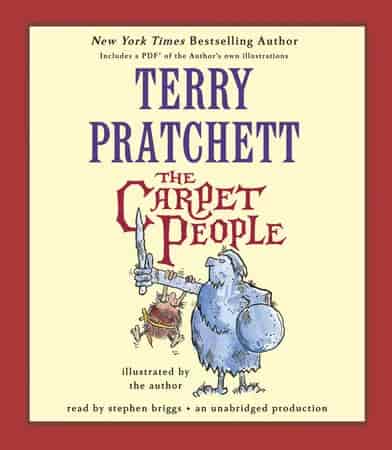
On the fifth day the Governor of the town called all the tribal chieftains to an audience in the market square, to hear their grievances. He didn't always do anything about them, but at least they got heard, and he nodded a lot, and everyone felt better about it at least until they got home. This is politics.
There are no nations! There is only humanity. And if we don’t come to understand that right soon, there will be no nations, because there will be no humanity.
p. 421
When Israel was first founded in 1948 and all my Jewish friends were jubilant, I was the skeleton at the feast. I said, ‘“We are building ourselves a ghetto. We will be surrounded by tens of millions of Muslims who will never forgive, never forget, and never go away.”
I was right.
p. 420
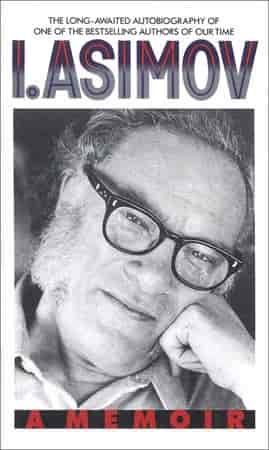
As the Reagan administration continued to transfer funds from hospitals and other much-needed social institutions into the pockets of arms manufacturers and politicians, working conditions grew steadily worse.
p. 487
He (Robert A. Heinlein) always pictured himself a libertarian, which to my way of thinking means “I want the liberty to grow rich and you can have the liberty to starve.” It’s easy to believe that no one should depend on society for help when you yourself happen not to need such help.
p. 311