Quotes about morality
424 quotes · 191 authors
Quotes
My father once told me that respect for the truth comes close to being the basis for all morality. "Something cannot emerge from nothing," he said. This is profound thinking if you understand how unstable "the truth" can be.
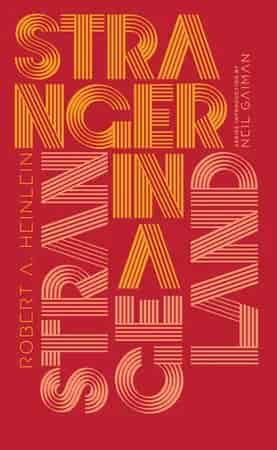
Ben, the ethics of sex is a thorny problem. Each of us is forced to grope for a solution he can live with — in the face of a preposterous, unworkable, and evil code of so-called "morals." Most of us know the code is wrong; almost everybody breaks it. But we pay Danegeld by feeling guilty and giving lip service. Willy-nilly, the code rides us, dead and stinking, an albatross around the neck.
You, too, Ben. You fancy yourself a free soul — and break that evil code. But faced with a problem in sexual ethics new to you, you tested it against that same Judeo-Christian code ... so automatically your stomach did flip-flops ... and you think that proves you're right and they're wrong. Faugh! I'd as lief use trial by ordeal.
"This poor ersatz Martian is saying that sex is a way to be happy. Sex should be a means of happiness. Ben, the worst thing about sex is that we use it to hurt each other. It ought never to hurt; it should bring happiness, or at least pleasure.
"The code says, 'Thou shalt not covet thy neighbor's wife.' The result? Reluctant chastity, bitterness, blows and sometimes murder, broken homes and twisted children — and furtive little passes degrading to woman and man. Is this Commandment ever obeyed? If a man swore on his own Bible that he refrained from coveting his neighbor's wife because the code forbade it, I would suspect either self-deception or subnormal sexuality. Any man virile enough to sire a child has coveted many women, whether he acts or not.
"Now comes Mike and says: 'There is no need to covet my wife... love her! There's no limit to her love, we have everything to gain — and nothing to lose but fear and guilt and hatred and jealousy.' The proposition is incredible. So far as I recall only pre-civilization Eskimos were this naive — and they were so isolated that they were almost 'Men from Mars' themselves. But we gave them our 'virtues' and now they have chastity and adultery just like the rest of us."
Most moral philosophers consciously or unconsciously assume the essential correctness of our cultural sexual code — family, monogamy, continence, the postulate of privacy, ... restriction of intercourse to the marriage bed, etcetera. Having stipulated our cultural code as a whole, they fiddle with details - even such piffle as solemnly discussing whether or not the female breast is an "obscene" sight! But mostly they debate how the human animal can be induced or forced to obey this code, blandly ignoring the high probability that the heartaches and tragedies they see all around them originate in the code itself rather than the failure to abide by the code.
A prude is a person who thinks that his own rules of propriety are natural laws. You are almost entirely free of this prevalent evil.
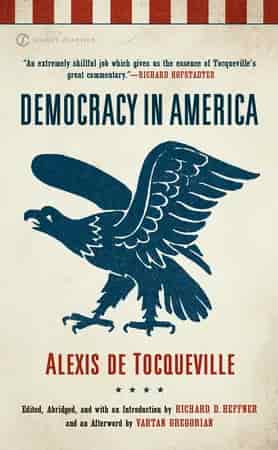
Despotism may govern without faith, but liberty cannot. How is it possible that society should escape destruction if the moral tie is not strengthened in proportion as the political tie is relaxed? And what can be done with a people who are their own masters if they are not submissive to the Deity?
The most moral activity of all is the creation of space for life to move around.
How are you going to teach virtue if you teach the relativity of all ethical ideas? Virtue, if it implies anything at all, implies an ethical absolute. A person whose idea of what is proper varies from day to day can be admired for his broadmindedness, but not for his virtue.
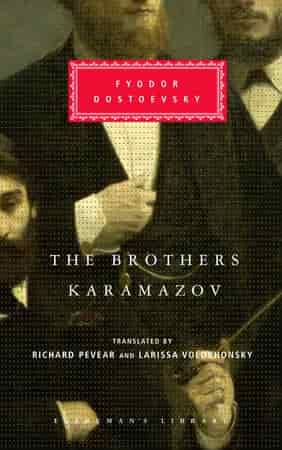
'But,' I [Dmitri Karamazov] asked, 'how will man be after that? Without God and the future life? It means everything is permitted now, one can do anything?' 'Didn't you know?' he said. And he laughed. 'Everything is permitted to the intelligent man,' he said.
If you were to destroy in mankind the belief in immortality, not only love but every living force maintaining the life of the world would at once be dried up. Moreover, nothing then would be immoral, everything would be lawful, even cannibalism.
I think...I would rather recollect a life misspent on fragile things than spent avoiding moral debt.
I cannot forbear adding to these reasonings an observation, which may, perhaps, be found of some importance. In every system of morality, which I have hitherto met with, I have always remarked, that the author proceeds for some time in the ordinary way of reasoning, and establishes the being of a God, or makes observations concerning human affairs; when of a sudden I am surprized to find, that instead of the usual copulations of propositions, is, and is not, I meet with no proposition that is not connected with an ought, or an ought not. This change is imperceptible; but is, however, of the last consequence. For as this ought, or ought not, expresses some new relation or affirmation, it is necessary that it should be observed and explained; and at the same time that a reason should be given, for what seems altogether inconceivable, how this new relation can be a deduction from others, which are entirely different from it. But as authors do not commonly use this precaution, I shall presume to recommend it to the readers; and am persuaded, that this small attention would subvert all the vulgar systems of morality, and let us see, that the distinction of vice and virtue is not founded merely on the relations of objects, nor is perceived by reason.