Quotes
Grief never mended no broken bones, and as good people’s wery scarce, what I says is, make the most on ’em.
“There’s a lot of fathering in those legends,” Sal commented, disapprovingly. “A lot of fathering, a lot of kinging, a lot of death and violence, and very little uncleing and ordinary kindly living.”
p. 53
Too good is good for nothing.
p. 355
What kind of a universe would it be if we could not do small kindnesses for one another?
p. 123
“It is hard to do good,” the voice whispered.
“Nonsense,” she muttered. “You only have to do it.”
p. 159
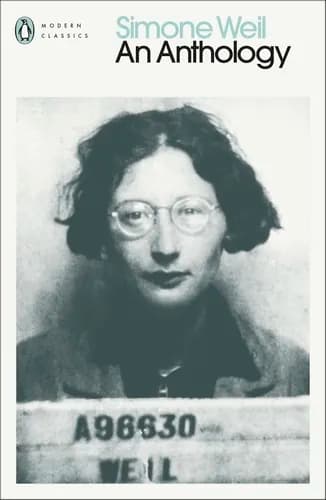
At the bottom of the heart of every human being, from earliest infancy until the tomb, there is something that goes on indomitably expecting, in the teeth of all experience of crimes committed, suffered, and witnessed, that good and not evil will be done to him. It is this above all that is sacred in every human being.
The good is the only source of the sacred. There is nothing sacred except the good and what pertains to it.
p. 51
Go poor Devil, get thee gone, why should I hurt thee? — This world surely is wide enough to hold both thee and me.
Good guys is just a fancy way of saying Us. Bad guys is only ever Them.' -
"The Devil doesn't make us do anything. The Devil, for example, doesn't make us mean. Rather, when we're mean, we make the Devil. Literally. Our actions create him. Conversely, when we behave with compassion, generosity, and grace, we create God in the world."
All evils are to be considered with the good that is in them, and with what worse attends them.
A passionate man turneth even good into evil and easily believeth evil; a good, peaceable man converteth all things into good.
The source of totalitarianism is a dogmatic attachment to the official word: the lack of laughter, of ironic detachment. An excessive commitment to Good may in itself become the greatest Evil: real Evil is any kind of fanatical dogmatism, especially exerted in the name of supreme Good... Consider only Mozart's Don Giovanni at the end of the opera, when he is confronted with the following choice: if he confesses his sins, he can still achieve salvation; if he persists, he will be damned forever. From this viewpoint of the pleasure principle, the proper thing to do would be to renounce his past, but he does not, he persists in his Evil, although he knows that by persisting he will be damned forever. Paradoxically, with his final choice of Evil, he acquires the status of an ethical hero - that is, of someone who is guided by fundamental principles beyond the pleasure principle and not just by the search for pleasure or material gain.