Quotes
The prison is overcrowded, the calendars full, the judges busy, the lawyers ambitious, and the cops zealous. What does it matter if someone gets trapped here for a year or two, gets ruined here, goes mad here, commits murder or suicide here? It's too bad, but that's the way the cookie crumbles sometimes. I do not claim that everyone in prison here is innocent, but I do claim that the law, as it operates, is guilty, and that the prisoners, therefore, are all unjustly imprisoned. Is it conceivable, after all, that any middle-class white boy — or, indeed, almost any white boy — would have been arrested on so grave a charge as murder, with such flimsy substantiation, and forced to spend, as of this writing, three years in prison? What force, precisely, is operating when a prisoner is advised, requested, ordered, intimidated, or forced, to confess to a crime he has not committed, and promised a lighter sentence for so perjuring and debasing himself? Does the law exist for the purpose of furthering the ambitions of those who have sworn to uphold the law, or is it seriously to be considered as a moral, unifying force, the health and strength of a nation?
Well, if one really wishes to know how justice is administered in a country, one does not question the policemen, the lawyers, the judges, or the protected members of the middle class. One goes to the unprotected — those, precisely, who need the law's protection most! — and listens to their testimony. Ask any Mexican, any Puerto Rican, any black man, any poor person — ask the wretched how they fare in the halls of justice, and then you will know, not whether or not the country is just, but whether or not it has any love for justice, or any concept of it. It is certain, in any case, that ignorance, allied with power, is the most ferocious enemy justice can have.
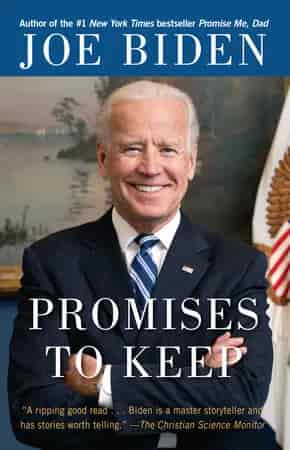
The system wasn't working, and I thought it was time to err on the side of a new model. What might work, I thought, was a system that promoted personal accountability, consistency, and certainty. Congress could say people who committed the same federal crime, under the same circumstances, were going to jail for the same amount of time. We could give judges a narrower set of sentencing guidelines to work with, and felons would be required to pay the same price. We'd be judging the crime, not the person.
p. 123
A convicted felon who had strong family ties, a stake in the community, and an education might get probation, while a man who had few family ties, little stake in the community, and little education might draw a ten-year sentence for the same crime.
p. 122
Life is not fair...Anyone who says it is, or even that it ought to be, is a fool or worse.
p. 634
To live with integrity in an unjust society we must work for justice. To walk with integrity through a landscape strewn with beer cans, we must stop and pick them up.
p. 41
They strike down the weak and call it justice. They ungird their loins and call it reparation. They bark like dogs and call it reason.
Cromwell: You don't seem to appreciate the seriousness of your position.
More: I defy anyone to live in that cell for a year and not appreciate the seriousness of his position.
Cromwell: Yet the State has harsher punishments.
More: You threaten like a dockside bully.
Cromwell: How should I threaten?
More: Like a Minister of State, with justice!
Cromwell: Oh, justice is what you're threatened with.
More: Then I'm not threatened.
Justice is the end of government. It is the end of civil society. It ever has been, and ever will be, pursued, until it be obtained, or until liberty be lost in the pursuit. In a society, under the forms of which the stronger faction can readily unite and oppress the weaker, anarchy may as truly be said to reign, as in a state of nature where the weaker individual is not secured against the violence of the stronger: And as in the latter state even the stronger individuals are prompted by the uncertainty of their condition, to submit to a government which may protect the weak, as well as themselves: so in the former state, will the more powerful factions be gradually induced by a like motive, to wish for a government which will protect all parties, the weaker as well as the more powerful.
She had the hard, half-apathetic expression of one who deems anything possible at the hands of Time and Chance except, perhaps, fair play.
"Fairness doesn't govern life and death. If it did, no good man would ever die young."
It was not his fight. Not personally his fight. No more his fight than any one of them. But he had made it his. Because of Stone, because of Rand and Harriet, because of priest who’d hounded him across half the continent, he had tried to make a fight of it. And perhaps, as well, because of something undefinable, unknown to himself, unsuspected in himself—some crazy idealism, some deep-rooted sense of justice, some basic aversion to bullies and bigots and reformers.
p. 245