Quotes
The farther and wider that the discovery and knowledge of such an enormous evil, as the base and villainous treatment and slavery which the poor unfortunate Black People meet with, is spread and made known, the cry for justice, even virtue lifting up her voice, must rise the louder and higher, for the scale of equity and justice to be lifted up in their defence.
p. 19
“He was acquitted; he must have been.”
“Right. Good lawyer, tainted evidence. But that doesn’t mean he was innocent.”
p. 121
Man, are you capable of being just? It is a woman who poses the question, you will not deprive her of that right at least. Tell me, what gives you sovereign over empire to oppress my sex? Your strength? Your talents?
Gandhi carried the concept of the powerful committed minority into the twentieth century, first gaining recognition of the rights of Indians living in South Africa and then achieving India's independence from British domination. "It is a superstitious and ungodly thing to believe that an act of a majority binds a minority," he said. "It is not numbers that count but quality.... I do not regard the force of numbers as necessary in a just cause."
Satyagraha derives its power from two apparently opposite attributes: fierce autonomy and total compassion. It says, in effect: I will not coerce you. Neither will I be coerced by you. If you behave unjustly, I will not oppose you by violence (bodyforce) but by the force of truth—the integrity of my beliefs. My integrity is evident in my willingness to suffer, to endanger myself, to go to prison, even to die if necessary. But I will not cooperate with injustice.
I've experienced all kinds of discrimination," Oshima says. "Only people who've been discriminated against can really know how much it hurts. Each person feels the pain in his own way, each has his own scars. So I think I'm as concerned about fairness and justice as anybody. But what disgusts me even more are people who have no imagination. The kind T. S. Eliot calls hollow men. People who fill up that lack of imagination with heartless bits of straw, not even aware of what they're doing. Callous people who throw a lot of empty words at you, trying to force you to do what you don't want to. Like that lovely pair we just met." He sighs and twirls the long slender pencil in his hand. "Gays, lesbians, straights, feminists, fascist pigs, communists, Hare Krishnas-none of them bother me. I don't care what banner they raise. But what I can't stand are hollow people. When I'm with them I just can't bear it, and wind up saying things I shouldn't. With those women I should've just let it slide, or else called Miss Saeki and let her handle it. She would have given them a smile and smoothed things over. But I just can't do that. I say things I shouldn't, do things I shouldn't do. I can't control myself. That's one of my weak points.
Do you know why this world is as bad as it is? […] it is because people think only about their own business, and won't trouble themselves to stand up for the oppressed, nor bring the wrong-doer to light.
p. 192
[E]mancipation cannot be so easily detached from union (which is another way of saying that racial justice and liberal democracy rise or fall with each other).
That was probably the most truthful thing that Tanvir had said to him yet. Wherever one was in the world, it seemed that it was difficult to bring the rich and powerful to book. It was enough to turn anyone into a communist – as long as it didn’t mean he had to share his cigarettes and beer.
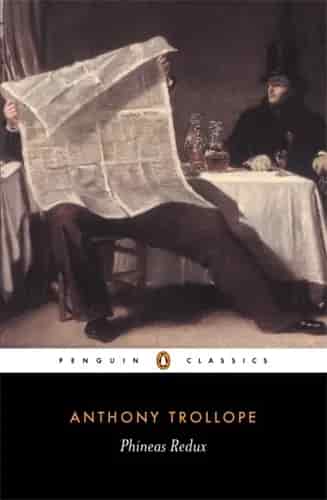
“Would that be justice, ladies?” asked the just man.
“It would be success, Mr. Low, — which is a great deal the better thing of the two.”
The more time I spent in jail, the more I realized that the law isn’t rational at all. It’s a lottery. What color is your skin? How much money do you have? Who’s your lawyer? Who’s the judge?
p. 238
Courage remains as important in the legal profession today as it was then. Throughout our history lawyers who have made the greatest mark on this country haven't done so because they were smarter or were born into better families or held more important positions; it was because they were willing to stand firm for justice in the face of immense pressure and often at grave personal costs.
p. 182