Quotes
From what can "ought" be derived. The most compelling answer is this: ethics must be somehow based on an appreciation of human nature — on a sense of what a human being is or might be, and on what a human being might want to have or want to be. If that is naturalism, then naturalism is no fallacy. No one could seriously deny that ethics is responsive to such facts about human nature. We may just disagree about where to look for the most compelling facts about human nature -n novels, in religious texts, in psychological experiments, in biological or anthropological investigations. The fallacy is not naturalism but, rather, any simple-minded attempt to rush from facts to values. In other words, the fallacy is greedy reductionism of values to facts, rather than reductionism considered more circumspectly, as the attempt to unify our world-view so that out ethical principles don't clash irrationally with the way the world is.
Among the forces which sweep and play throughout the universe, untutored man is but a wisp in the wind. Our civilization is still in a middle stage, scarcely beast, in that it is no longer wholly guided by instinct; scarcely human, in that it is not yet wholly guided by reason. On the tiger no responsibility rests. We see him aligned by nature with the forces of life — he is born into their keeping and without thought he is protected. We see man far removed from the lairs of the jungles, his innate instincts dulled by too near an approach to free-will, his free-will not sufficiently developed to replace his instincts and afford him perfect guidance. He is becoming too wise to hearken always to instincts and desires; he is still too weak to always prevail against them. As a beast, the forces of life aligned him with them; as a man, he has not yet wholly learned to align himself with the forces. In this intermediate stage he wavers — neither drawn in harmony with nature by his instincts nor yet wisely putting himself into harmony by his own free-will. He is even as a wisp in the wind, moved by every breath of passion, acting now by his will and now by his instincts, erring with one, only to retrieve by the other, falling by one, only to rise by the other — a creature of incalculable variability. We have the consolation of knowing that evolution is ever in action, that the ideal is a light that cannot fail. He will not forever balance thus between good and evil. When this jangle of free-will and instinct shall have been adjusted, when perfect understanding has given the former the power to replace the latter entirely, man will no longer vary. The needle of understanding will yet point steadfast and unwavering to the distant pole of truth.
Life was cheap in the Middle Ages. It has become cheaper since. It is only in specific battles for specific lives that our culture is put to the test, and with it our humanity.
A man lives not only his personal life, as an individual, but also, consciously or unconsciously, the life of his epoch and his contemporaries.
Humans, in order to rise above the animals, had learned how to convert themselves into nothing more than organs or limbs or even disposable fingernails and hair of a larger metaphorical organism.
Wouldn't it have been better to change humanity so it no longer desired to destroy itself?
I have always thought the actions of men the best interpreters of their thoughts.
To people off alone, as we were, there is something stirring about finding evidences of human labour and care in the soil of an empty country. It comes to you as a sort of message, makes you feel differently about the ground you walk over every day.
The heart of another is a dark forest, always, no matter how close it has been to one's own.
This is just what human beings do-turn objects into people, people into objects. Back and forth. Tit for tat.
Centuries ago, sailors on long voyages used to leave a pair of pigs on every deserted island. Or they'd leave a pair of goats. Either way, on any future visit, the island would be a source of meat. These islands, they were pristine. These were home to breeds of birds with no natural predators. Breeds of birds that lived nowhere else on earth. The plants there, without enemies they evolved without thorns or poisons. Without predators and enemies, these islands, they were paradise. The sailors, the next time they visited these islands, the only things still there would be herds of goats or pigs. .... Does this remind you of anything? Maybe the ol' Adam and Eve story? .... You ever wonder when God's coming back with a lot of barbecue sauce?
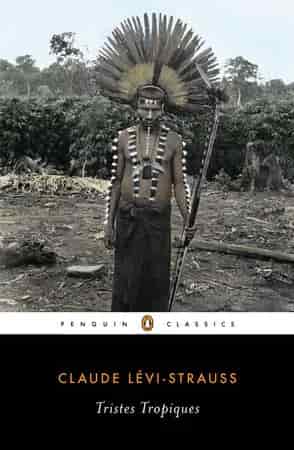
Men can coexist on condition that they recognize each other as being all equally, though differently, human, but they can also coexist by denying each other a comparable degree of humanity, and thus establishing a system of subordination.
p. 149