Quotes
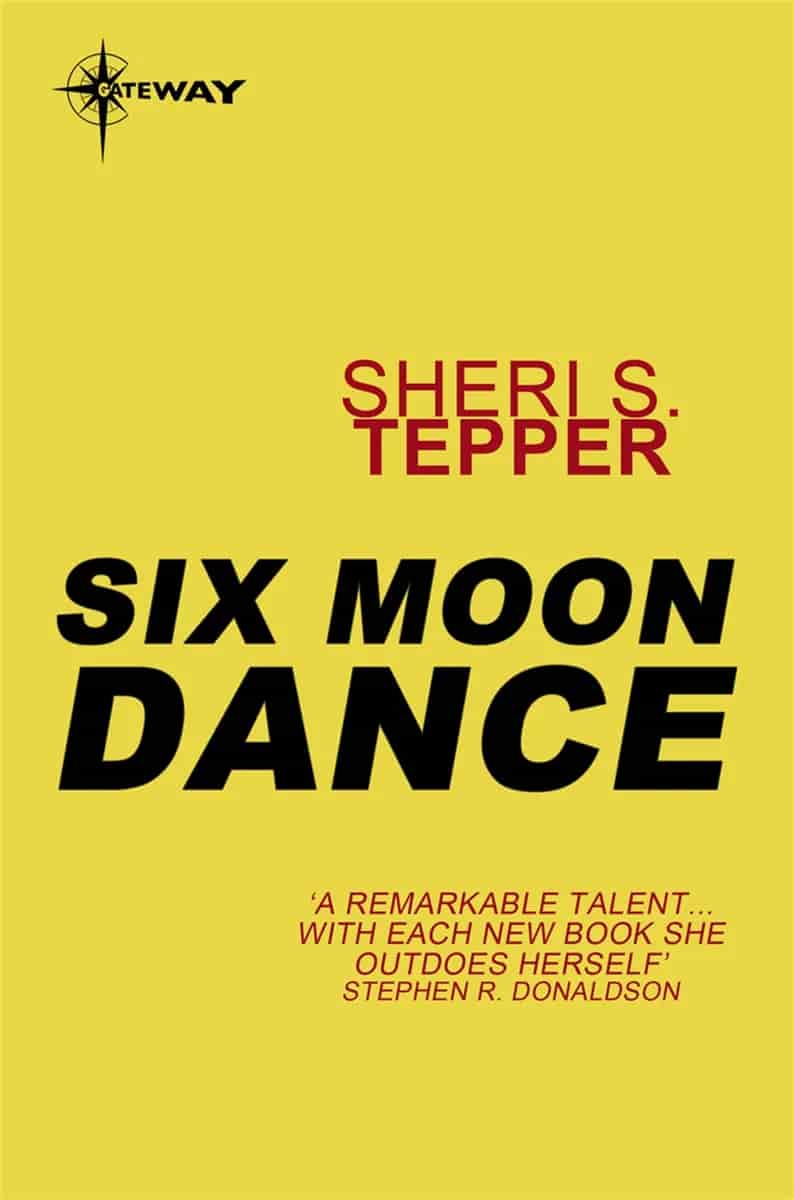
What small potatoes we all are, compared with what we might be!
They lost their humanity, in our eyes, because of a certain willed ignorance on their part.
“The human problem?” I asked, somewhat offended.
She put her arm around me. “Forgive me, Gretamara, but your race as a whole has the unfailing habit of fouling its nest, killing its original planet, and doing its best to kill any others to which it is moved. Because we love and admire the human race for its many good qualities, we call this not ‘the human condition,’ meaning an irrevocable state, but ‘the human problem,’ one we wish to solve. The effort has gone on for some millennia, without result, and some of those involved in the effort are beginning to believe it is a waste of time and treasure.”
p. 276
Any mankind person worth his salt can simultaneously incubate whole clutches of ideas that are either contradictory or mutually exclusive. For instance, mankind has persuaded itself that its race is perfectible, though it hasn’t changed physically, mentally, or psychologically since the Cro-Magnon. Mankind has also persuaded itself that each individual is unique, though each person shares ninety-nine and ninety-nine one hundredths of his DNA and roughly the same percentage of his ideas with thousands or even millions of other persons.
p. 216
Mankind had always had a propensity for trying to govern the ungovernable and to control what was uncontrollable. Mankind had always relied upon laws and rules to direct those drives that did not care about laws or rules. Pragmatism had at last prevailed.
p. 157
If you have read your assignment, you know that mankind has a stratified mentality. The ancient lizard mind lies below the mammalian mind, which lies below a primate mind, which is modified by a mind adapted to language, and since these layers have developed in response to differing evolutionary pressures, they often do not function efficiently together. Human civility tries to control ape dominance, human rationality tries to control mammalian sexuality, human social conscience tries to ameliorate reptilian greed, never with total success.
p. 98
As the Gauphin taught, people are ridiculous! We have language and history, we have technology and philosophy, and we still have not achieved good sense and self-control!
p. 315
“It’s exactly the way we thought and acted. Men didn’t have to be better! At least, not in terms of western thought, he didn’t. He strutted and crowed and told himself just as he was, he was made in the image of God! It was easier to depend on heaven than be responsible on earth, but humans were divinely created so why worry.”
“And you don’t believe he was? Human?”
“He wasn’t what I thought of as sapiens. In my opinion, very few of us were sapiens. Maybe none of us were. Maybe we’d had a chance of becoming sapiens, but we threw it away.”
“When did mankind do that?”
“In Nela’s time, I think. It was then that pitiful people who saw no reality and knew no science declared the holiness of reproduction. And while the liberals were preserving the right to beget, the reactionaries were preserving the faults in our gene pool. We could corrupt and destroy all the rest of creation, but our own germ plasm was sacred. It didn’t matter that there were billions of us, but anything sapiens about us was far more threatened by our numbers than by any change we might make in ourselves.…”
p. 324
The Ultimate Destiny of Man is to stop being only man.
p. 478
It is when we try to grapple with another man's intimate need that we perceive how incomprehensible, wavering, and misty are the beings that share with us the sight of the stars and the warmth of the sun.
This magnificent butterfly finds a little heap of dirt and sits still on it; but man he will never on his heap of mud keep still.
The earth seemed unearthly. We are accustomed to look upon the shackled form of a conquered monster, but there — there you could look at a thing monstrous and free. It was unearthly, and the men were, — No, they were not inhuman. Well, you know, that was the worst of it — this suspicion of their not being inhuman. It would come slowly to one. They howled, and leaped, and spun, and made horrid faces; but what thrilled you was just the thought of their humanity — like yours — the thought of your remote kinship with this wild and passionate uproar. Ugly. Yes, it was ugly enough; but if you were man enough you would admit to yourself that there was in you just the faintest trace of a response to the terrible frankness of that noise, a dim suspicion of there being a meaning in it which you — you so remote from the night of first ages — could comprehend. And why not? The mind of man is capable of anything — because everything is in it, all the past as well as all the future. What was there after all? Joy, fear, sorrow, devotion, valour, rage — who can tell? — but truth — truth stripped of its cloak of time. Let the fool gape and shudder — the man knows, and can look on without a wink. But he must at least be as much of a man as these on the shore. He must meet that truth with his own true stuff — with his own inborn strength. Principles? Principles won't do. Acquisitions, clothes, pretty rags — rags that would fly off at the first good shake. No; you want a deliberate belief.