Quotes
“To us it does not seem that long ago, possibly because our children hear stories told around the fire of things which happened fifteen centuries back. Such stories carry an immediacy one does not get from books.…”
“Which is why some countries carry such old grudges,” offered Marianne. “What children learn at their grandmas’ knees they act upon as though it happened yesterday.”
He nodded gravely, even sadly. “Perhaps that is true. Those who have an oral tradition full of old wrongs and old revenge do seem to fight the same battles forever. If the Irish were not forever singing of their ancient wrongs—or writing poetry about it…well, we see the result in every morning’s newspapers.”
p. 67
History, like love, is so apt to surround her heroes with an atmosphere of imaginary brightness.
But if Germany, thanks to Hitler and his successors, were to enslave the European nations and destroy most of the treasures of their past, future historians would certainly pronounce that she had civilized Europe.
p. 124
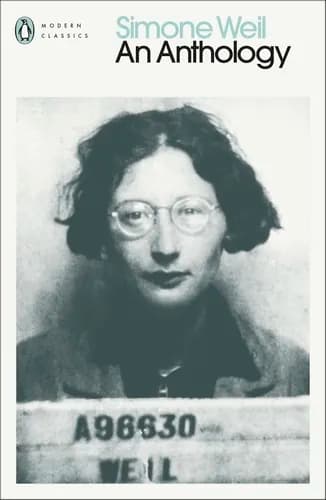
The common run of moralists complain that man is moved by his private self-interest: would to heaven it were so! Private interest is a self-centered principle of action, but at the same time restricted, reasonable and incapable of giving rise to unlimited evils. Whereas, on the other hand, the law of all activities governing social life, except in the case of primitive communities, is that here one sacrifices human life — in himself and in others — to things which are only means to a better way of living. This sacrifice takes on various forms, but it all comes back to the question of power. Power, by definition, is only a means; or to put it better, to possess a power is simply to possess means of action which exceed the very limited force that a single individual has at his disposal. But power-seeking, owing to its essential incapacity to seize hold of its object, rules out all consideration of an end, and finally comes, through an inevitable reversal, to take the place of all ends. It is this reversal of the relationship between means and end, it is this fundamental folly that accounts for all that is senseless and bloody right through history. Human history is simply the history of the servitude which makes men — oppressed and oppressors alike — the plaything of the instruments of domination they themselves have manufactured, and thus reduces living humanity to being the chattel of inanimate chattels.
p. 141
Hunters for gold or pursuers of fame, they all had gone out on that stream, bearing the sword, and often the torch, messengers of the might within the land, bearers of a spark from the sacred fire. What greatness had not floated on the ebb of that river into the mystery of an unknown earth! . . . The dreams of men, the seed of commonwealths, the germs of empires.
We keep falling into the same ditches, you know? I mean, we learn more and more about the physical universe, more about our own bodies, more technology, but somehow, down through history, we go on building empires of one kind or another, then destroying them in one way or another. We go on having stupid wars that we justify and get passionate about, but in the end, all they do is kill huge numbers of people, maim others, impoverish still more, spread disease and hunger, and set the stage for the next war. And when we look at all of that in history, we just shrug our shoulders and say, well, that’s the way things are. That’s the way things always have been.
p. 392
“From what I’ve read,” I said to him, “the world goes crazy every three or four decades. The trick is to survive until it goes sane again.”
p. 229
[H]istory is always written by the winners. When two cultures clash, the loser is obliterated, and the winner writes the history books—books which glorify their own cause and disparage the conquered foe. As Napoleon once said, "What is history, but a fable agreed upon?" By its very nature, history is always a one-sided account.
The official style is at once humble, polite, curt and disagreeable: it derives partly from that used in Byzantine times by the eunuch slave-secretariat, writing stiffly in the name of His Sacred Majesty, whose confidence they enjoyed, to their fellow-slaves outside the palace precincts — for the Emperor had summary power over everyone; and partly from the style used by the cleric-bureaucracy of the Middle Ages, writing stiffly in the name of the feudal lords to their serfs and, though cautious of offending their employers, protected from injury by being servants of the Church, not of the Crown, and so subject to canon, not feudal, law. The official style of civil servants, so far as it recalls its Byzantine derivation, is written by slaves to fellow-slaves of a fictitious tyrant; and, so far as it recalls its mediaeval derivation, is written by members of a quasi-ecclesiastical body, on behalf of quasi-feudal ministers (who, being politicians, come under a different code of behaviour from theirs) to a serflike public.
Besides, [Saint] George pointed out, dragons burn towns and demand princesses as ransom.
The dragons, referring to the Siege of Jerusalem, the Sack of Constantinople and a thousand years of dynastic marriages, said, Look who's talking.
Fifty years from now, if an understanding of man's origins, his evolution, his history, his progress is not in the common place of the school books, we shall not exist.
In every age there is a turning point, a new way of seeing and asserting the coherence of the world. It is frozen in the statues of Easter Island that put a stop to time—and in the medieval clocks of Europe that once also seemed to say the last word about the heavens for ever. Each culture tries to fix its visionary moment, when it was transformed by a new conception either of nature or of man. But in retrospect, what commands our attention as much are the continuities—the thoughts that run or recur from one civilization to another.