Quotes
Time travel is increasingly regarded as a menace. History is being polluted.
We are living in the most destructive and, hence, the most stupid period of the history of our species.
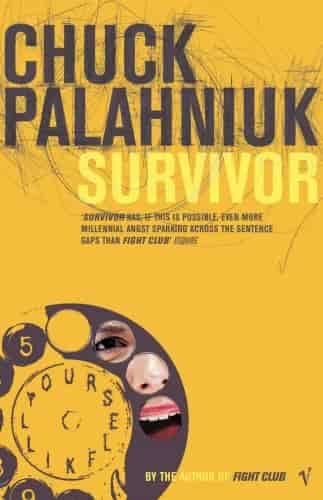
There are only patterns, patterns on top of patterns, patterns that affect other patterns. Patterns hidden by patterns. Patterns within patterns.
If you watch close, history does nothing but repeat itself.
What we call chaos is just patterns we haven’t recognized. What we call random is just patterns we can’t decipher. What we can’t understand we call nonsense. What we can’t read we call gibberish.
There is no free will.
There are no variables.
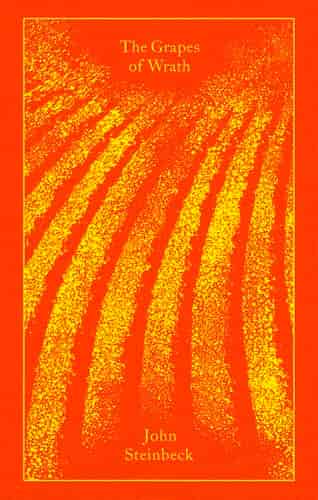
And the great owners, who must lose their land in an upheaval, the great owners with access to history, with eyes to read history and to know the great fact: when property accumulates in too few hands it is taken away. And that companion fact: when a majority of the people are hungry and cold they will take by force what they need. And the little screaming fact that sounds through all history: repression works only to strengthen and knit the repressed. The great owners ignored the three cries of history. The land fell into fewer hands, the number of dispossessed increased, and every effort of the great owners was directed at repression.
p. 249
The great events of history are often due to secular changes in the growth of population and other fundamental economic causes, which, escaping by their gradual character the notice of contemporary observers, are attributed to the follies of statesmen or the fanaticism of atheists.
p. 14
Anyone who feels the urge to undertake such a task must dedicate himself for his labors as he would prepare for a pilgrimage to distant lands. He must spare no time or effort, fear no earthly power or rank, and rise above his own vanity or false modesty in order to tell, in accordance with the expression of the Code Napoléon, the truth, the whole truth, and nothing but the truth.
It is the soothing thing about history that it does repeat itself.
The alphabet, when pushed to a high degree of abstract visual intensity, became typography. The printed word with its specialist intensity burst the bonds of medieval corporate guilds and monasteries, created extreme individualist patterns of enterprise and monopoly. (p. 23)
One of the greatest errors in the reconstruction of another era lies in our tendency to think of them as being like ourselves in feeling and attitudes. Actually, without considerable study on the part of a present-day man — if he were confronted by a fifteenth-century man — there would be no possible communication. I think it is possible through knowledge and discipline for a modern man to understand, and, to a certain extent, live into a fifteenth-century mind, but the reverse would be completely impossible.
... it is true of the spirit as it is true of battles — only the winners are remembered.
p. 307
The sixth pre-Christian century—the miraculous century of Buddha, Confucius and Lâo-Tse, of the Ionian philosophers and Pythagoras—was a turning point for the human species. A March breeze seemed to blow across the planet from China to Samos, stirring man into awareness, like the breath of Adam's nostrils. In the Ionian school of philosophy, rational thought was emerging from the mythological dream-world. ...which, within the next two thousand years, would transform the species more radically than the previous two hundred thousand had done.
[I]n the past two decades anthropologists have gathered data on life and death in pre-state societies rather than accepting the warm and fuzzy stereotypes. What did they find? In a nutshell: Hobbes was right, Rousseau was wrong.
p. 95