Quotes about freedom
641 quotes · 303 authors
Quotes
In order to live free and happily, you must sacrifice boredom. It is not always an easy sacrifice.
"The attempt to impose upon man, a creature of growth and capable of sweetness, to ooze juicily at the last round the bearded lips of God, to attempt to impose, I say, laws and conditions appropriate to a mechanical creation, against this I raise my sword-pen."
"When a man cannot choose, he ceases to be a man."
"Does God want goodness or the choice of goodness? Is a man who chooses to be bad perhaps in some way better than a man who has the good imposed upon him?
“The common people will let it go. Oh yes, they’ll sell liberty for a quieter life. That is why they must be led, sir, driven, pushed!”
Morale was deteriorating and it was all Yossarian's fault. The country was in peril; he was jeopardizing his traditional rights of freedom and independence by daring to exercise them.
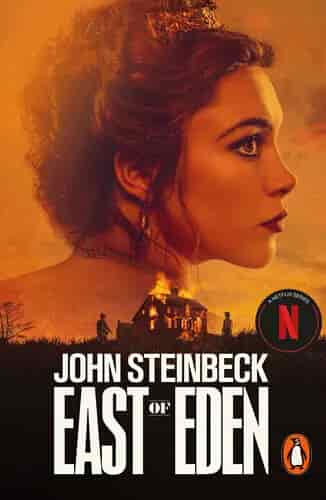
[The Hebrew] word timshel — Thou mayest — that gives a choice. It might be the most important word in the world. That says the way is open. That throws it right back on a man. For if Thou mayest — it is also true that Thou mayest not... [Thou mayest] makes a man great, that gives him stature with the gods, for in his weakness and his filth ... he has still the great choice. He can choose his course and fight it through and win.
p. 301
And this I believe: that the free, exploring mind of the individual human is the most valuable thing in the world. And this I would fight for: the freedom of the mind to take any direction it wishes, undirected. And this I must fight against: any idea, religion, or government which limits or destroys the individual.
p. 131
What freedom men and women could have, were they not constantly tricked and trapped and enslaved and tortured by their sexuality! The only drawback in that freedom is that without it one would not be a human. One would be a monster.
Even that has its reason; it is often better to be in chains than to be free.
In order for a slave--or, for that matter, a slaveholder--to become free, a series of successive perceptions must be realized. First, the person must perceive that the owners (and slaves) are merely human, that is, putting all rhetoric aside, that there exists a dichotomy of privilege and exploitation, and that the privilege is a result of exploitation. … The second realization is, once again, that the owners and slaves are merely human, meaning this time that the exploitation and consequent privilege are not inevitable, but the result of social arrangements and force (as well as a huge dollop of bad luck on the part of those enslaved). … The third realization is yet again that the owners are merely human, by which I now mean they are vulnerable. Wealth does not protect them.
p. 63
Of course he had seen that human affairs were irrational and unexplainable. This no one could miss. But he realized now that he had been making the assumption that the people who involved themselves in governance were making a good-faith effort to run things in a rational manner, with a view to the long-term well-being of humanity and its biophysical support system. Desmond laughed at him as he tried to express this, and irritably he exclaimed, “But why else take on such compromised work, if not to that end?”
“Power,” Desmond said. “Power and gain.”
“Ah.”
Sax had always been so uninterested in those things that it was hard for him to understand why anyone else would be. What was personal gain but the freedom to do what you wanted to do? And what was power but the freedom to do what you wanted to do? And once you had that freedom, any more wealth or power actually began to restrict one’s options, and reduce one’s freedom. One became a servant of one’s wealth or power, constrained to spend all one’s time protecting it.
p. 234