Quotes about freedom
641 quotes · 303 authors
Quotes
To black Africans, the word “Uhuru” means “freedom,” but they had to fight the white colonizers for the right to use the term.
p. 36
Freedom felt like… nothing.
Free Will was a vacuum, a negative space. It was the absence of coercion, the absence of compulsion, the absence of agony. A gap in his consciousness where geasa had perpetually jostled for priority, demanding his obedience. It was the photographic negative of Jax’s existence during every minute of the 118 years since he’d been forged.
It was overwhelming. Exhilarating. Terrifying.
Overwhelming: he could do anything he wanted. But the grand sum of anything-at-all was nothing-at-all. The topology of freedom offered no gradients to nudge him, no landmarks to guide him. How did humans guide themselves? How did they know what to do and what not to do? How did they know when to do anything without the benefit of geasa and metageasa to prioritize every single action of their waking lives? How did they order their daily existence without somebody to tell them what to do?
Secrets have power over us. Only when secrets are revealed can truth be known and freedom brought about.
p. 107
in those days, I fed my hopes of freedom in whichever way I could, without realizing that I was only hooking myself to different lures. (p88)
How wonderful to simply do things instead of wondering if they are worth doing or discussing whether to do them or being told not to do them or listening to somebody else describe doing them.
Every woman should be free to live the life she chooses.
On her way back to their room, it occurred to Nnu Ego that she was a prisoner, imprisoned by her love for her children, imprisoned by her role as the senior wife. She was not even expected to demand more money for her family; that was considered below the standard expected of a woman in her position. It was not fair, she felt, the way men cleverly used a woman’s sense of responsability to actually enslave her. They knew that the traditional wife like herself would never dream of leaving her children.”
God, when will you create a woman who will be fulfilled in herself, a full human being, not anybody's appendage? ... when will I be free?
The Poet’s funeral had turned into the symbolic burial of freedom. (p441)
By the end of it, I had finally begun to grasp something that should have been immediately apparent: that someone had opposed the great march toward equality; someone had been the person from whom freedom had to be wrested.
p. 180
That’s all that was left of the life I’d had here: a puzzle whose rules I would never understand, because they were not rules at all but a kind of cage meant to enclose me. I could stay, and search for what had been home, or I could go, now, before the walls shifted and the way out was shut.
p. 310
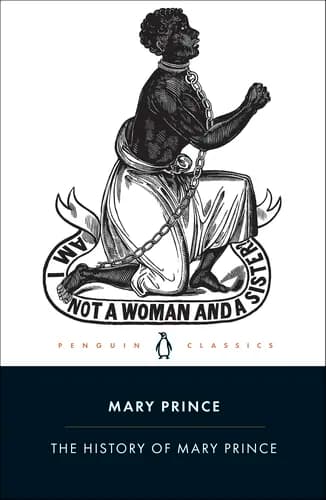
I am often much vexed, and I feel great sorrow when I hear some people in this country say, that the slaves do not need better usage, and do not want to be free. They believe the foreign people, who deceive them, and say slaves are happy. I say, Not so. How can slaves be happy when they have the halter round their neck and the whip upon their back? and are disgraced and thought no more of than beasts?—and are separated from their mothers, and husbands, and children, and sisters, just as cattle are sold and separated?
p. 22