Quotes
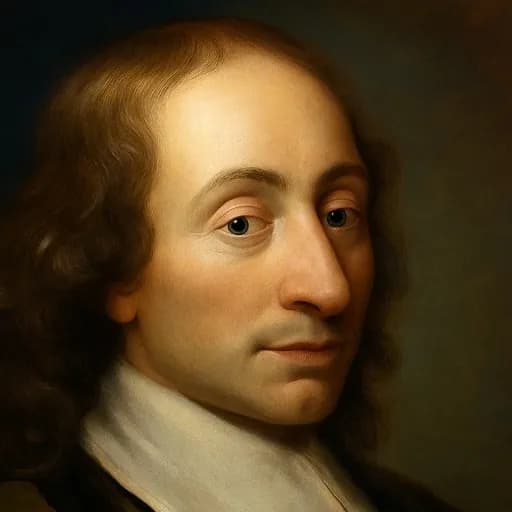
As men are not able to fight against death, misery, ignorance, they have taken it into their heads, in order to be happy, not to think of them at all.
The last act is tragic, however happy all the rest of the play is; at the last a little earth is thrown upon our head, and that is the end for ever.
Nothing is so important to man as his own state, nothing is so formidable to him as eternity; and thus it is not natural that there should be men indifferent to the loss of their existence, and to the perils of everlasting suffering. They are quite different with regard to all other things. They are afraid of mere trifles; they foresee them; they feel them. And this same man who spends so many days and nights in rage and despair for the loss of office, or for some imaginary insult to his honor, is the very one who knows without anxiety and without emotion that he will lose all by death. It is a monstrous thing to see in the same heart and at the same time this sensibility to trifles and this strange insensibility to the greatest objects. It is an incomprehensible enchantment, and a supernatural slumber, which indicates as its cause an all-powerful force.
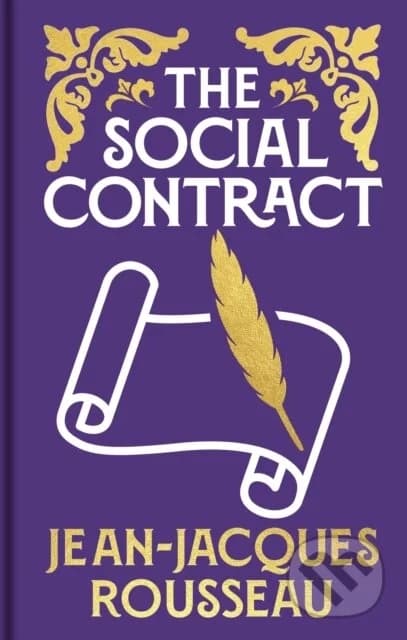
The body politic, like the human body, begins to die from its birth, and bears in itself the causes of its destruction.
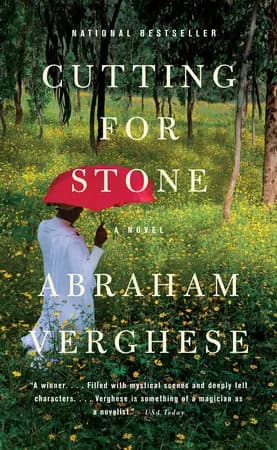
And that is how he passed from this life to the next, without fanfare, with characteristic simplicity, fearless, opening his eyes that last time to make sure we were fine before he went on.
The truth of the matter is that death is a mystery to me. I have no opinion on the subject.
p. 30
Whatever world it is, whatever you’ve done there for better or worse, you always leave the same way.
Alone.
p. 523
Like Christianity, Buddhism explained suffering. In forms that established themselves in China, Buddhism offered the same sort of comfort to bereaved survivors and victims of violence or of disease as Christian faith did in the Roman world. Buddhism of course originated in India, where disease incidence was probably always very high as compared with civilizations based in cooler climates; Christianity, too, took shape in the urban environments of Jerusalem, Antioch, and Alexandria where the incidence of infectious disease was certainly very high as compared to conditions in cooler and less crowded places. From their inception, therefore, both faiths had to deal with sudden death by disease as one of the conspicuous facts of human life. Consequently, it is not altogether surprising that both religions taught that death was a release from pain, and a blessed avenue of entry upon a delightful afterlife where loved ones would be reunited, and earthly injustices and pains amply compensated for.
"Dying is a strange business, and I'm not going to bore you with the details. I might have weeks or I might have months and though it's a cliche, it's true that so many of the things I once believed to be important no longer are. ...I find myself reflecting on the essential moments of my life."
p. 336
My marriage brought great happiness into my life, but lately there's been nothing but sadness. I understand that love and tragedy go hand in hand, for there can't be one without the other, but nonetheless I find myself wondering whether the tradeoff is fair. A man should die as he had lived, I think; in his final moments, he should be surrounded and comforted by those he's always loved.
p. 237
A city of silence and truth, where success and failure, murderer and victim, come together, where thieves and policemen lie side by side in peace for the first and last time.
Why do people laugh, dance in triumph, feel recklessly secure in positions of power? Why do they not remember the true place in the scheme of things and their inevitable end?
p. 272