Quotes about consumerism
98 quotes · 65 authors
Quotes
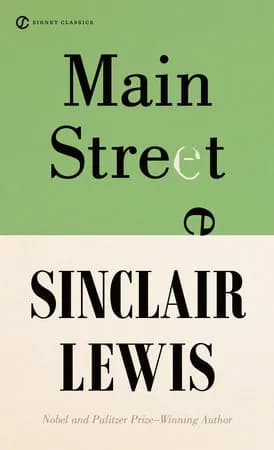
A village in a country which is taking pains to become altogether standardized and pure, which aspires to succeed Victorian England as the chief mediocrity of the world, is no longer merely provincial, no longer downy and restful in its leaf-shadowed ignorance. It is a force seeking to conquer the earth... Sure of itself, it bullies other civilizations, as a traveling salesman in a brown derby conquers the wisdom of China and tacks advertisements of cigarettes over arches for centuries dedicate to the sayings of Confucius. Such a society functions admirably in the production of cheap automobiles, dollar watches, and safety razors. But it is not satisfied until the entire world also admits that the end and joyous purpose of living is to ride in flivvers, to make advertising-pictures of dollar watches, and in the twilight to sit talking not of love and courage but of the convenience of safety razors.
Just as he was an Elk, a Booster, and a member of the Chamber of Commerce, just as the priests of the Presbyterian Church determined his every religious belief and the senators who controlled the Republican Party decided in little smoky rooms in Washington what he should think about disarmament, tariff, and Germany, so did the large national advertisers fix the surface of his life, fix what he believed to be his individuality. These standard advertised wares—toothpastes, socks, tires, cameras, instantaneous hot-water heaters—were his symbols and proofs of excellence; at first sight the signs, then the substitutes, for joy and passion and wisdom. ~ Ch. 7
I seek only to point out that the principle of accumulation based on inequality was a vital part of the pre-war order of Society and of progress as we then understood it, and to emphasize that this principle depended on unstable psychological conditions, which it may be impossible to recreate. It was not natural for a population, of whom so few enjoyed the comforts of life, to accumulate so hugely. The war has disclosed the possibility of consumption to all and the vanity of abstinence to many. Thus the bluff is discovered; the labouring classes may be no longer willing to forgo so largely, and the capitalist classes, no longer confident of the future, may seek to enjoy more fully their liberties of consumption so long as they last, and thus precipitate the hour of their confiscation.
It is a major defect of our present organized system and the economy of abundance that, without providing great goals, it has taken away some of the important real necessities, leaving people with nothing to do.
The void is soon filled. Behavior like going into debt on the installment plan, gives an artificial but then real necessity, something to do, paying up. This is the Rat Race, but I doubt that it would be run if people did not need its justifying necessity, for the commodities themselves are not that attractive.
p. 154
The irony is that in our decades, the combination of rationalism, asceticism, and individualism (the so-called Protestant Ethic) has produced precisely the system of boondoggling, luxury-consumption, and status.
p. 143
"Tibetans try to see death for what it is. It is the end of attachment to things. ... We don't have to cling to life artificially, or to death for that matter. We simply walk toward the sliding doors. Waves and radiation. Look how well-lighted everything is. The place is sealed off, self-contained. It is timeless. Another reason why I think of Tibet. Dying is an art in Tibet. A priest walks in, sits down, tells the weeping relatives to get out and has the room sealed. Doors, windows sealed. He has serious business to see to. Chants, numerology, horoscopes, recitations. Here we don't die, we shop. But the difference is less marked than you think." - Murray
“Once you’re out of school, it is only a matter of time before you experience the vast loneliness and dissatisfaction of consumers who have lost their group identity.”- Murray
"Waves of relief and gratitude flowed over me. The system had blessed my life. I felt its support and approval." - Jack, at the ATM.
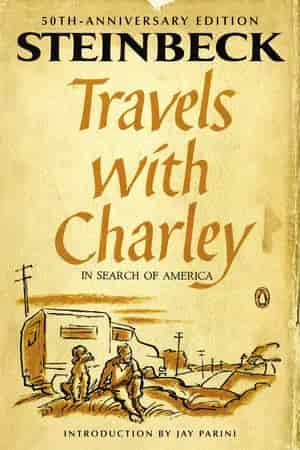
The mountains of things we throw away are much greater than the things we use. In this, if in no other way, we can see the wild and reckless exuberance of our production, and waste seems to be the index.
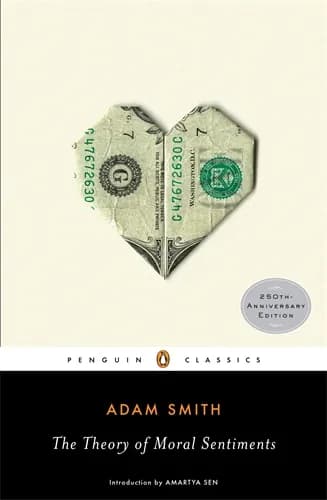
How many people ruin themselves by laying out money on trinkets of frivolous utility? What pleases these lovers of toys is not so much the utility, as the aptness of the machines which are fitted to promote it. All their pockets are stuffed with little conveniences. They contrive new pockets, unknown in the clothes of other people, in order to carry a greater number. They walk about loaded with a multitude of baubles, in weight and sometimes in value not inferior to an ordinary Jew's-box, some of which may sometimes be of some little use, but all of which might at all times be very well spared, and of which the whole utility is certainly not worth the fatigue of bearing the burden.
In a community wherepublic services have failed to keep abreast of private consumption things are very different. Here, in an atmosphere of private opulence and public squalor, the private goods have full sway.
One man's consumption becomes his neighbor's wish.