


Quotes about conscience
95 quotes · 72 authors
Quotes
People talk about the conscience, but it seems to me one must just bring it up to a certain point and leave it there. You can let your conscience alone if you're nice to the second housemaid.
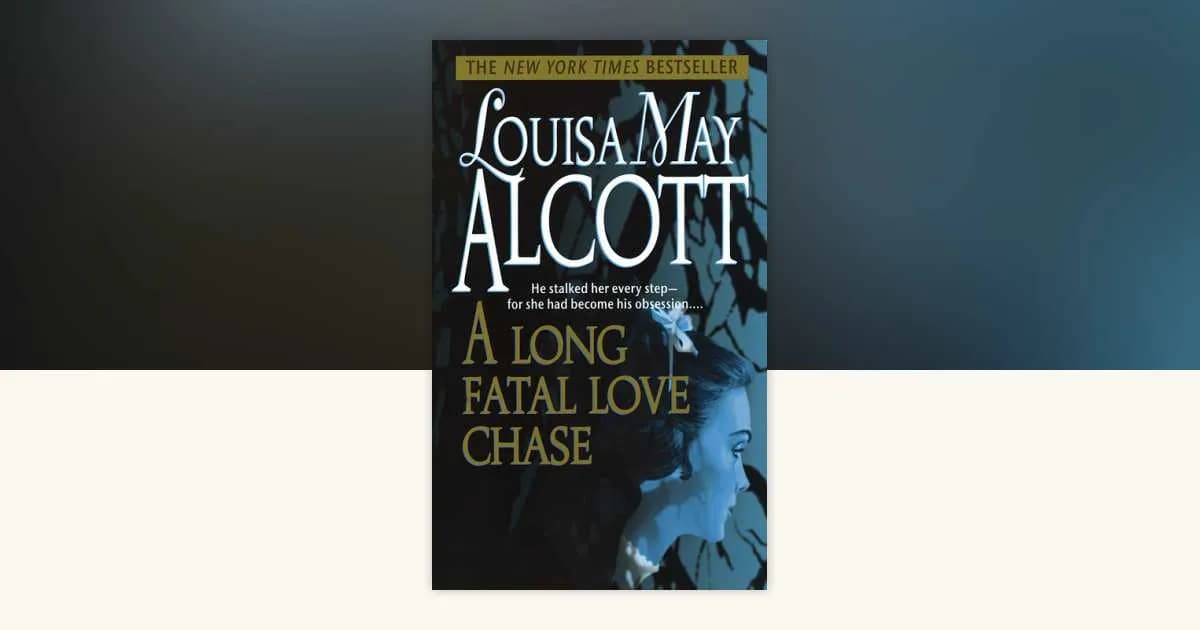
I mean that it is more natural for me to be wicked than virtuous, when I do a bad act, and I've done many, I never feel wither shame, remorse or fear, I sometimes wish it was not necessary as I don't like the trouble, but as for any moral sense of principle, I haven't a particle. Many people are like me as actions prove, but they are not so frank in owning it and insist on keeping up the humbug of virtue. You'll find that is true, Rose, when you know the world better.
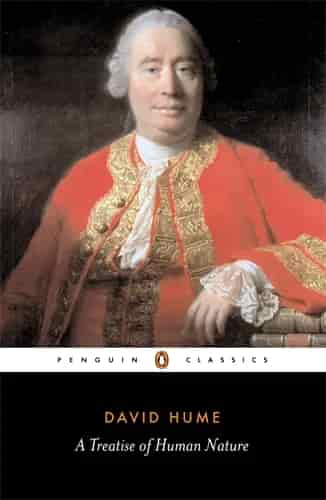
Actions may be laudable or blameable; but they cannot be reasonable: Laudable or blameable, therefore, are not the same with reasonable or unreasonable. The merit and demerit of actions frequently contradict, and sometimes controul our natural propensities. But reason has no such influence. Moral distinctions, therefore, are not the offspring of reason. Reason is wholly inactive, and can never be the source of so active a principle as conscience, or a sense of morals.
His mind was destitute of that dread which has been erroneously decried as if it were nothing higher than a man's animal care for his own skin: that awe of the Divine Nemesis which was felt by religious pagans, and, though it took a more positive form under Christianity, is still felt by the mass of mankind simply as a vague fear at anything which is called wrong-doing. Such terror of the unseen is so far above mere sensual cowardice that it will annihilate that cowardice: it is the initial recognition of a moral law restraining desire, and checks the hard bold scrutiny of imperfect thought into obligations which can never be proved to have any sanctity in the absence of feeling.
Look to your health; and if you have it, praise God, and value it next to a good conscience; for health is the second blessing that we mortals are capable of; a blessing that money cannot buy.
"Dear Emile, I am glad indeed to hear you speak like a man, and to behold the feelings of your heart. At your age this exaggerated unselfishness is not unpleasing. It will decrease when you have children of your own, and then you will be just what a good father and a wise man ought to be. I knew what the result would be before our travels; I knew that when you saw our institutions you would be far from reposing a confidence in them which they do not deserve. In vain do we seek freedom under the power of the laws. The laws! Where is there any law? Where is there any respect for law? Under the name of law you have everywhere seen the rule of self-interest and human passion. But the eternal laws of nature and of order exist. For the wise man they take the place of positive law; they are written in the depths of his heart by conscience and reason; let him obey these laws and be free; for there is no slave but the evil-doer, for he always does evil against his will. Liberty is not to be found in any form of government, she is in the heart of the free man, he bears her with him everywhere. The vile man bears his slavery in himself; the one would be a slave in Geneva, the other free in Paris.
There is a stage of degradation which robs the soul of its life; and the inner voice cannot be heard by one whose whole mind is bent on getting food.
We have reached the moral order at last; we have just taken the second step towards manhood. If this were the place for it, I would try to show how the first impulses of the heart give rise to the first stirrings of conscience, and how from the feelings of love and hatred spring the first notions of good and evil. I would show that justice and kindness are no mere abstract terms, no mere moral conceptions framed by the understanding, but true affections of the heart enlightened by reason, the natural outcome of our primitive affections; that by reason alone, unaided by conscience, we cannot establish any natural law, and that all natural right is a vain dream if it does not rest upon some instinctive need of the human heart.
Conscience is the voice of the soul; the passions are the voice of the body.
It is a mistake to classify the passions as lawful and unlawful, so as to yield to the one and refuse the other. All alike are good if we are their masters; all alike are bad if we abandon ourselves to them. Nature forbids us to extend our relations beyond the limits of our strength; reason forbids us to want what we cannot get, conscience forbids us, not to be tempted, but to yield to temptation. To feel or not to feel a passion is beyond our control, but we can control ourselves. Every sentiment under our own control is lawful; those which control us are criminal. A man is not guilty if he loves his neighbour's wife, provided he keeps this unhappy passion under the control of the law of duty; he is guilty if he loves his own wife so greatly as to sacrifice everything to that love.
Conscience is the guardian in the individual of the rules which the community has evolved for its own preservation.
p. 54












That’s all the quotes.
11 quotes in the collection · come back when we add more