Quotes
A diverse community is a resilient community, capable of adapting to changing situations.
p. 303
Understanding ecological interdependence means understanding relationships. It requires the shifts of perception that are characteristic of systems thinking—from the parts to the whole, from objects to relationships, from contents to patterns. ...Nourishing the community means nourishing those relationships.
p. 298
The principle of flexibility... suggests a corresponding strategy of conflict resolution. ...the community will need stability and change, order and freedom, tradition and innovation. ...these unavoidable conflicts are much better resolved by establishing a dynamic balance.
p. 303
As one grows older, one lives more and more off the little signs of whatever community one moves through day to day and less and less off the gifts that fall out of individual relationships. If one does not prepare for this change in youth, than age becomes a bitter time. This is not to disparage the beauty of one’s relationships with lover or friend. It is only to acknowledge what, for so many in the city, is a sad truth. Community can, however awkwardly, replace individual relationships. But individual relationships only grow poisonous and resentful if there is no community to support them.
p. 147
A true community consists of individuals - not mere species members, not couples - respecting each others individuality and privacy while at the same time interacting with each other mentally and emotionally - free spirits in free relation to each other - and co-operating with each other to achieve common ends. Traditionalists say the basic unit of "society" is the family; "hippies" say the tribe; noone says the individual.
p. 7
They say you are not you except in terms of relation to other people. If there weren't any other people there wouldn't be any you because what you do, which is what you are, only has meaning in relation to other people.
Marriage is not a covenant between a man and a woman; even the beasts cleave together and produce their young. Marriage is a covenant between a man and a woman on one side and their community on the other.
We become one tribe because we say we're one tribe.
Take any one of those items and extrapolate it into sophisticated adult terms and apply it to your family life or your work or your government or your world and it holds true and clear and firm. Think what a better world it would be if we all — the whole world — had cookies and milk about three o’clock every afternoon and then lay down with our blankies for a nap. Or if all governments had as a basic policy to always put things back where they found them and to clean up their own mess.
And it is still true, no matter how old you are — when you go out into the world, it is best to hold hands and stick together.
There’s another thing not everyone figures out right away: It’s almost impossible to go through life all alone. We need to find our support group — family, friends, companion, therapy gatherings, team, church or whatever. The kindergarten admonition applies as long as we live: “When you go out into the world, hold hands and stick together.” It’s dangerous out there — lonely, too. Everyone needs someone. Some assembly is always required.
From the first day we are told in words we can handle what has come to be prized as the foundation of community and culture. Though the teacher may call these first lessons “simple rules,” they are in fact the distillation of all the hard-won, field-tested working standards of the human enterprise.
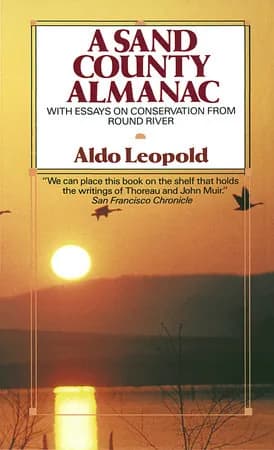
All ethics so far evolved rest upon a single premise: that the individual is a member of a community of interdependent parts. … The land ethic simply enlarges the boundaries of the community to include soils, waters, plants, and animals, or collectively: the land. … A land ethic changes the role of Homo sapiens from conqueror of the land-community to plain member and citizen of it. It implies respect for his fellow-members, and also respect for the community as such.
p. 203