Quotes
Above all else, the mentat must be a generalist, not a specialist. It is wise to have decisions of great moment monitored by generalists. Experts and specialists lead you quickly into chaos. The mentat-generalist, on the other hand, should bring to decision-making a healthy common sense. He must not cut himself off from the broad sweep of what is happening in his universe. He must remain capable of saying: "There's no real mystery about this at the moment. This is what we want now. It may prove wrong later, but we'll correct that when we come to it." The mentat-generalist must understand that anything which we can identify as our universe is merely a part of larger phenomena. But the expert looks backward; he looks into the narrow standards of his own specialty. The generalist looks outward; he looks for living principles, knowing full well that such principles change, that they develop. It is to the characteristics of change itself that the mentat-generalist must look. There can be no permanent catalogue of such change, no handbook or manual. You must look at it with as few preconceptions as possible, asking yourself: "Now what is this thing doing?"
What is justice? Two forces collide. Each may have the right in his own sphere. And here's where an Emperor commands orderly solutions. Those collisions he cannot prevent — he solves. [How?], in the simplest way: he decides.
Was it defeat to choose a lesser evil?
Select your battles carefully. Ultimately, victory and defeat are a matter of your own careful — or reckless — choices.
Muad'Dib could indeed see the Future, but you must understand the limits of this power. Think of sight. You have eyes, yet cannot see without light. If you are on the floor of a valley, you cannot see beyond your valley. Just so, Muad'Dib could not always choose to look across the mysterious terrain. He tells us that a single obscure decision of prophecy, perhaps the choice of one word over another, could change the entire aspect of the future. He tells us "The vision of time is broad, but when you pass through it, time becomes a narrow door." And always, he fought the temptation to choose a clear, safe course, warning "That path leads ever down into stagnation."
'I wish it need not have happened in my time,' said Frodo.
'So do I,' said Gandalf, 'and so do all who live to see such times. But that is not for them to decide. All we have to decide is what to do with the time that is given us.'
"Which path should I take?" he asked. "Which one is safe?"
"Take one, and you cannot take the other," she said. "But neither path is safe. Which way would you walk — the way of hard truths or the way of fine lies?"
"Truths," he said. "I've come too far for more lies."
Wouldst thou both eat thy cake and have it?
I say that the strongest principle of growth lies in human choice.
Tito was experiencing that inexorable law of human souls, that we prepare ourselves for sudden deeds by the reiterated choice of good or evil that gradually determines character.
We make choices, decisions, as long as we keep to the surface of things; once we reach the depths, we can neither choose nor decide, we can do nothing but regret the surface...
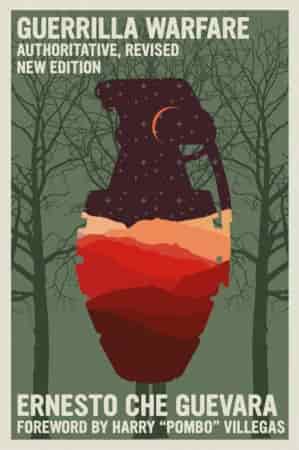
The best age for a guerrilla fighter varies between 25 and 35 years, a stage in which the life of most persons has assumed definite shape. Whoever sets out at that age, abandoning his home, his children, and his entire world must have thought well of his responsibility and reached a firm decision not to retreat a step.