Quotes about childhood
163 quotes · 111 authors
Quotes
Even where the affections are not strongly moved by any superior excellence, the companions of our childhood always possess a certain power over our minds which hardly any later friend can obtain. They know our infantine dispositions, which, however they may be afterwards modified, are never eradicated; and they can judge of our actions with more certain conclusions as to the integrity of our motives.
Then Christopher Robin and Winnie the Pooh walked hand in hand down the forest path and they said goodbye. So they went off together. But wherever they go, and whatever happens to them along the way, in that enchanted place on the top of the forest a little boy and his bear will always be playing.
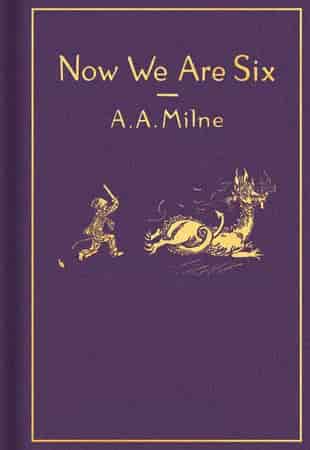
When I was One,
I had just begun.
When I was Two,
I was nearly new.
When I was Three
I was hardly me.
When I was Four,
I was not much more.
When I was Five,
I was just alive.
But now I am Six,
I'm as clever as clever,
So I think I'll be six now for ever and ever.
When a child first catches adults out — when it first walks into his grave little head that adults do not have divine intelligence, that their judgments are not always wise, their thinking true, their sentences just — his world falls into panic desolation. The gods are fallen and all safety gone. And there is one sure thing about the fall of gods: they do not fall a little; they crash and shatter or sink deeply into green muck. It is a tedious job to build them up again; they never quite shine. And the child’s world is never quite whole again. It is an aching kind of growing.
p. 19
From infancy on, we are all spies; the shame is not this but that the secrets to be discovered are so paltry and few.
I have thought a good deal about trees; I like them. They speak eloquently of the balanced dubiety which I told you was the sceptical attitude. No splendid crown without the strong root that works in the dark, drawing its nourishment among the rocks, the soil, hidden waters, and all the little, burrowing things. A man is like that; his splendours and his fruits are to be seen, to win him love and admiration. But what about the root?
Have you ever seen a bulldozer clearing land? It advances upon a great tree and shoves and pushes inexorably until the tree is down and thrust out of the way, and all of that effort is accompanied by a screaming and wrenching sounds from the tree as the great roots are torn from the ground. It is a particularly distressing kind of death. And when the tree is upturned, the root proves to be as big as the crown.
What is the root of man? All sorts of things that nourish his visible part, but the deepest root of all, the tap-root, is that child he once was, of which I spoke to you when I was amusing you with the story of my life. That is the root which goes deepest because it is reaching downward towards the ancestors.
A happy childhood has spoiled many a promising life.
What really shapes and conditions and makes us is somebody only a few of us ever have the courage to face: and that is the child you once were, long before formal education ever got its claws into you — that impatient, all-demanding child who wants love and power and can't get enough of either and who goes on raging and weeping in your spirit till at last your eyes are closed and all the fools say, "Doesn't he look peaceful?" It is those pent-up, craving children who make all the wars and all the horrors and all the art and all the beauty and discovery in life, because they are trying to achieve what lay beyond their grasp before they were five years old.
A strange child, perhaps, but I wouldn't give a pinch of dust for a child who was not strange. Is not every child strange, by adult accounting, if we could only learn to know it? If it has no strangeness, what is the use of it? To grow up into another humanoid turnip?
The Wart was not a proper son. He did not understand this, but it made him feel unhappy, because Kay seemed to regard it as making him inferior in some way. Also it was different not having a father and mother, and Kay had taught him that being different was wrong.
It’s a family joke that when I was a tiny child I turned from the window out of which I was watching a snowstorm, and hopefully asked, "Momma, do we believe in winter?"
It is hard to shake off any taboos a child is indoctrinated with in his earliest years. Even if he learns later that they are nonsense.
p. 445