Leafy Quotes
Recently added
The newest book quotes in the Leafy Quotes collection — passages readers have just added, each with its author, book and the page it came from.
What was ignoble about the Kenilworth spectacle was that the poor dog had begun to hate its own nature. It no longer needed to be beaten. It was ready to punish itself. At that point it would have been better to shoot it.
p. 90
It is the mother and children who make up the core and the husband only a contributor to the economy as a paying lodger might be.
p. 11
My case rests on the rights of desire,’ he says. ‘On the god who makes even the small birds quiver.’
Although he devoted hours of each day to his new discipline, he finds its first premise, as enunciated in the Communications 101 handbook, preposterous: 'Human society has created language in order that we may communicate our thoughts, feelings, and intentions to each other.' His own opinion, which he does not air, is that the origins of speech lie in song, and the origins of song in the need to fill out with sound the overlarge and rather empty human soul.
p. 3
You behave as if everything I do is part of the story of your life. You are the main character, I am a minor character who doesn’t make an appearance until halfway through.
p. 198
"Is he happy? By most measurements, yes, he believes he is. However, he has not forgotten the last chorus of Oedipus: Call no man happy until he is dead."
p. 2
The secret and sacred word that binds him to the farm is 'belong'. Out in the veld by himself he can breathe the word aloud: I belong on the farm. What he really believes but does not utter, what he keeps to himself for fear that the spell will end, is a different form of the word: I belong to the farm. He tells no one because the word is misunderstood so easily, turned so easily to its inverse: The farm belongs to me. The farm will never belong to him, he will never be more than a visitor: he accepts that.
Nothing I have forgotten is worth the remembering.
p. 17
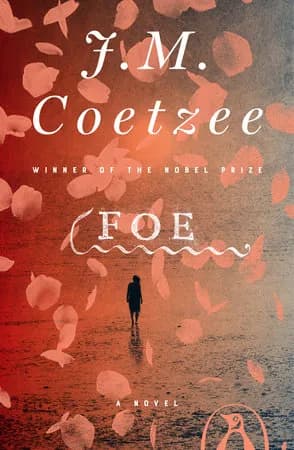
Would gladly now recount to you the history of this singular Cruso, as I heard it from his own lips. But the stories he told me were so various and so hard to reconcile one with another, that I was more and more driven to conclude age and isolation had taken their toll on his memory, he no longer knew for sure what truth, what fancy.
p. 12
Seen from too remote a vantage, life begins to lose its particularity. All shipwrecks become the same shipwreck, all castaways the same castaway, sunburnt, lonely, clad in the skins of the beast he has slain.
To me the moral is that he has the last word who disposes over the greatest force. I mean the executioner and his assistants, both great and small. If I were the Irish woman, I should rest most uneasy in my grave knowing to what interpreter the story of my last hours has been consigned.
I would rather be the author of my story than have lies told about me.