Leafy Quotes
Recently added
The newest book quotes in the Leafy Quotes collection — passages readers have just added, each with its author, book and the page it came from.
Hrathen turned to Dial. “The first step in taking control of a nation, Arteth, is the simplest. You find someone to hate.”
p. 86
You have to expect a measure of subterfuge in any political engagement.
p. 331
“I do, however, wonder why you preach hatred of the Atlantans when you yourself simply pity them.”
Hrathen didn’t respond immediately, tapping his gauntleted finger against the stone parapet with a repetitive click. “It’s not so hard, once you accustom yourself to it,” he finally said. “A man can force himself to hate if he wishes, especially if he convinces himself that it is for a higher good.”
p. 286
“I suppose an optimistic comment wouldn’t do much good right now.”
Galladon smiled slightly. “Definitely not—you optimists just can’t understand that a depressed person doesn’t want you to try and cheer them up. It makes us sick.”
p. 324
There's always another secret.
Men often place pride before reason.
p. 273
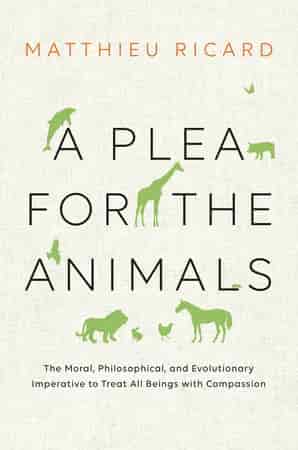
Benevolence is not a commodity that needs to be distributed sparingly like cake or chocolate. It is away of being, an attitude, an intention to do good for those who enter our sphere of attention and the wish to alleviate their suffering. Loving animals also does not mean loving humans less. In fact, by also loving animals we love people better, because our benevolence is then vaster and therefore of better quality. Someone who loves only a selection of sentient beings, even of humanity, is the possessor of only fragmentary and impoverished benevolence.
p. 98
Kindness, altruistic love, and compassion are qualities that do not harmonize well with bias. Restricting the field of our compassion not only diminishes it quantitatively but also qualitatively. Applying our compassion only to certain beings, human beings in this case, makes it a lesser and a poorer thing.
p. 39
We continue to live in ignorance concerning the harm we inflict on animals; very few of us have ever visited an industrial breeding site or a slaughterhouse. We maintain a kind of moral schizophrenia that has us lavishing pampering our pets and at the same time planting our forks in the pigs that have been sent to the slaughter by the millions, even though they are in no way less conscious, less sensitive to pain, or less intelligent than our cats and dogs.
p. 4
In the rich countries, depending on the species, 80 to 95 percent of the animals we eat are “produced” in industrial breeding operations where their short lives are an uninterrupted continuity of pain. All of that becomes possible the moment we begin to regard other living beings as objects for consumption or reserves of meat that we can deal with however we please.
p. 74
[Even Darwin’s] natural selection only predicts that survivors will be fit enough, that is, fitter than their losing competitors; it postulates satisficing, not optimizing.
p. 166
"I'm suspicious about people interested in saving other people's souls."
p. 214