Leafy Quotes
Recently added
The newest book quotes in the Leafy Quotes collection — passages readers have just added, each with its author, book and the page it came from.
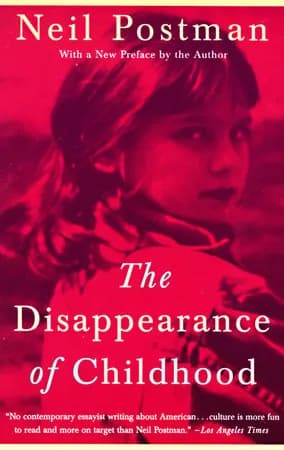
Children are the living messages we send to a time we will not see. From a biological point of view it is inconceivable that any culture will forget that it needs to reproduce itself. But it is quite possible for a culture to exist without a social idea of children. Unlike infancy, childhood is a social artifact, not a biological category.
The old notion that the savage is the freest of mankind is the reverse of the truth. He is a slave, not indeed to a visible master, but to the past, to the spirits of his dead forefathers, who haunt his steps from birth to death, and rule him with a rod of iron.
If mankind had always been logical and wise, history would not be a long chronicle of folly and crime.
The slow, the never ending approach to truth consists in perpetually forming and testing hypotheses, accepting those at which at the time seem to fit the facts and rejecting the others.
Small minds cannot grasp great ideas; to their narrow comprehension, their purblind vision, nothing seems really great and important but themselves. Such minds hardly rise into religion at all.
In the ages to come man may be able to predict, perhaps even to control, the wayward courses of the winds and the clouds, but hardly will his puny hands have strength to speed afresh our slackening planet in its orbit or rekindle the dying fire of the sun. Yet the philosopher who trembles at the idea of such distant catastrophes may console himself by reflecting that these gloomy apprehensions, like the earth and the sun themselves, are only parts of that unsubstantial world which thought has conjured up out of the void, and that the phantoms which the subtle enchantress has evoked to-day she may ban to-morrow. They too, like so much that to the common eye seems solid, may melt into air, into thin air.
In primitive society the rules of ceremonial purity observed by divine kings, chiefs, and priests agree in many respects with the rules observed by homicides, mourners, women in childbed, girls at puberty, hunters and fishermen, and so on. To us these various classes of persons appear to differ totally in character and condition; some of them we should call holy, others we might pronounce unclean and polluted. But the savage makes no such moral distinction between them; the conceptions of holiness and pollution are not yet differentiated in his mind. To him the common feature of all these persons is that they are dangerous and in danger, and the danger in which they stand and to which they expose others is what we should call spiritual or ghostly, and therefore imaginary. The danger, however, is not less real because it is imaginary; imagination acts upon man as really does gravitation, and may kill him as certainly as a dose of prussic acid.
But once a fool always a fool, and the greater the power in his hands the more disastrous is likely to be the use he makes of it. The heaviest calamity in English history, the breach with America, might never have occurred if George the Third had not been an honest dullard.
From the earliest times man has been engaged in a search for general rules whereby to turn the order of natural phenomena to his own advantage, and in the long search he has scraped together a great hoard of such maxims, some of them golden and some of them mere dross. The true or golden rules constitute the body of applied science which we call the arts; the false are magic.
The abundance, the solidity, and the splendor of the results already achieved by science are well fitted to inspire us with a cheerful confidence in the soundness of its method.
It is probably not too much to say that the hope of progress--moral and intellectual as well as material--in the future is bound up with the fortunes of science, and that every obstacle placed in the way of scientific discovery is a wrong to humanity.
The world cannot live at the level of its great men.