Leafy Quotes
Recently added
The newest book quotes in the Leafy Quotes collection — passages readers have just added, each with its author, book and the page it came from.
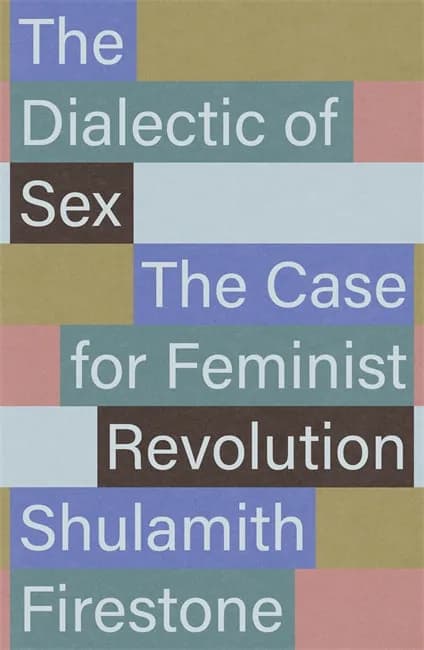
Because class oppression of women and children couched in the phraseology of "cute" it is much harder to fight than open oppression
Mutual aid, even though it may represent one of the factors of evolution, covers nevertheless one aspect only of human relations; that by the side of this current, powerful though it may be, there is, and always has been, the other current — the self-assertion of the individual, not only in its efforts to attain personal or caste superiority, economical, political, and spiritual, but also in its much more important although less evident function of breaking through the bonds, always prone to become crystallized, which the tribe, the village community, the city, and the State impose upon the individual. In other words, there is the self-assertion of the individual taken as a progressive element.
It is evident that no review of evolution can be complete, unless these two dominant currents are analyzed. However, the self-assertion of the individual or of groups of individuals, their struggles for superiority, and the conflicts which resulted therefrom, have already been analyzed, described, and glorified from time immemorial. In fact, up to the present time, this current alone has received attention from the epical poet, the annalist, the historian, and the sociologist. History, such as it has hitherto been written, is almost entirely a description of the ways and means by which theocracy, military power, autocracy, and, later on, the richer classes' rule have been promoted, established, and maintained.
Constant erotic stimulation of male sexuality coupled with its forbidden release through most normal channels are designed to encourage men to look at women as only things whose resistance to entrance must be overcome.
Women throughout history before the advent of birth control were at the continual mercy of their biology - menstruation, menopause, and "female ills," constant painful childbirth, wetnursing and care of infants, all of which made them dependent on males (whether brother, father, husband, lover, or clan, government, community-at-large) for physical survival.
p. 8
To grant that the sexual imbalance of power is biologically based is not to lose our case. We are no longer just animals. And the Kingdom of Nature does not reign absolute.
p. 9
If any revolutionary movement can succeed at establishing an egalitarian structure, radical feminism will.
p. 39
If we had to name the one cultural current that most characterizes America in the twentieth century, it might be the work of Freud and the disciplines that grew out of it.
It is everywhere. The division yin and yang pervades all culture, history, economics, nature itself: modern Western versions of sex discrimination are only the most recent layer. To so heighten one's sensitivity to sexism presents problems far worse than the black militant's new awareness of racism: Feminists have to question, not just all of Western culture, but the organization of culture itself, and further, even the very organization of nature. Many women give up in despair: if that's how deep it goes they don't want to know. Others continue strengthening and enlarging the movement, their painful sensitivity to female oppression existing for a purpose: eventually to eliminate it.
p. 2
Contemporary slang reflects this animal state: children are "mice," "rabbits," "kittens," women are called "chicks," (in England( "birds," "hens," "dumb clucks," "silly geese," "old mares," "bitches." Similar terminology is used about males as a defamation of character, or more broadly only about pressed males males: stud, wold, cat, stag, jack - and then it is used much more rarely, and often with a specifically sexual connotation.
It is especially in the domain of ethics that the dominating importance of the mutual-aid principle appears in full. That mutual aid is the real foundation of our ethical conceptions seems evident enough. But whatever the opinions as to the first origin of the mutual-aid feeling or instinct may be whether a biological or a supernatural cause is ascribed to it — we must trace its existence as far back as to the lowest stages of the animal world; and from these stages we can follow its uninterrupted evolution, in opposition to a number of contrary agencies, through all degrees of human development, up to the present times. Even the new religions which were born from time to time — always at epochs when the mutual-aid principle was falling into decay in the theocracies and despotic States of the East, or at the decline of the Roman Empire — even the new religions have only reaffirmed that same principle. They found their first supporters among the humble, in the lowest, downtrodden layers of society, where the mutual-aid principle is the necessary foundation of every-day life; and the new forms of union which were introduced in the earliest Buddhist and Christian communities, in the Moravian brotherhoods and so on, took the character of a return to the best aspects of mutual aid in early tribal life.
Each time, however, that an attempt to return to this old principle was made, its fundamental idea itself was widened. From the clan it was extended to the stem, to the federation of stems, to the nation, and finally — in ideal, at least — to the whole of mankind.
A revolutionary in every bedroom cannot fail to shake up the status quo. And if it’s your wife who is revolting, you can’t just split to the suburbs.
p. 38
Sex class is so deep as to be invisible. Or it may appear as a superficial inequality, one that can be solved by merely a few reforms, or perhaps by the full integration of women into the labour force. But the reaction of the common man, woman, and child - 'That? Why you can't change that! You must be out of your mind!' - is the closest to the truth. ]
p. 1